What Most People Get Wrong
Most calls we get start the same way: "the opener just died." Nine times out of ten in a town like Randolph, where houses were built between 1938 and 1996 and the typical one went up around 1964, the opener itself is fine. What's failed is the circuit feeding it, or the battery backup that was bolted on later to a house that never had one.
A lot of these garages were never wired for a motor load in the first place. The opener got added in the 80s or 90s as an upgrade, tied into whatever outlet was closest, usually a single 15-amp circuit shared with something else in the garage. When that circuit trips, or when the power actually goes out, people assume the motor burned up. It usually didn't. The fix is often as simple as a reset at the breaker, but if the wiring is original to a 1960s build, it may be due for more than a reset.
The other mistake: assuming a battery backup unit will outlast the power outage. Older backup batteries lose capacity fast once they're a few years old, and in a severe cold climate, cold cuts that capacity further right when you need it most.
What to Check
Before you call anyone, there are a few things worth looking at yourself.
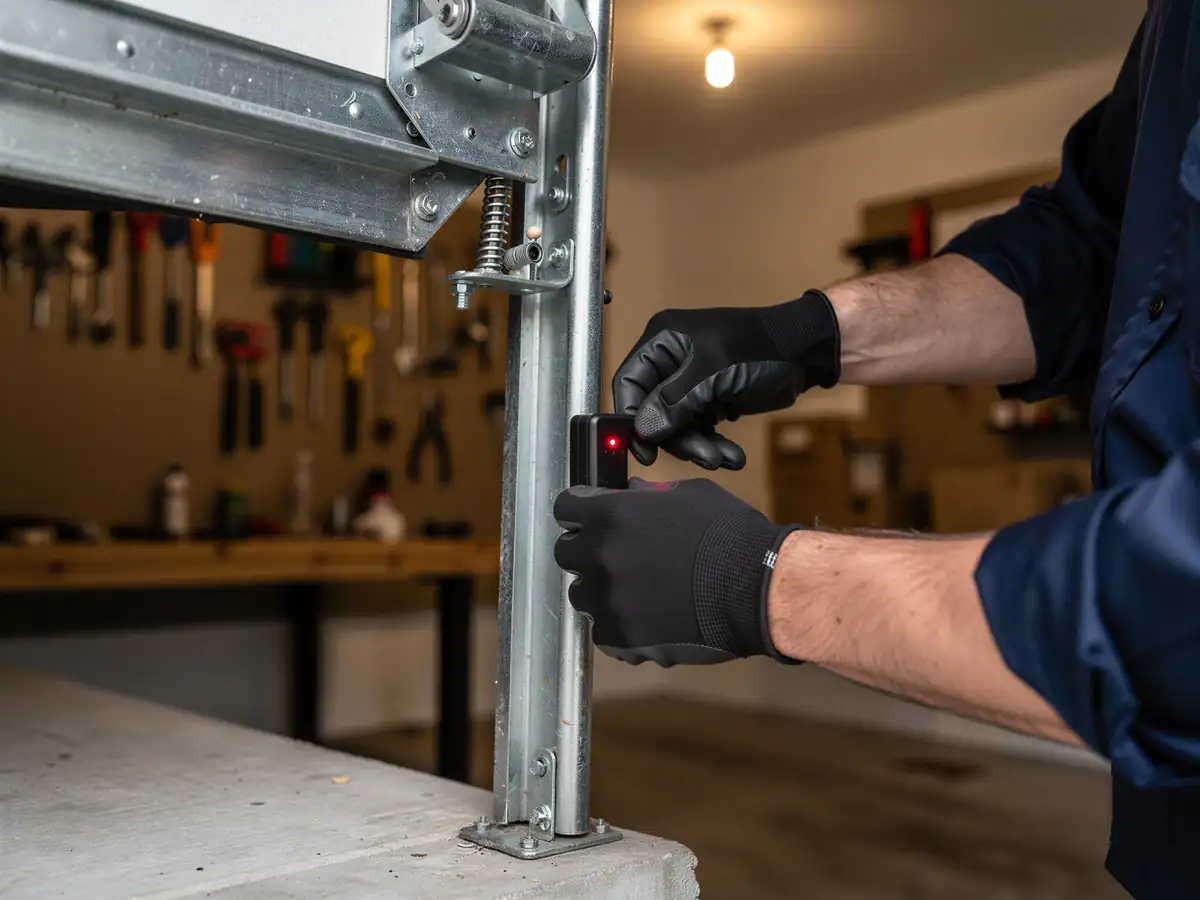
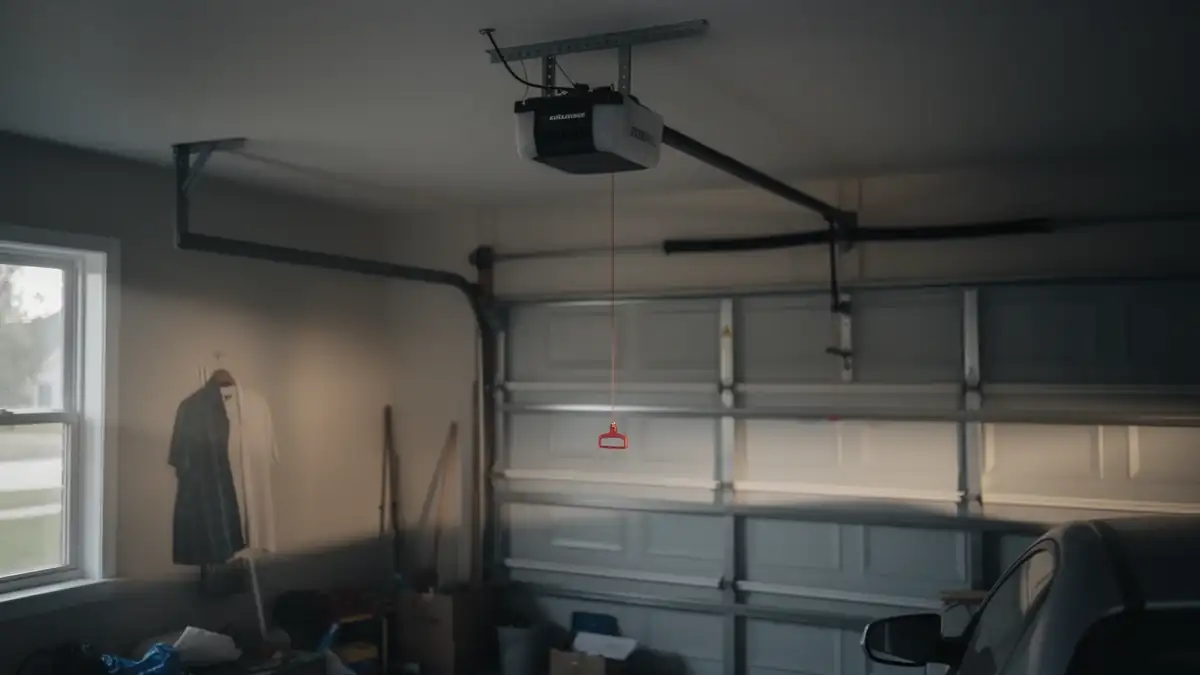
First, the breaker. If the opener is dead but the garage lights work, you're probably not dealing with a motor problem at all. Second, the wall switch and the sensors at the bottom of the track - a knocked sensor will stop the door from closing even with full power. Third, if you have a battery backup unit, check the indicator light on it. A solid or blinking red light usually means the battery is past its useful life, not that the unit itself has failed.
Fourth, find the manual release cord. In a house built in the 1960s or 70s, the garage door is often the only way in or out during a daytime power cut, and a lot of homeowners have never actually pulled that cord to test it. Do it once when the power is on, not during the outage, so you know the door drops cleanly and you can lift it by hand.
We don't do electrical panel work - if the issue traces back to the breaker box itself, that's a call for a licensed electrician, not us.
What the Weather Here Does to It
Randolph sits in a severe cold climate band
And that cold works on an opener in ways that have nothing to do with the power grid. Grease inside the gearbox thickens below a certain temperature, which makes the motor work harder to turn the drive gear every single start. On a plastic gear that's already a few decades old - common on openers installed when a lot of this area's housing stock, built mostly in the 1960s and 70s, first got automatic doors - that extra strain is what finally strips the teeth.
Cold also shortens battery life fast
A backup battery rated for a certain number of cycles at room temperature delivers noticeably fewer once the garage temperature drops into the range we see here most winters. That matters because power cuts and hard cold often arrive together - ice loading on lines, not just low temperatures - so the backup is working its hardest exactly when it's weakest.
Belt-drive openers handle the cold better than chain-drive in general, but neither is immune
If your opener predates the 2000s, assume the cold is taking a bite out of its remaining life every winter, not just this one.
What Is Going On
Put it together and the pattern in Randolph is consistent: a housing stock with a median build year around 1964, openers retrofitted onto circuits that weren't designed for them, and a climate that stresses both the mechanical parts and the battery backup every winter. That's three separate things, and when one goes wrong it usually looks like the other two.
A dead opener during a power cut isn't one problem, it's the end of a chain - old wiring, an aging gearbox, a battery that's lost its capacity in the cold. Fixing one part without looking at the others just means you're back here next winter.
We can't predict when a specific circuit or gear is going to fail, and we're not going to pretend we can. What we can tell you is that in houses from this era, these three points are where it breaks, in roughly that order of likelihood. If your opener is original to a house built before the 1990s, plan on at least one of these catching up with you eventually, and it's worth having the manual release tested before that happens rather than during the outage.