What Most People Get Wrong
Most people picture a service call as a five-minute fix: a squirt of lubricant, a tightened bolt, done. That's not what happens on a lot of the doors we see here. Housing in this area was mostly built between 1938 and 1996, with the median landing around 1964, and most of the stock across the 116 named areas we work in dates to the 1960s and 70s. That means the door, the track, and sometimes the opener are original or close to it.
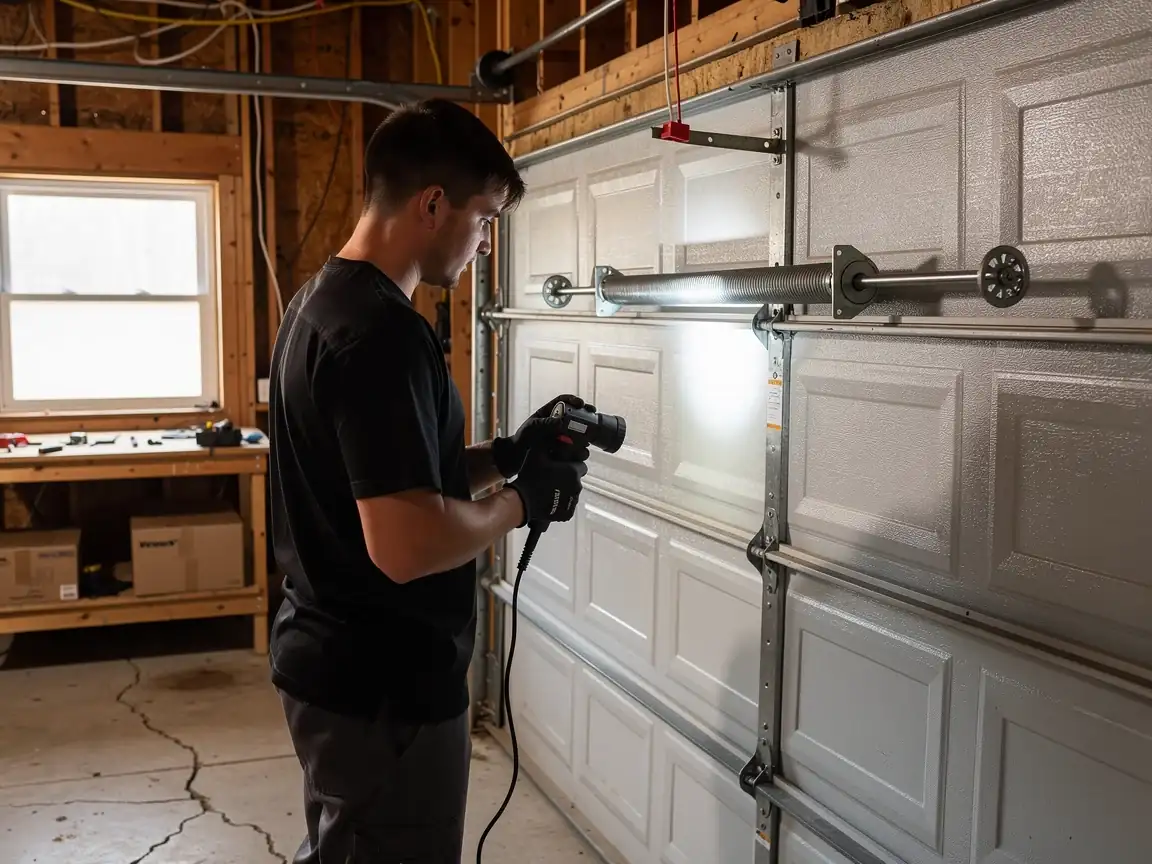
A call on a house like that isn't a quick tune-up. It's figuring out whether the torsion spring was ever sized for the door currently hanging on it, whether the track has been re-shimmed over the decades as the house settled, and whether the opener's gear set has worn past the point of a simple part swap. People expect us to show up, oil the hinges, and leave. Sometimes that's true. More often, on a door this old, the call starts with taking the hardware apart enough to see what's actually under the surface, because the symptom you called about (a noisy door, a door that won't close all the way) is rarely the actual problem on hardware this age.
What to Check
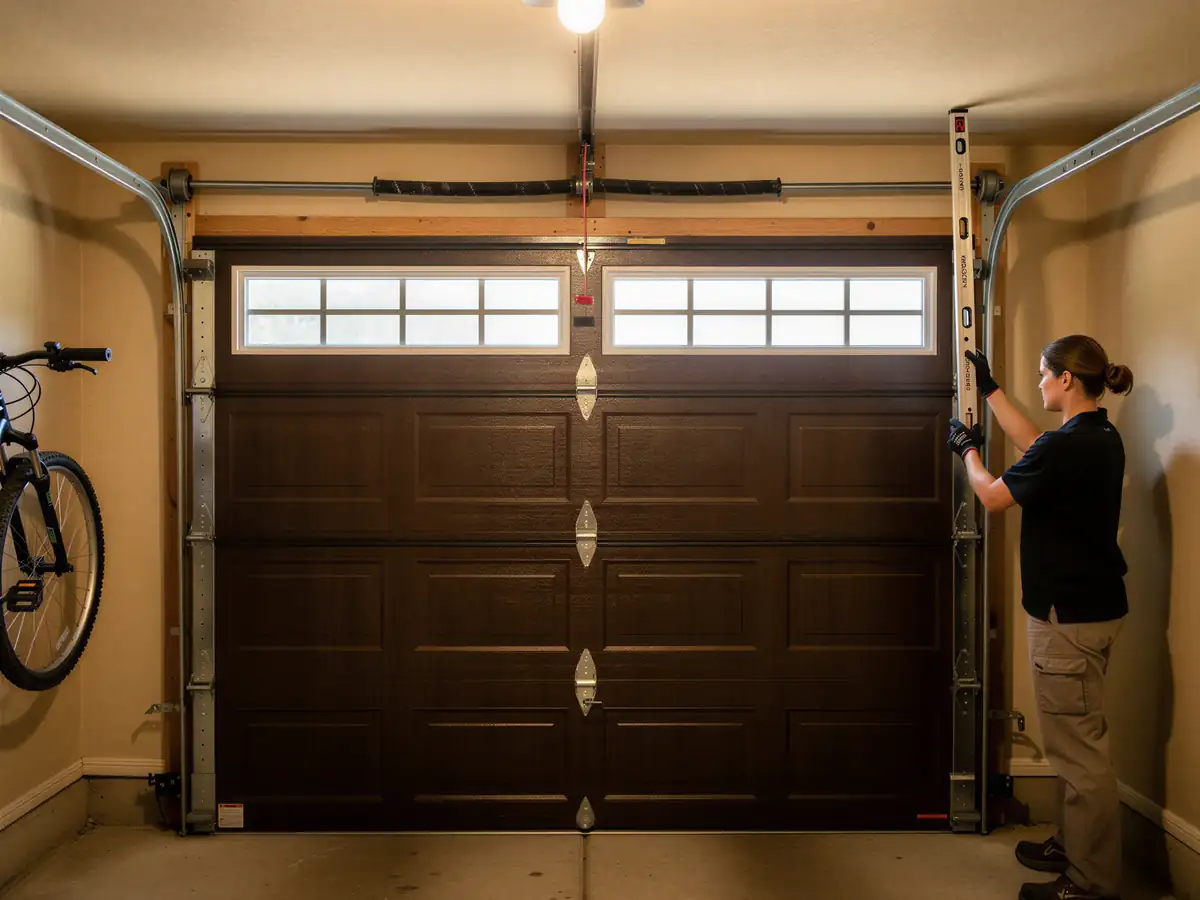
Before you call anyone, there's a short list worth walking through yourself. Stand the door open halfway and let go. If it drops or shoots up, the spring tension is off, and that's not a DIY fix. Look at the bottom corners of the panel for rust or rot, especially on doors that have been sitting since the 1960s or 70s without a repaint. Check the track brackets where they bolt to the frame; on houses this old, wood framing around the opening has often shifted enough that the brackets are no longer square.
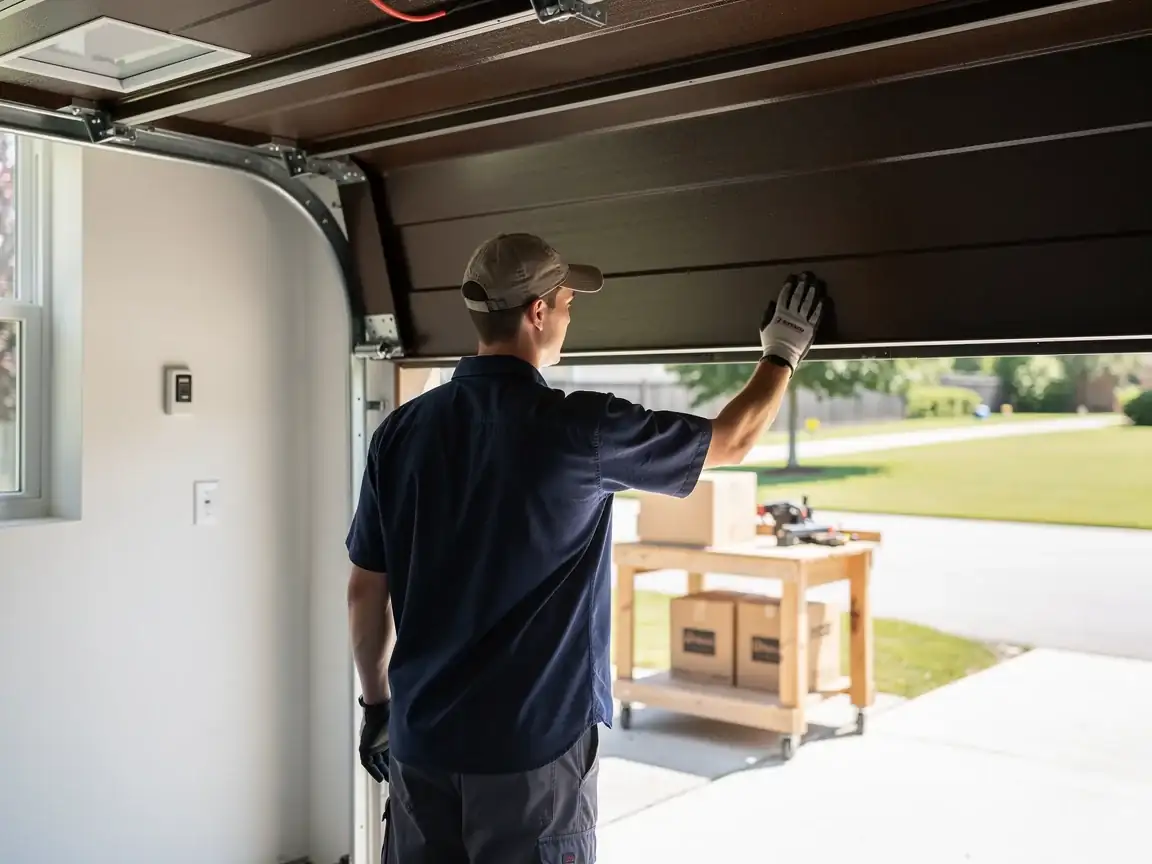
Pull the manual release and move the door by hand. If it's heavy or binds partway, something downstream (rollers, hinges, or the spring itself) is carrying load it shouldn't be. Listen for grinding from the opener head when it runs, which usually means the gear inside has worn teeth, a common failure on units that have been running since the house was newer construction.
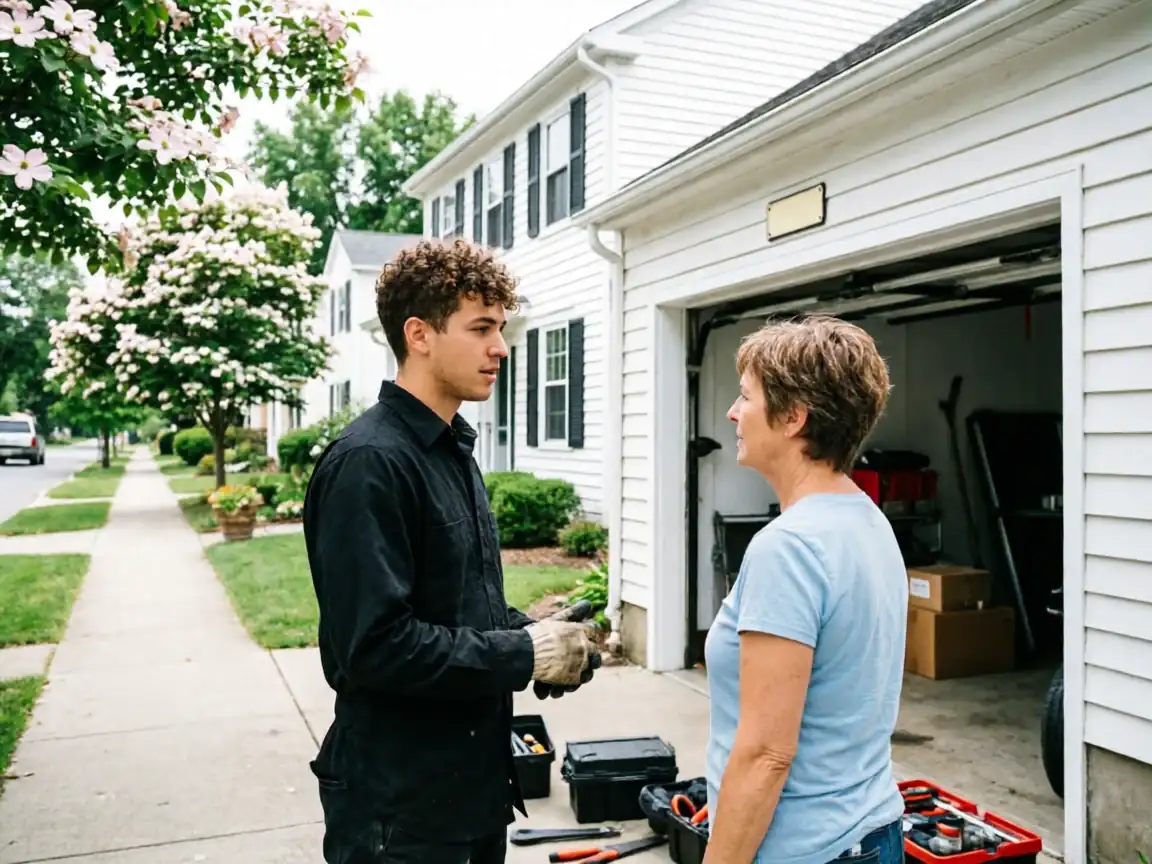
Write down what you see before the call. A technician who knows the door's probably original to a 1960s or 70s build goes in already expecting certain parts, and that saves you a diagnostic visit that just confirms what you could have told them on the phone.
What the Weather Here Does to It
This area sits in a cold-severe climate band
And that matters more to a garage door than people expect. Steel torsion springs stiffen in sustained cold, which changes how much force the opener motor needs to lift the same door it handled fine in October. On original hardware from the 1960s or 70s, that extra strain is often the thing that finally snaps a spring that was already near the end of its life.
Cold also thickens old grease inside opener gearboxes until the motor runs hot just turning over
And it shrinks rubber weatherseals at the bottom of the door until gaps open up along the slab. On a house built in this era, that gap wasn't a problem when the door was new and sealed tight, but decades of seasonal freeze and thaw on the slab and the frame around the opening have usually moved things just enough that the seal never sits flush anymore.
We see the jump in calls follow the cold snaps, not because something breaks overnight
But because the cold is the last straw on hardware that was already worn thin from forty or fifty years of swinging through winters like this one.
What Is Going On
Most of what we find on a service call in this area comes down to age meeting load. The door itself might be fine, but the spring underneath it was sized for a lighter panel than the insulated steel one that got swapped in at some point over the last fifty-plus years, and that mismatch shows up as a door that's hard to lift by hand or an opener that strains every time it runs.
With median household income here at $146,174, plenty of owners decide once a spring or opener motor fails that it's time to replace the whole unit rather than keep patching hardware from the 1960s or 70s. That's a fair call in a lot of cases, but it's not automatic. A sound door with a worn spring is usually cheaper to repair than replace, and we'll tell you that straight.
Here's the honest limit: if the track or the framing around the opening has shifted enough from decades of settling that nothing squares up anymore, that's a bigger carpentry problem than a service call covers, and we'll say so rather than force a door into an opening it doesn't fit.