What You Pay
We don't post a flat number for opener repair because what's actually wrong varies more than owners expect, especially on a door this age. A Hopatcong house built around the area's 1962 median usually still has its original chain-drive opener, or a replacement from decades back, and the failure on those units is almost never the motor itself - it's a stripped gear, a burnt circuit board, or a dead capacitor. Each of those is a different job with a different parts cost.
What we can tell you is how we decide repair versus replace. With median household income here at $114,057 across Hopatcong's roughly 5,842 households, most owners we talk to want the existing opener fixed if the drive gear and motor are sound - that's the cheaper path and it's usually the right one. If the logic board is gone on a unit old enough that the manufacturer no longer makes that board, replacement is the honest answer, not a repair quote that won't hold.
We give you the number after we've looked at the unit in your garage, not before. A phone guess on an opener this old is a guess, and we'd rather tell you that up front than quote you something we have to change once the cover's off."}
Doing It Yourself
Swapping a remote battery, resetting the travel limits, or cleaning the photo-eye lenses - those are fine to do yourself, and plenty of Hopatcong owners already have. Where it stops being a DIY job is the gearbox and the circuit board, and on a chain-drive unit from the 1960s-70s building wave that's most of what goes wrong.
The gear inside an older opener is usually nylon, and it strips teeth over time, especially with the cold-to-hot swings a garage here sees through the year. Replacing it means pulling the motor housing apart, and on a unit this old you're often hunting for a part the manufacturer stopped stocking years back. We'll tell you straight if that part doesn't exist anymore - at that point the honest move is a new opener, not another hour chasing a part number online.
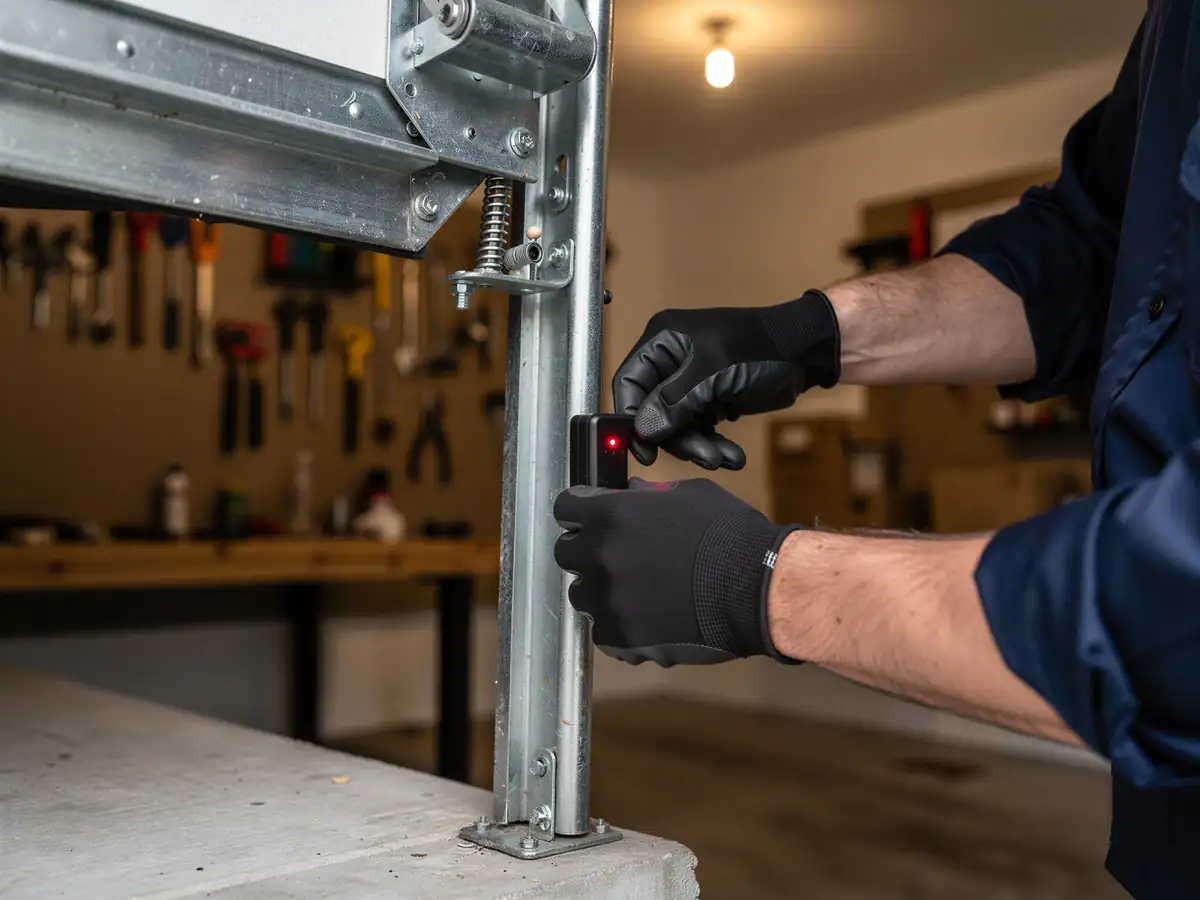
The other thing we won't talk you out of calling us for: the opener's travel and force settings control how hard the door slams down if something's wrong with the spring or cable. Get that wrong on your own and you've got a door that comes down too fast on whatever's underneath it. That one's not worth the gamble.
How We Fix It
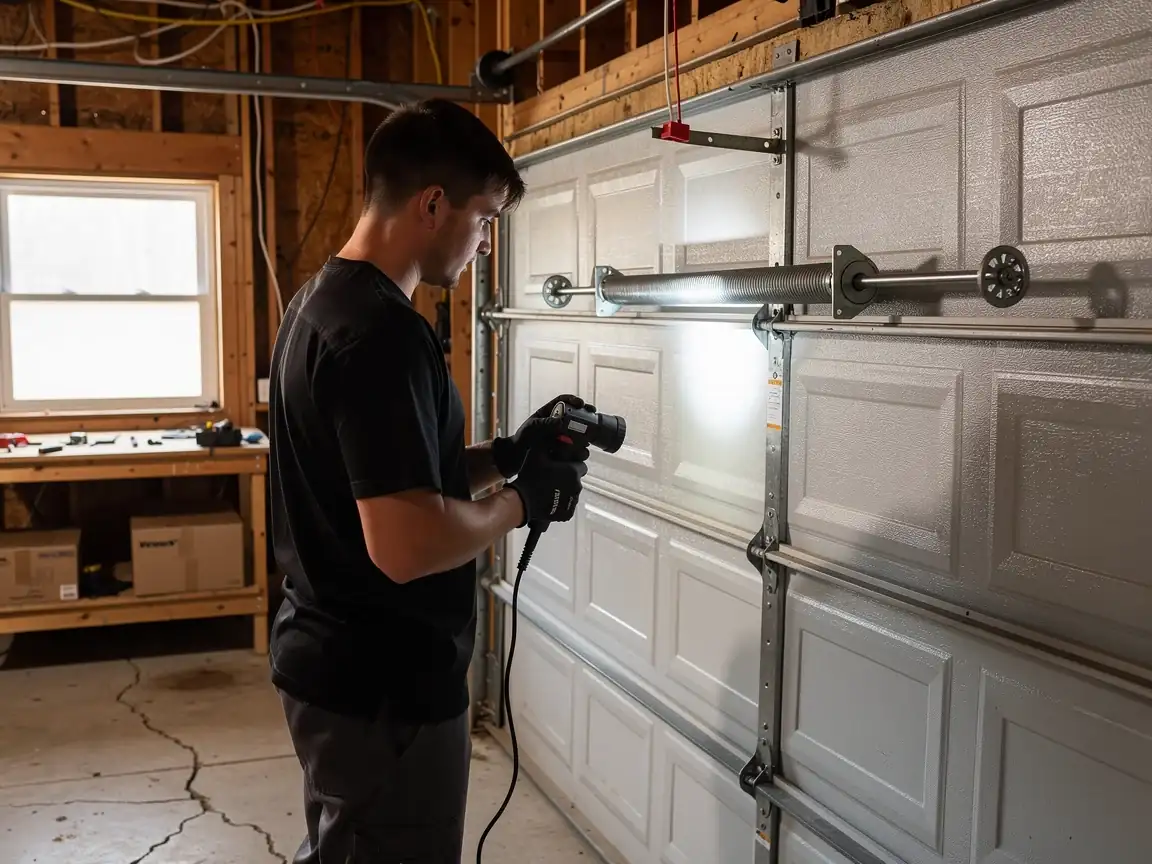
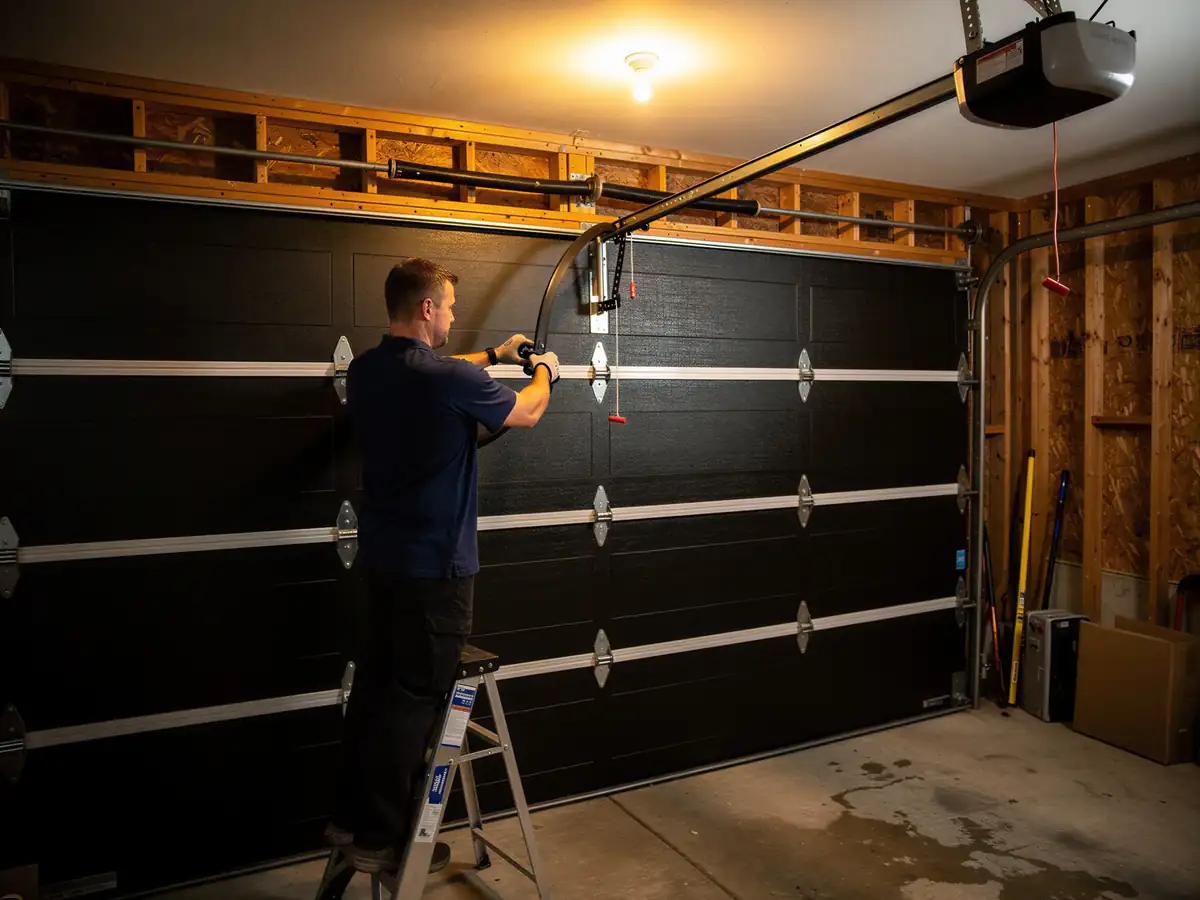
We start by running the opener through its cycle and listening
A grinding chain, a motor that hums but doesn't turn the drive, or a unit that clicks and quits all tell us something different before we've opened a single panel. On the 1960s-70s stock common through this corner of the service area, the usual suspects are a stripped drive gear, a failed capacitor, or a circuit board that's taken on moisture over a cold Hopatcong winter.
Hopatcong falls inside our COLD severe service band
And that matters for openers specifically: cold grease inside the gearbox thickens up, the chain tensions wrong, and a board that's been through enough freeze-thaw cycles starts failing intermittently before it fails for good. We check the board's solder joints and the capacitor before we assume the motor's bad, because replacing a motor when the board's the problem is a wasted job.
If the opener's original to a door built around 1962
We also check whether the opener's force settings were ever matched to the door's actual spring weight - a lot of older installs never were, and that mismatch wears the opener out faster than normal use would. We fix what's actually broken, not just the part that's easiest to swap.
What Is on the Truck
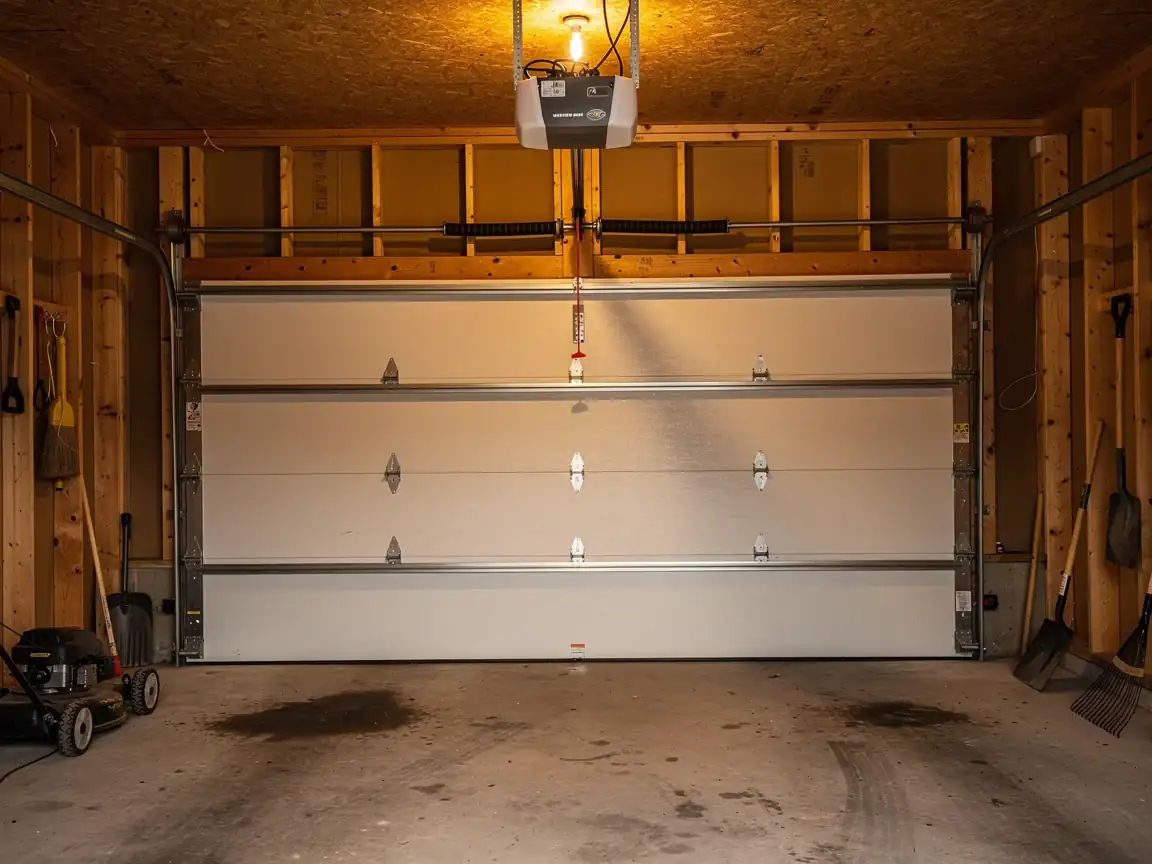
For an opener call out to Hopatcong, the truck carries drive gears and sprockets for chain and belt units, capacitors, logic boards for the openers still in wide production, photo-eye sensor pairs, and wall console and keypad hardware. That covers the repair on most of what's actually installed on doors from the area's 1960s-70s building wave.
What it doesn't carry is a board for every opener ever made. If your unit is old enough that the manufacturer discontinued the board years ago, we won't have it on the shelf, and ordering one - if it still exists anywhere - can take longer than most owners want to wait. That's the honest limitation: on a door this age, sometimes the fastest real fix is a new opener rather than a hunt for a part.
We stock full replacement openers on the truck too, so if a repair isn't practical we can usually get a working door back the same visit rather than scheduling a second trip. Since we're running the 8 miles out from Randolph for the call, we'd rather carry what covers both outcomes than come back twice.
Booking a Visit
We run opener calls to Hopatcong from our Randolph shop, about 8 miles out, so we schedule the visit rather than treat it as a drop-in stop. Tell us what the opener's doing - won't close, reverses on its own, runs but the door doesn't move - and we'll bring the parts most likely to match that symptom on a door from the area's 1960s-70s stock.
If you're not sure whether it's the opener or the door itself acting up, that's fine; a lot of owners can't tell the difference from the garage floor, and it changes what we bring. We'd rather ask a couple of questions on the phone than show up short a part.
See our Hopatcong garage door service page if the issue isn't just the opener - a sagging door or broken spring changes what's actually wrong here. And if you're calling from Randolph itself rather than Hopatcong, our opener repair page for Randolph covers that service area directly.