What Is on the Truck
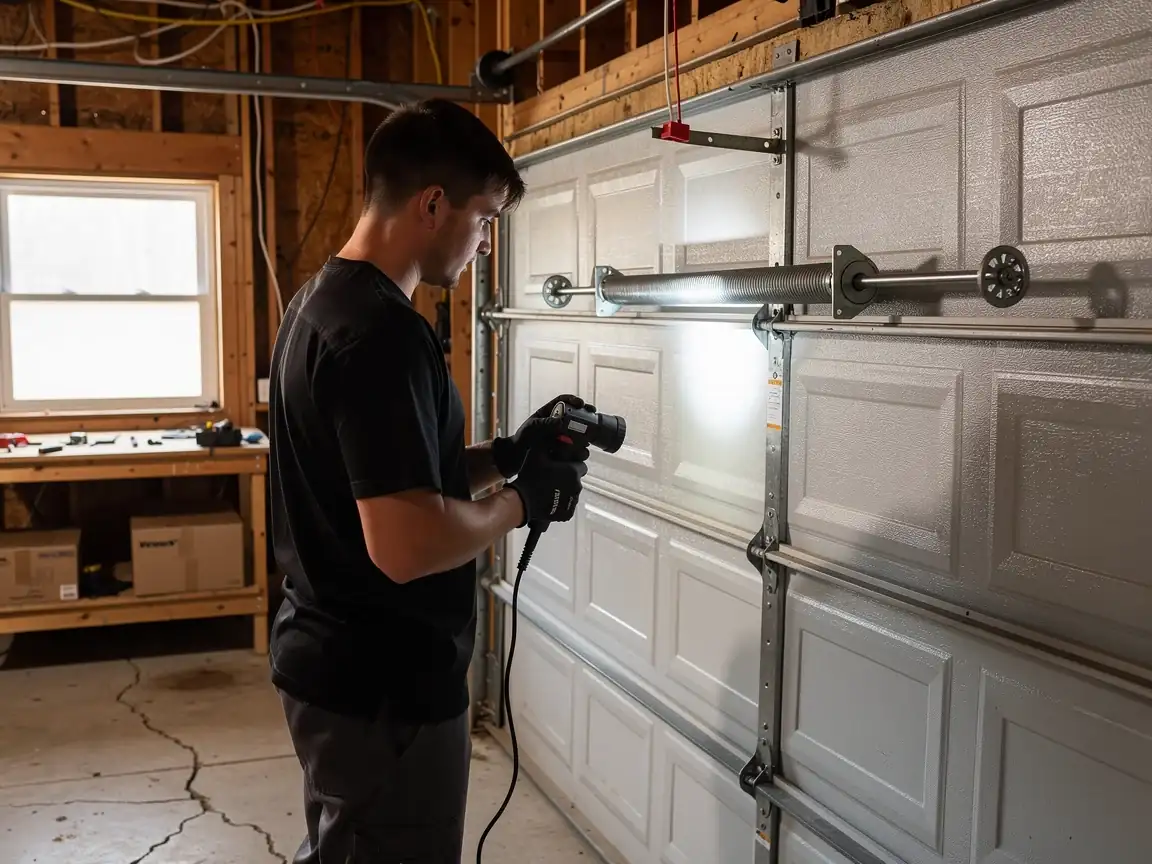
Succasunna's housing stock centers on 1971, a few years newer than the 1964 median across the wider service area, which puts it right at the shift from extension-spring cable drums to the heavier torsion setups that became standard by the mid-1970s. That matters because the cable that fails on a 1971 door often isn't the thick torsion cable people picture - it's the thinner lift cable riding the drum at the end of an extension spring, and it wears differently, stretches differently, and snaps at a different point in the door's travel.
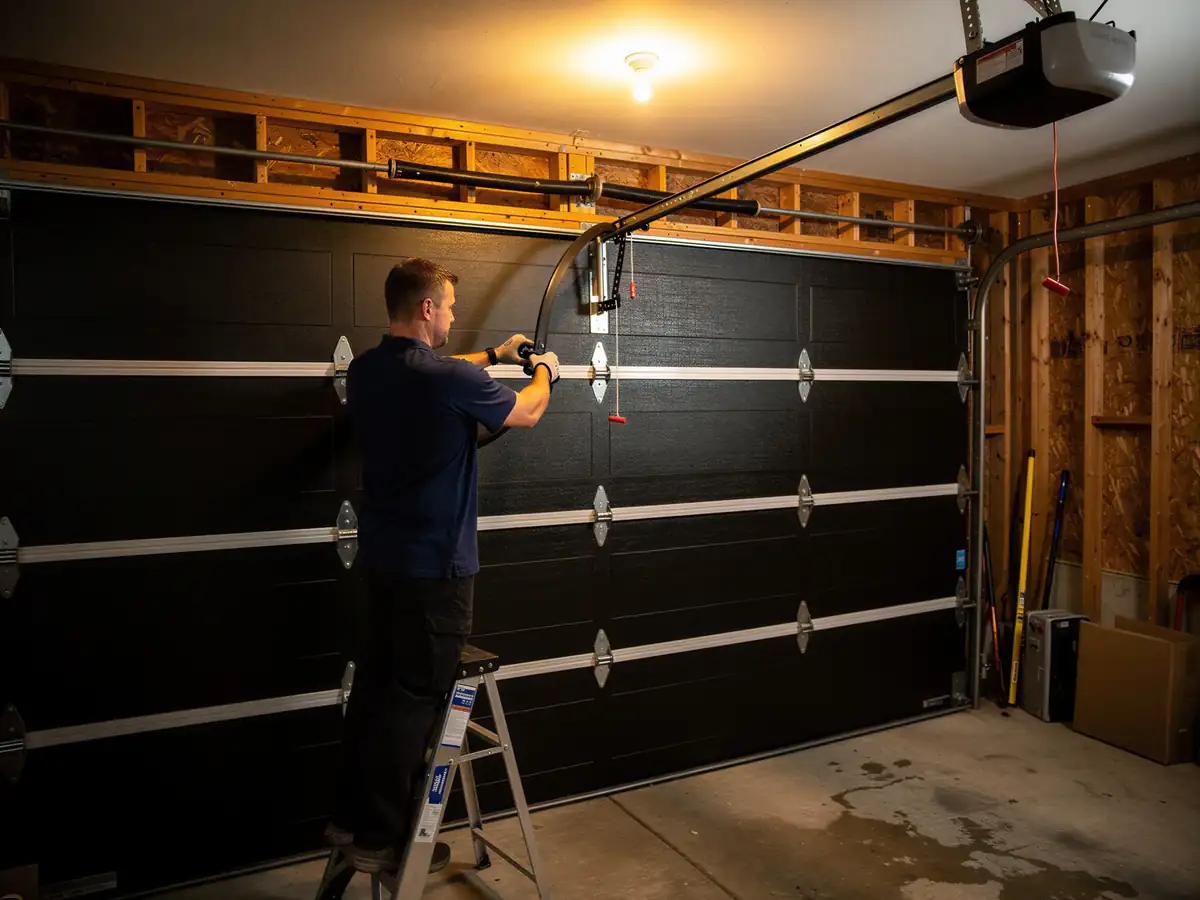
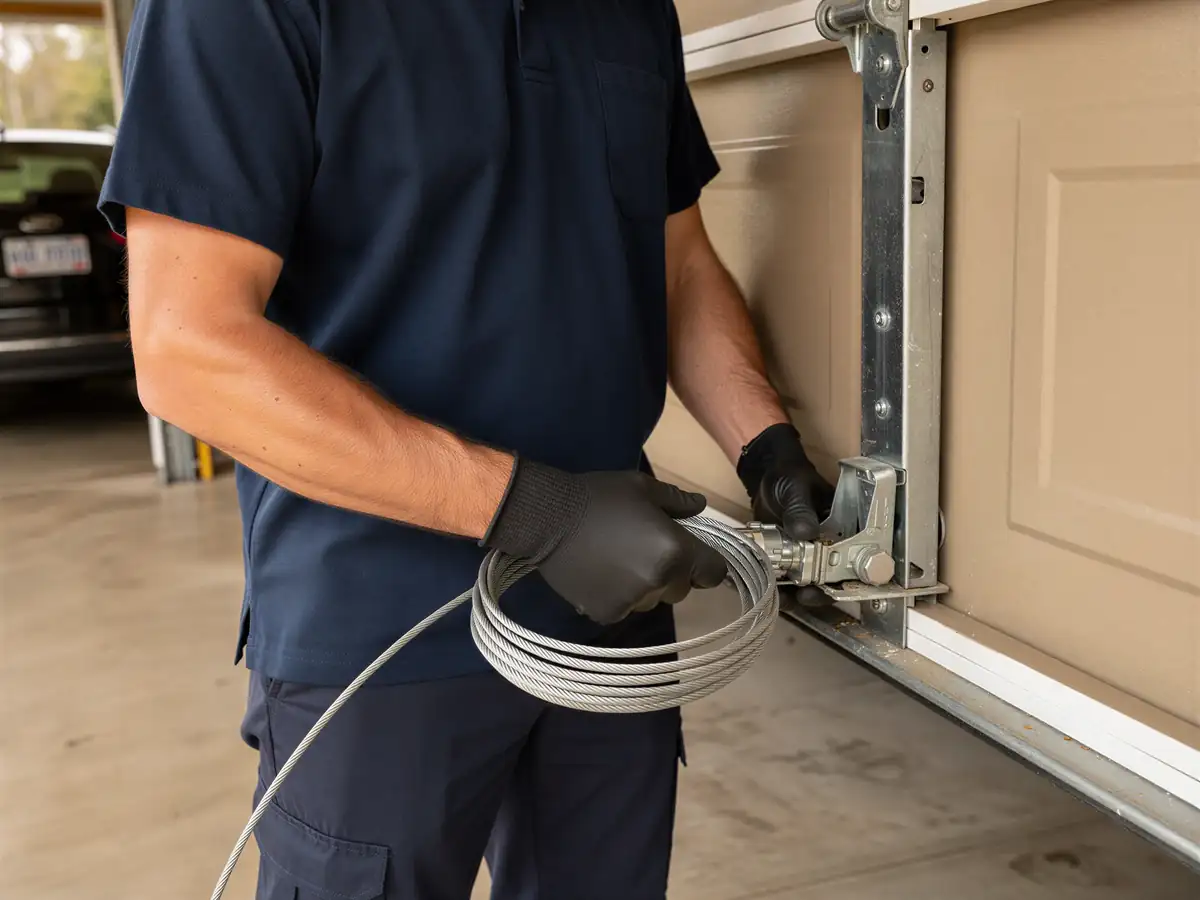
We carry both styles of cable, the drums and fittings that go with 1970s hardware, and the clips and safety cables that a lot of these original setups never had installed. If your door was never retrofitted with a containment cable on the extension springs, we'll point that out - it's a cheap add that keeps a broken spring from becoming a projectile, and it's common on houses from this build era that have never been touched.
We also bring standard torsion cable and drums for the houses in the neighborhood that got a door swap at some point since 1971, because not every house on a given street still has what it shipped with.
Doing It Yourself
A frayed or snapped lift cable is not a spring job, but it's still under load, and on an extension-spring door from this era the spring itself is exposed and under tension right next to where you'd be working. If the cable has already let go and the door is sitting crooked or jammed in the track, don't force it up by hand and don't run the opener to try to clear it - that's how a second cable goes, or how the door comes off the track entirely.
What you can safely check: look at the cable where it wraps the drum at the top corners. Visible fraying, a kink, or rust bloom means it's close to done even if it hasn't broken yet. If you see that on one side, assume the other side isn't far behind - they age at close to the same rate since they've carried the same load for the same years.
We won't talk you through replacing it yourself. The spring tension on these older extension setups is unpredictable once the geometry's off, and it's the single most common way people get hurt on this repair.
What You Pay
We don't post a flat number for cable repair because what's actually on your door changes the job
A single snapped cable on a working torsion system is a different ticket than two worn cables on an untouched 1971 extension setup with no containment hardware. Income levels in Succasunna run higher than the $146,174 median across the service area, and we see that reflected less in what people are willing to pay and more in how fast they call - most owners here get in touch the same day something frays rather than running the door on a bad cable for a few more weeks.
What we can tell you
If both cables are original to a house built in the early 1970s, we'll usually recommend replacing both at once rather than just the one that broke, since the other is carrying the same age and the same load. That's a slightly bigger ticket up front but it avoids a second call six months later for the matching failure.
Where This Job Goes Sideways
The part that turns a cable repair into a bigger job is the drum. On older extension-spring setups, a cable that's been fraying slowly sometimes jumps the drum groove before it fully snaps, and that can chew the drum edge or bend the shaft slightly. If that's happened, replacing the cable alone doesn't fix it - the new cable will re-track wrong and fray again in weeks.
The other failure mode we see on this build era is a track that's shifted out of plumb over fifty-some years of settling. A cable can look fine and still be riding wrong because the track itself has moved. We check both before we quote the job as a simple cable swap, because telling you it's a quick fix and then finding the drum's shot once we're into it isn't how we want to do business.
Winters here fall under the same severe-cold band that covers the whole region, and that cold is what snaps a cable, not a weak spring - the metal contracts, a cable with existing fray gives way on the coldest mornings of the year, which is also when you most need the door to open.
Booking a Visit
We run this job out of Randolph, and Succasunna sits about four miles out - one of the closer stops on the route, inside the ring that also includes Dover, Kenvil, and Wharton at three miles. We don't keep a branch or a depot in town, so we can't promise a same-hour arrival, but the drive itself is short, which matters less for the trip than for how quickly we can get back out if a part needs to be special-ordered for an older setup.
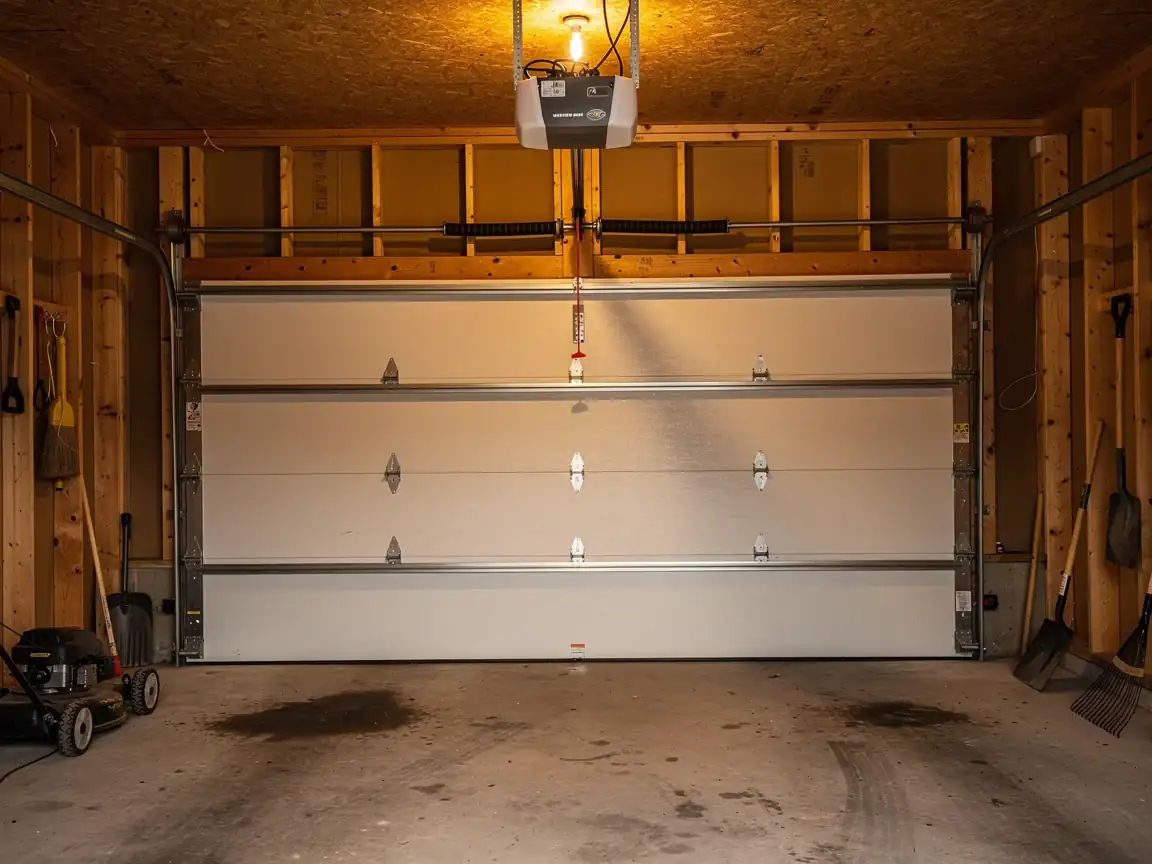
Tell us the house's rough age when you call - 1971 is close enough - and whether the door has extension springs on the sides or a single torsion spring across the top. That one detail changes which cable, drum, and clips go on the truck before we leave, which saves a second trip. If you're not sure, a phone photo of the spring assembly works fine. For anything beyond the cable itself, our Succasunna service page covers the rest of what we do in town.
What Causes It Around Here
With 3,325 households in Succasunna, enough of the stock lines up with that 1971 median that the same cable failure shows up on a predictable run of streets each winter
Original extension-spring doors that have never had the cable swapped, now carrying over fifty years of open-and-close cycles on the same wire. Frayed strands at the drum, rust where the cable sits in a damp track, and a final snap on a cold morning is the pattern we see most.
- 3,325 households
Houses that got a door replacement at some point
Common enough that we can't assume one way or the other - usually went to torsion hardware, and those fail less from age and more from a roller binding in the track and putting uneven load on one cable until it gives. Either way, the fix starts with knowing which hardware is actually on the door, not just how old the house is.