Where This Job Goes Sideways
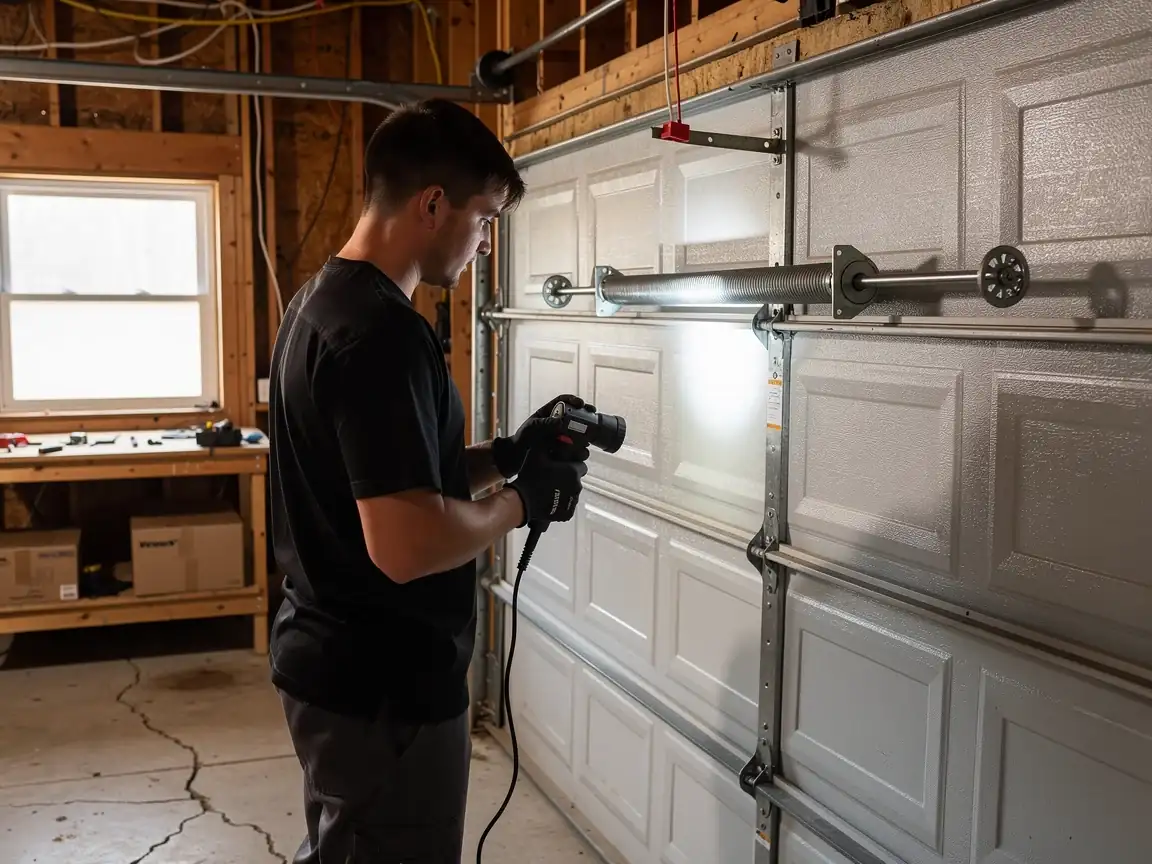
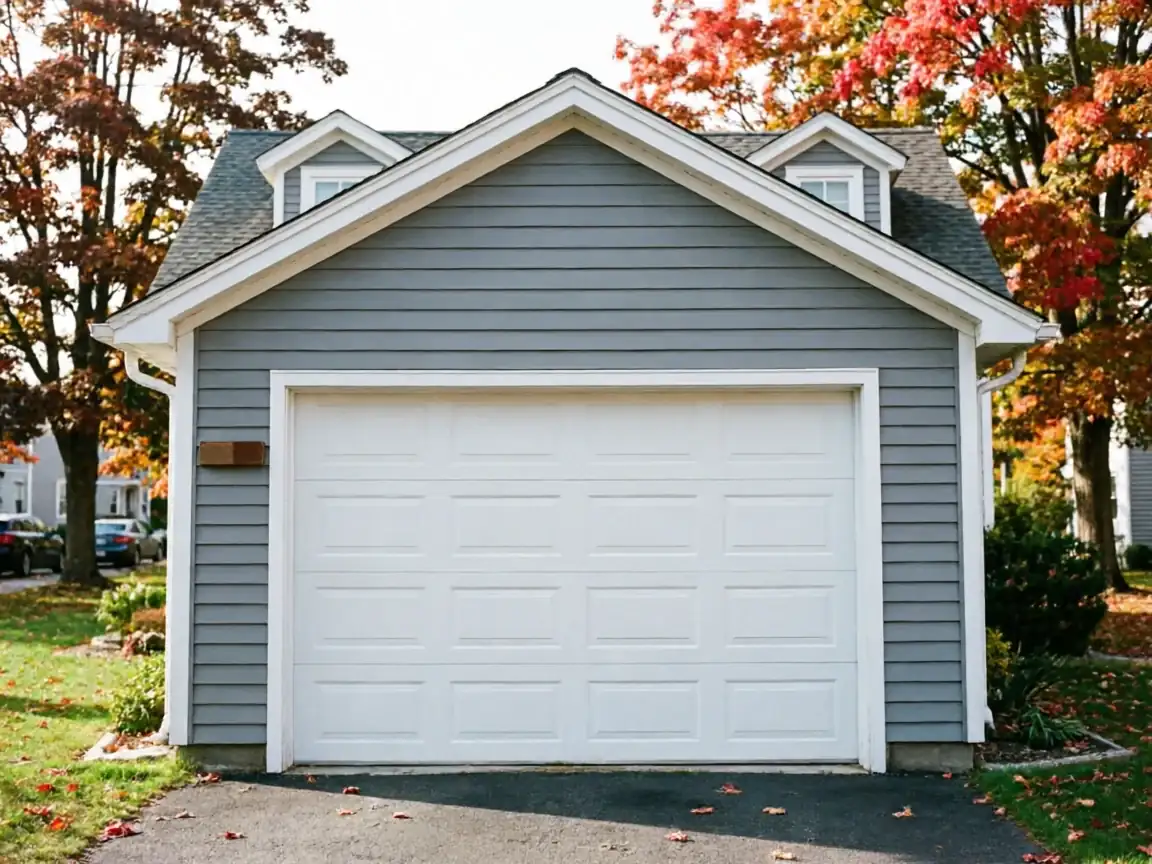
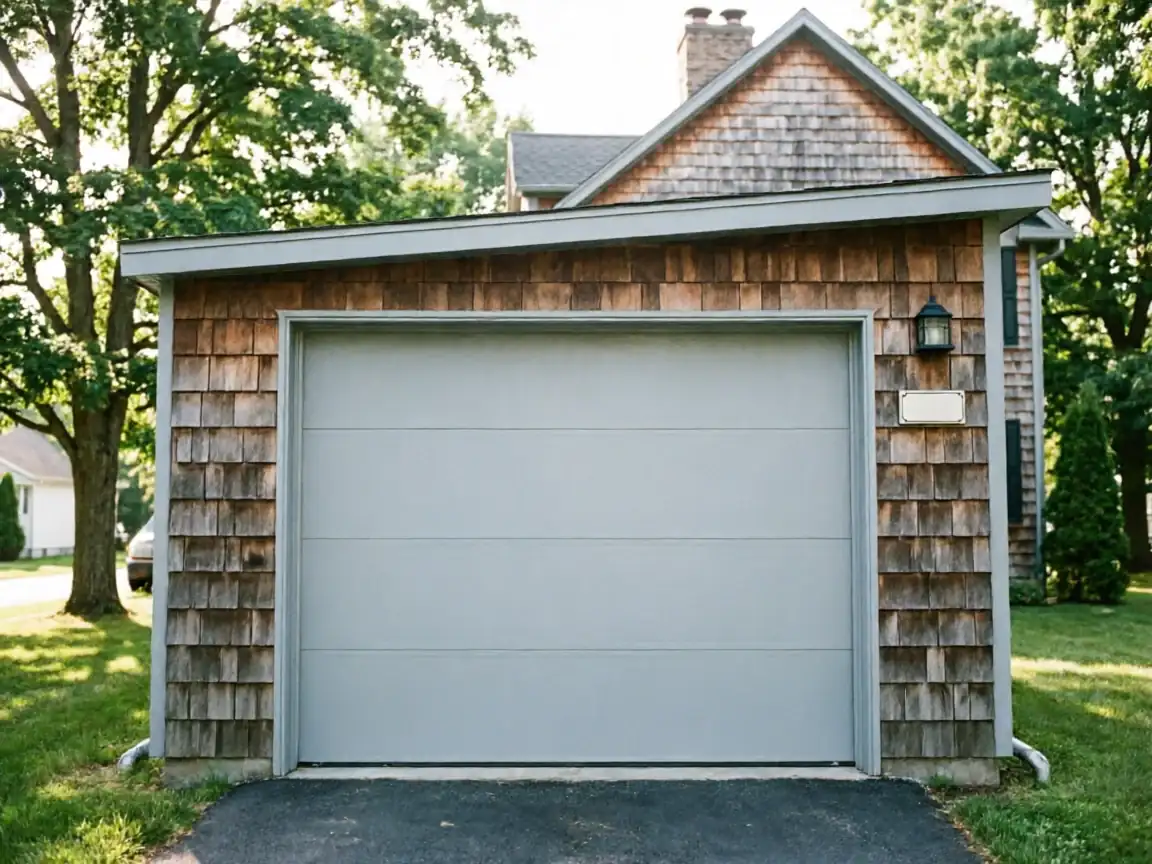
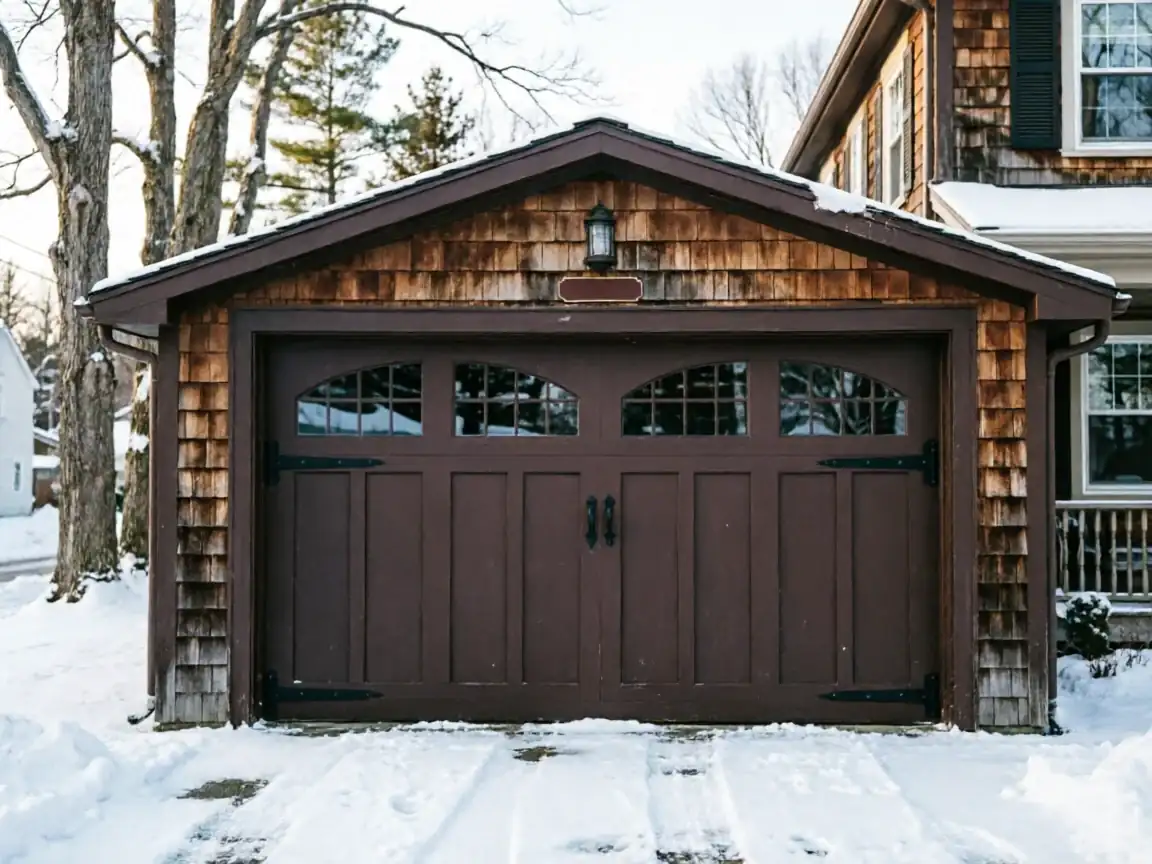
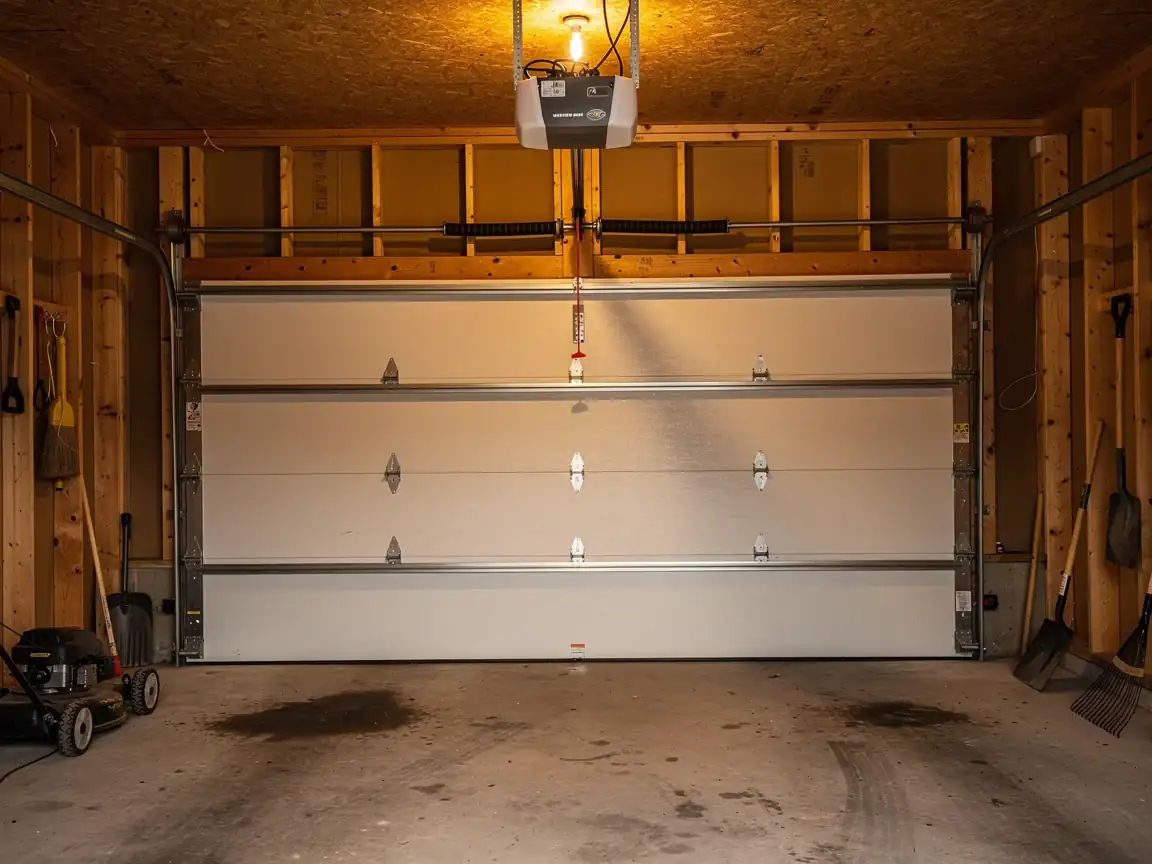
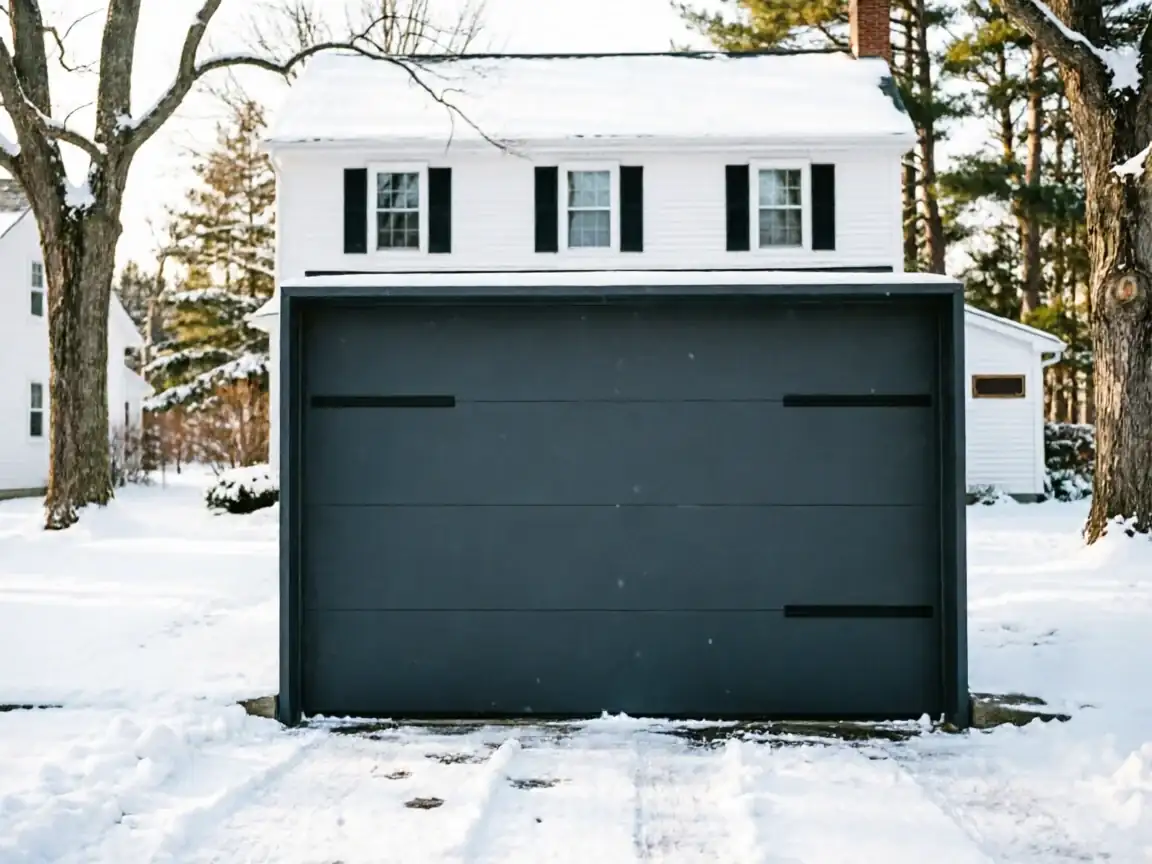
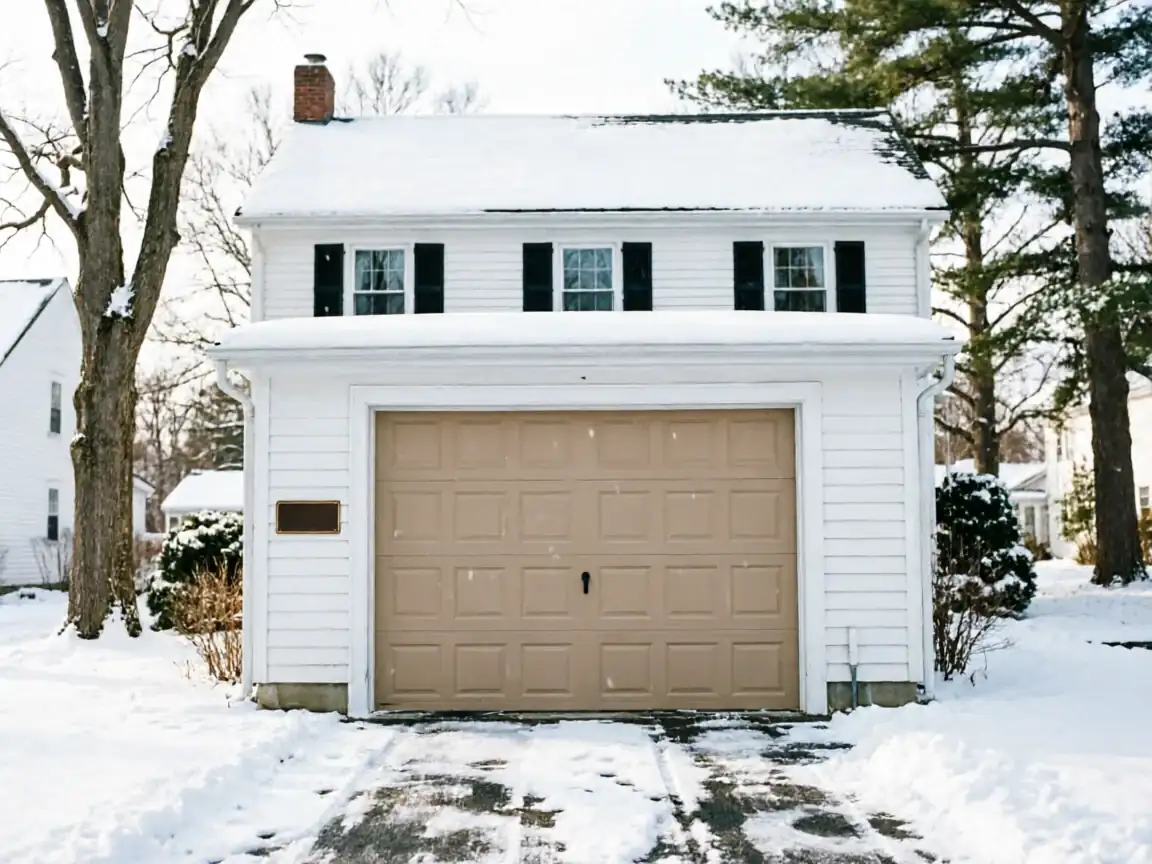
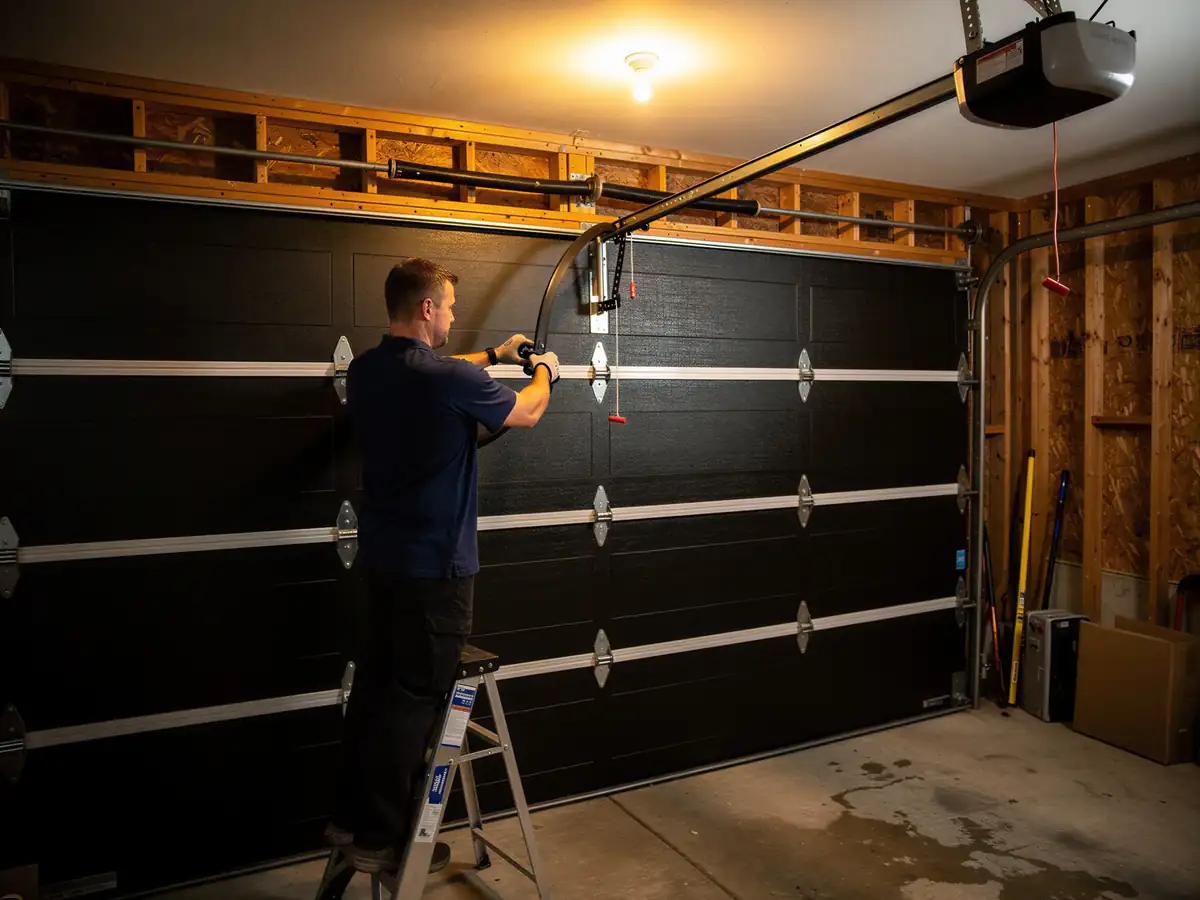
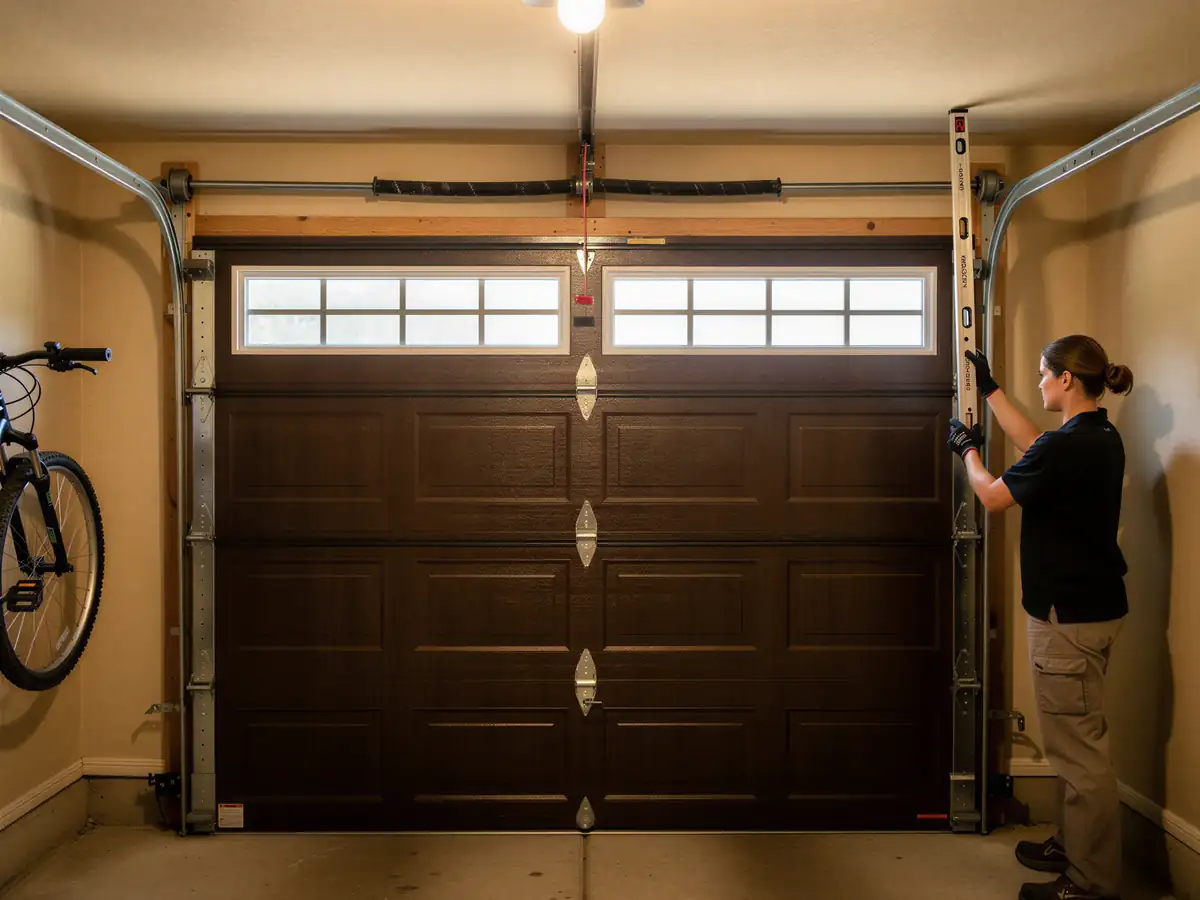
Most garages in Landing went up around 1967, which puts the doors themselves in a specific category: single steel or wood sectional panels, usually 8 or 9 feet wide, hung on torsion springs that were sized for a lighter door than what's often been swapped in since. A lot of these houses have had one door replacement in fifty-plus years, which means the track and the spring are original even when the panel isn't. That mismatch - new door, old hardware - is where the job goes sideways. A spring rated for the 1967 panel doesn't hold a heavier insulated steel replacement, so the opener strains, the cable frays faster, and homeowners call us thinking the opener's dying when it's really the spring doing a job it was never sized for.
We see this pattern across the older pockets near Landing more than in the newer construction further out. It's not a defect in the house, it's just the math of a 55-year-old spring curve meeting a door that weighs more than the one it replaced. First thing we check on any call here is whether the hardware and the panel actually match.
Booking a Visit
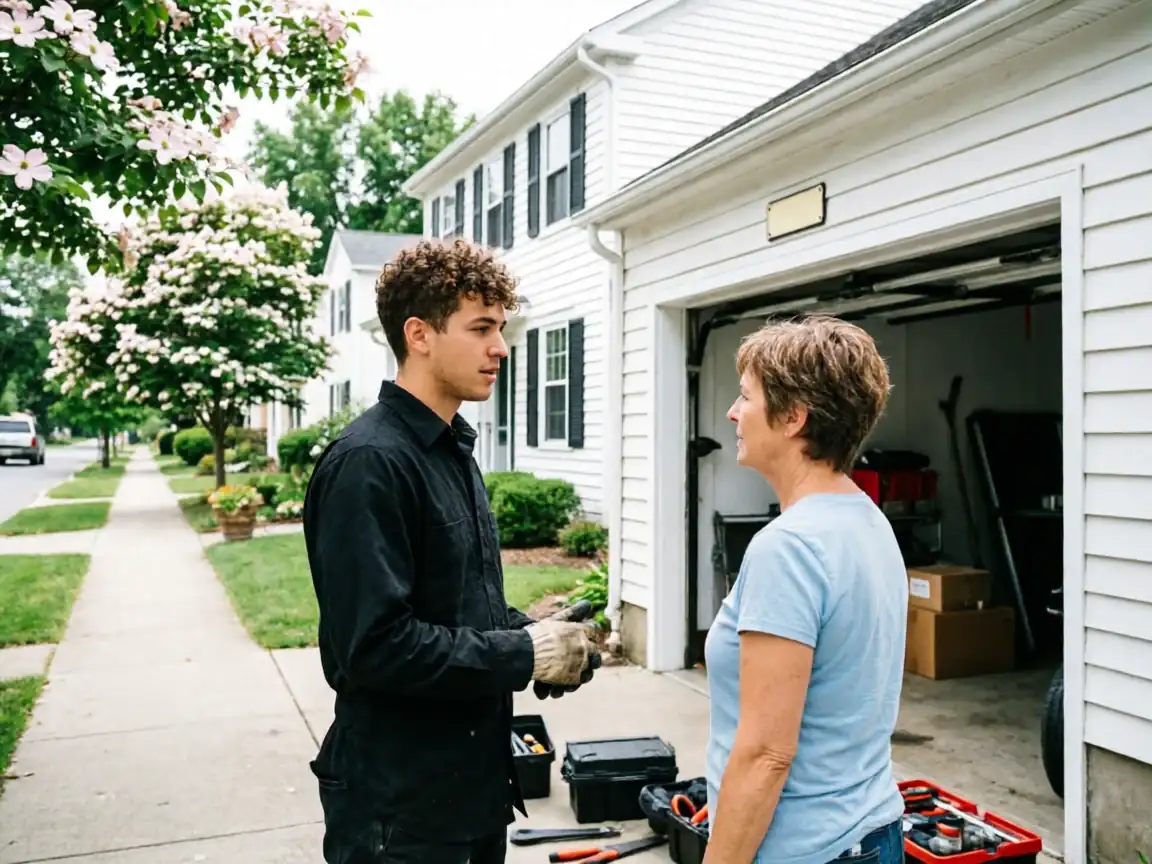
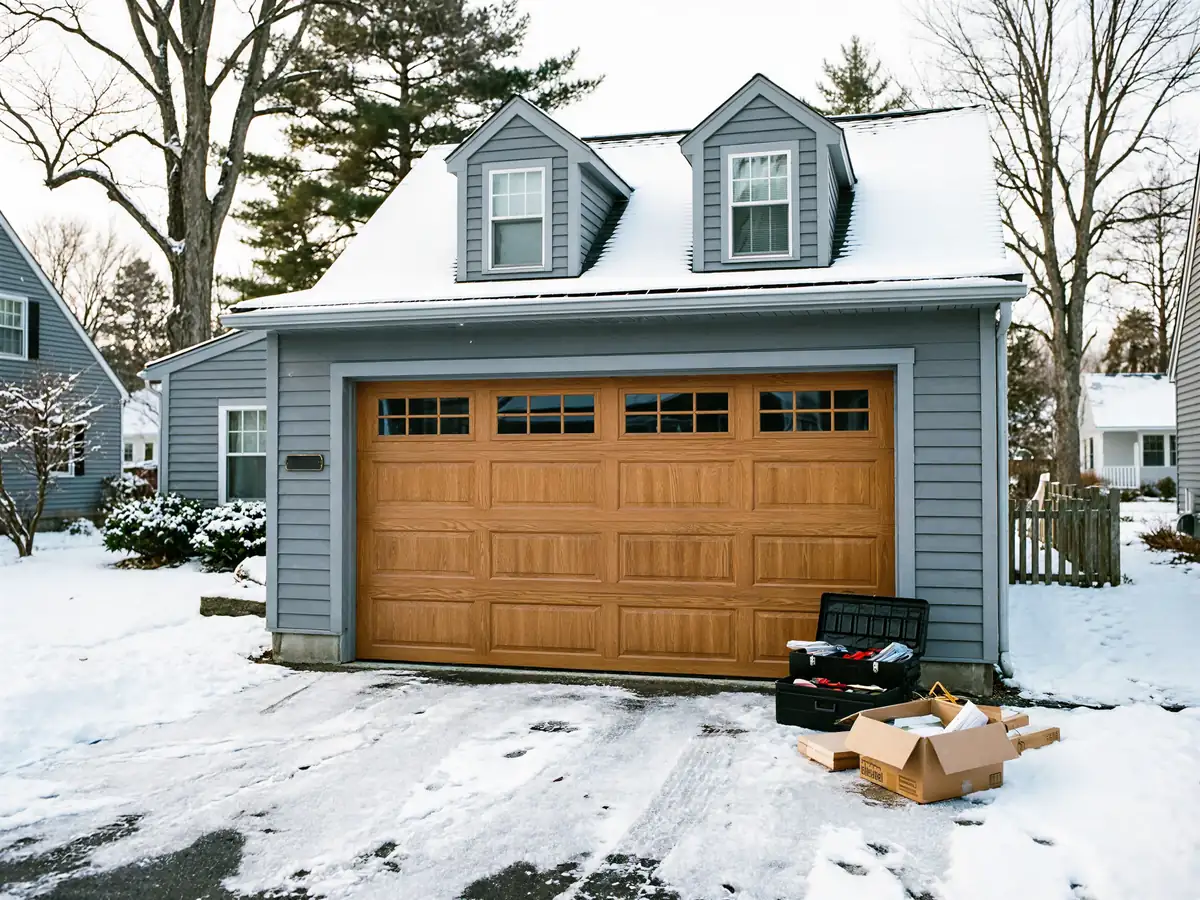
We run this job out of Randolph, about 6 miles from Landing. There's no branch office or local crew stationed in town - it's a truck coming from Randolph with the parts for the call you described when you booked. That distance isn't a problem for scheduling, but it does mean we ask more specific questions up front: what the door looks like, roughly how old the house is, whether the spring is visibly broken or just making noise. The better the description, the less likely we show up with the wrong torsion rod or the wrong size roller.
If you're not sure what's wrong, that's fine too - plenty of calls start as 'it won't open' and end up being a cable off the drum rather than a dead opener. We'd rather ask a second question on the phone than guess at the hardware twice.
What Causes It Around Here
With a median build year of 1967, the standard failure here is age on the moving parts
Not weather damage to the structure. Springs rated for 10,000 cycles wear out around the same calendar point no matter the house, and a door installed new in the late 1960s has had a long run. Add a region climate classed as cold and severe, and the metal fatigue that ends a torsion spring's life happens faster through repeated freeze-thaw cycling on the coil than it would in a milder zone.
Landing's household count is small, just over 1,500 by the numbers we have
And incomes here run a bit under the wider service area's median. That doesn't change what breaks - it's still springs, cables, rollers, and the occasional opener gear - but it does shape what repair option makes sense. We don't push full replacements when a spring swap and a roller set will get another decade out of a door that's structurally sound.
How It Shows Up
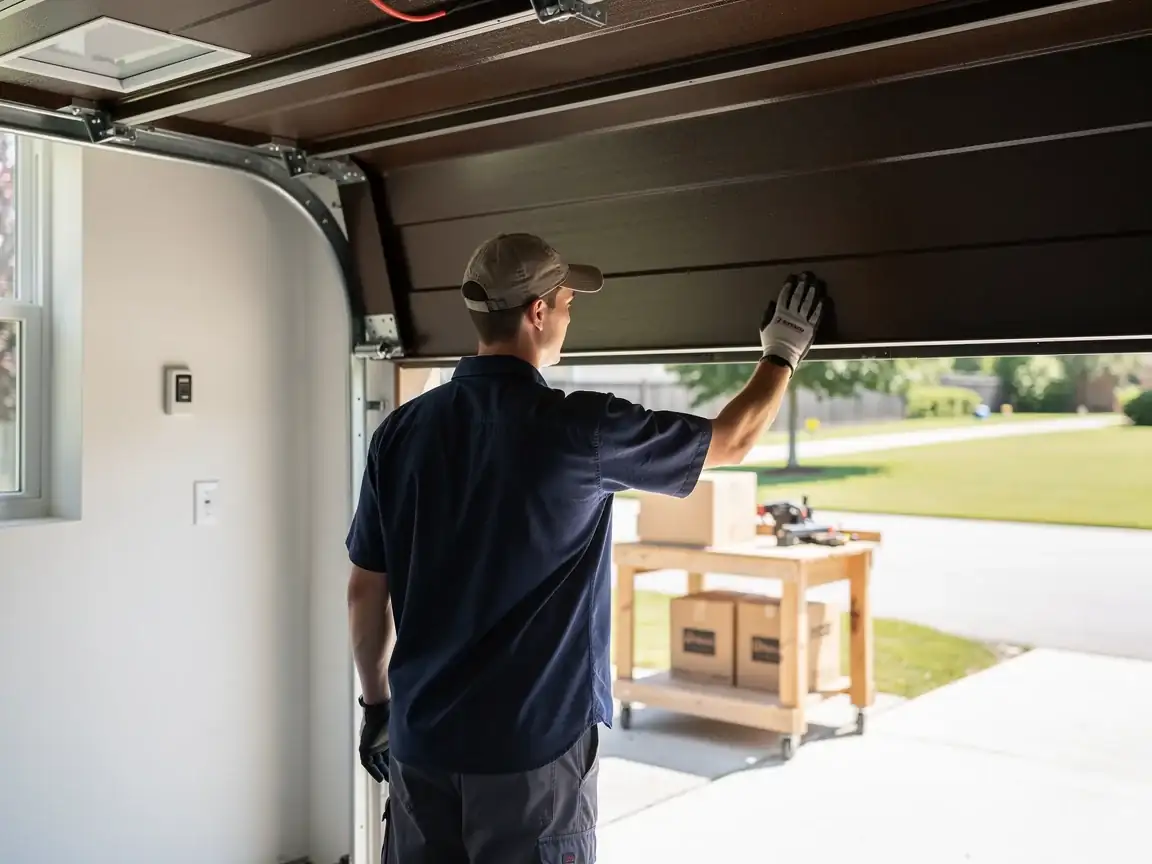
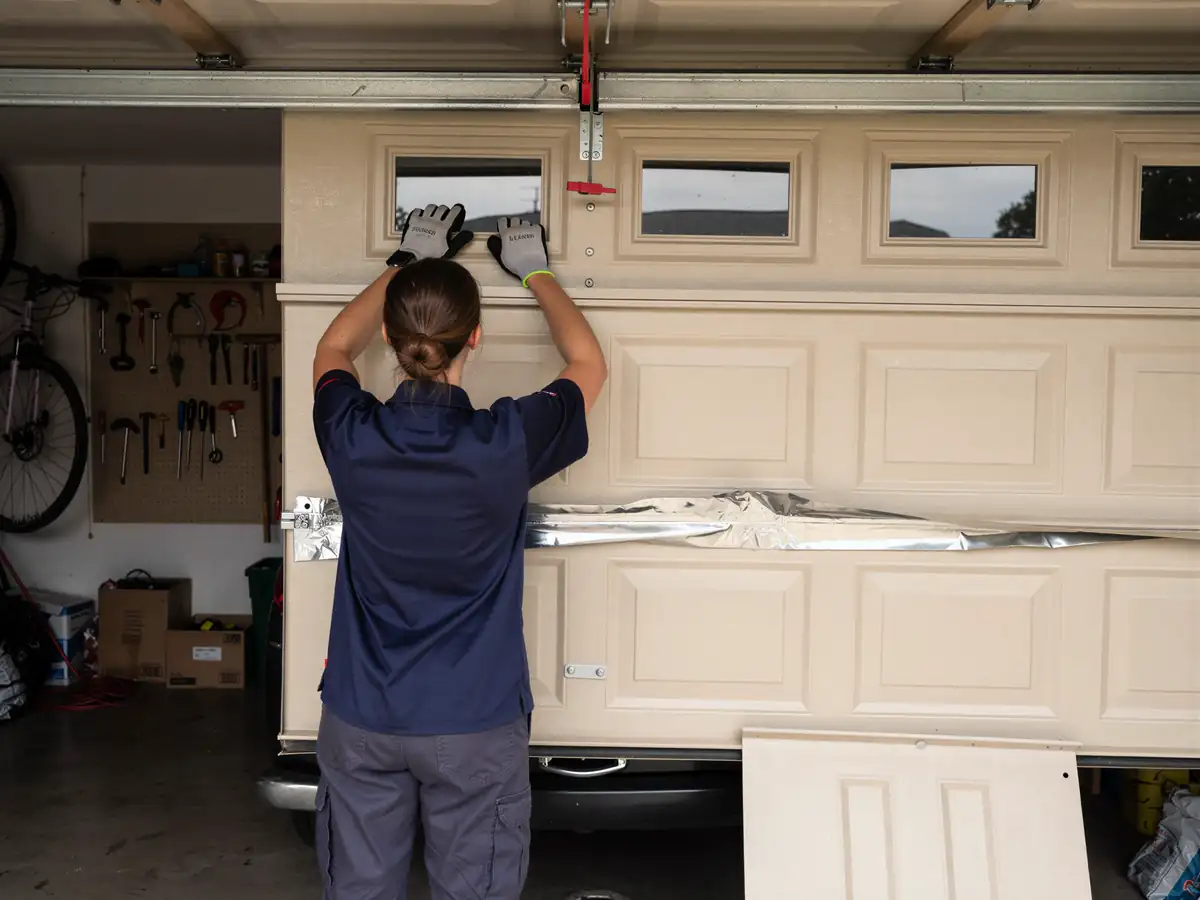
The door that won't open all the way, or drops halfway and stalls, is almost always a spring that's lost tension or snapped outright. You'll often hear it before you see it - a bang from the garage, usually when no one's home, which is the spring letting go. A door that opens fine but closes unevenly, dipping on one side, points to a cable or roller on that side, not the spring.
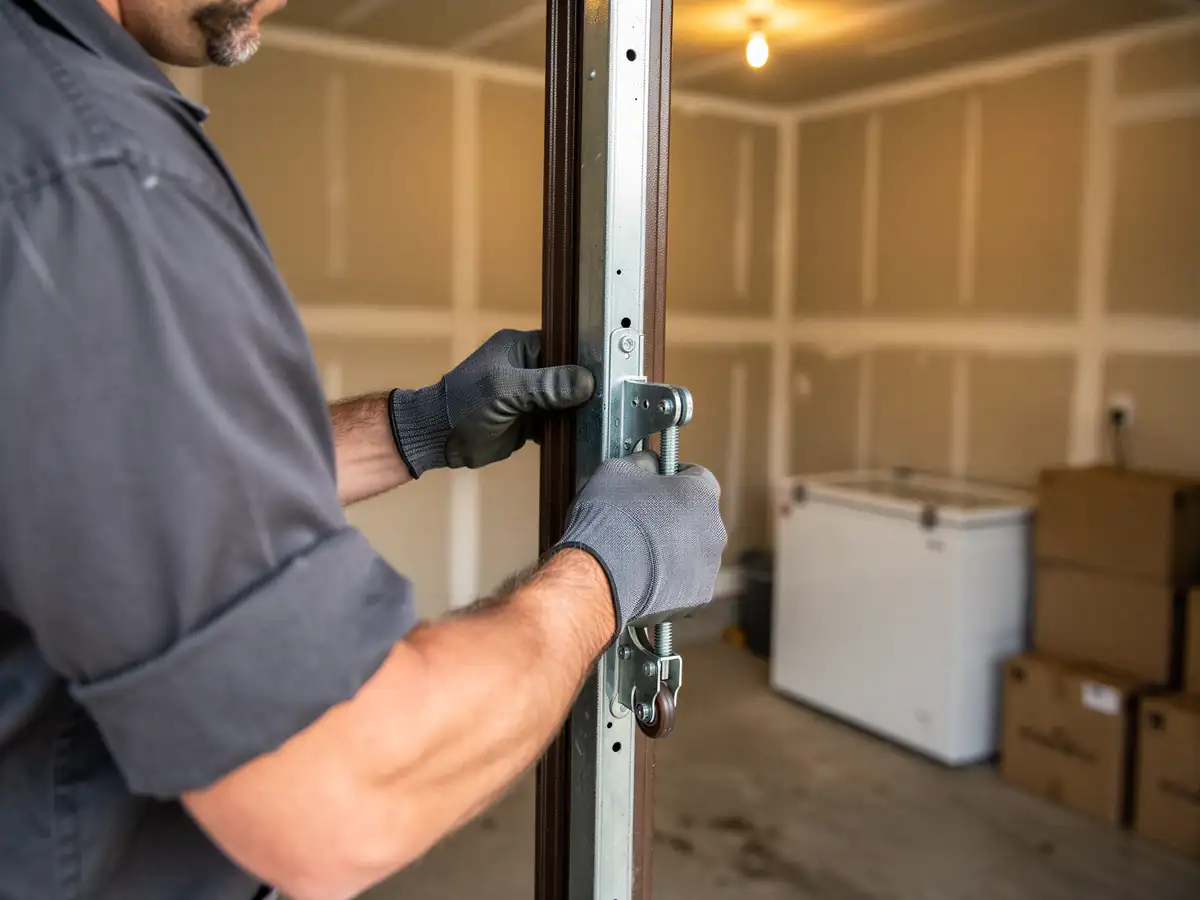
On the older torsion setups common to 1960s construction, a grinding or scraping sound usually means a roller has worn past its bearing and is riding metal-on-metal in the track. That's cheaper to fix early than late - a worn roller left alone chews up the track rail, and then you're replacing track instead of a $20 part.
Doing It Yourself
Lubricating hinges and rollers, tightening loose bolts on the track brackets, and testing the auto-reverse safety feature are all fine to do yourself and worth doing twice a year. What we don't recommend touching is the torsion spring. It's under enough tension to cause a serious injury if it releases while you're working on it, and on a door this old, the winding cones and set screws are frequently rusted or undersized for the tools people have at home.
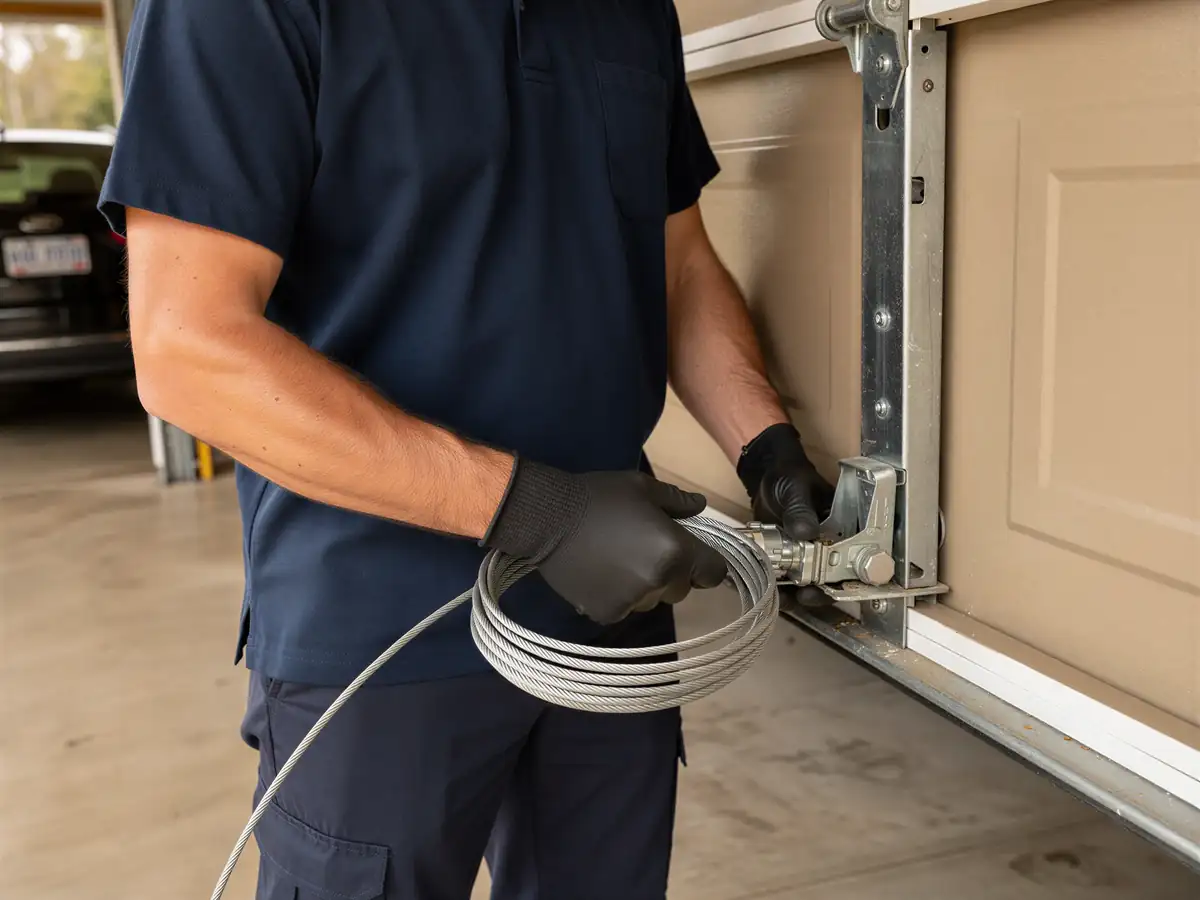
If the door is off its track or a cable has come off the drum, leave it. Those are a service call, not a weekend project, and forcing the door open manually when a cable's off can bend the track enough to need a full replacement instead of a repair.
What Is on the Truck
For calls in Landing we carry torsion springs in the sizes that match 1960s-era door weights, standard-lift cable, steel rollers in both nylon and ball-bearing versions
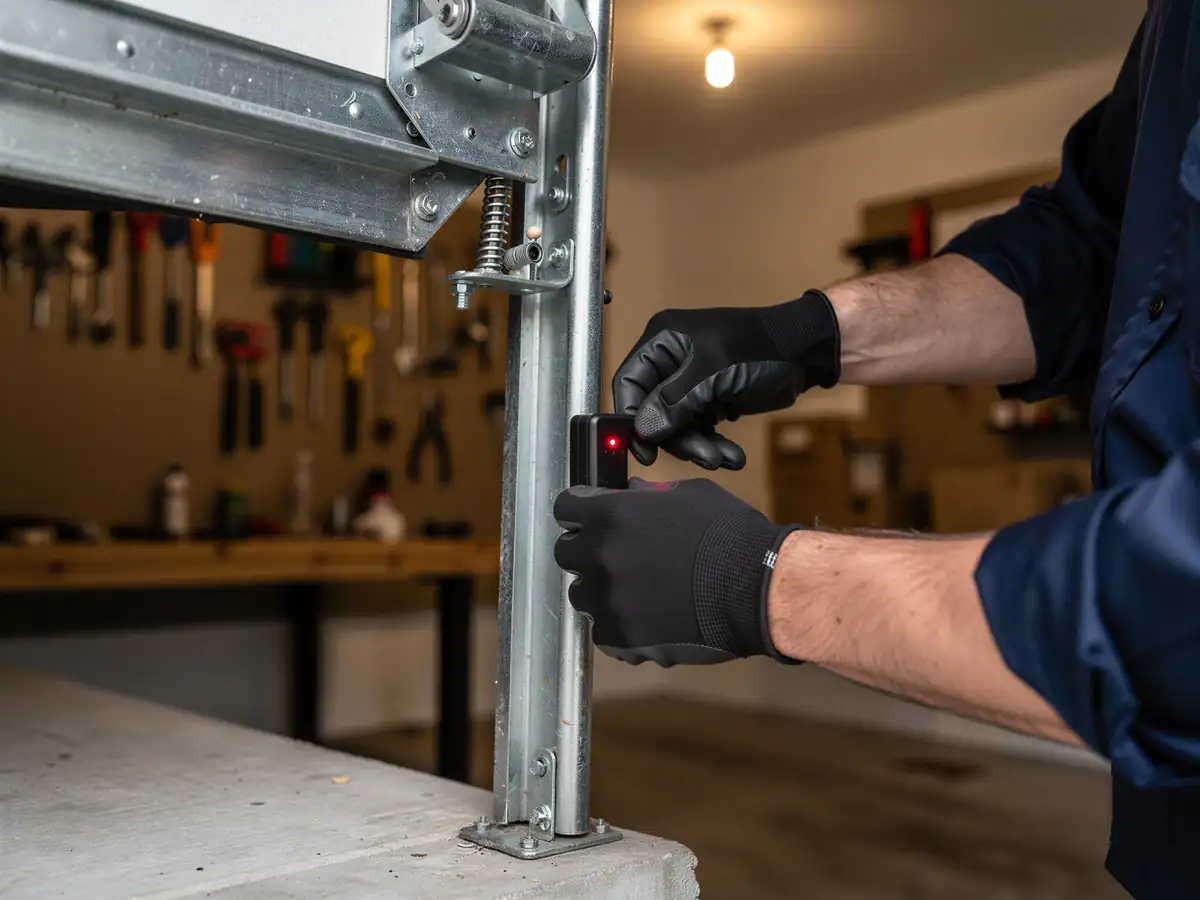
And the sensors and gear kits that cover most openers installed in the last fifteen to twenty years on these houses. What we don't stock on the truck is anything custom - a non-standard panel size or a discontinued opener model sometimes means ordering a part and coming back, and we'll tell you that on-site rather than pretend otherwise.
Given the housing age here, torsion springs are the single most-replaced part on these calls
Which is why we keep a wide range of sizes rather than one or two standard ones.