How Long You Are Without the Door
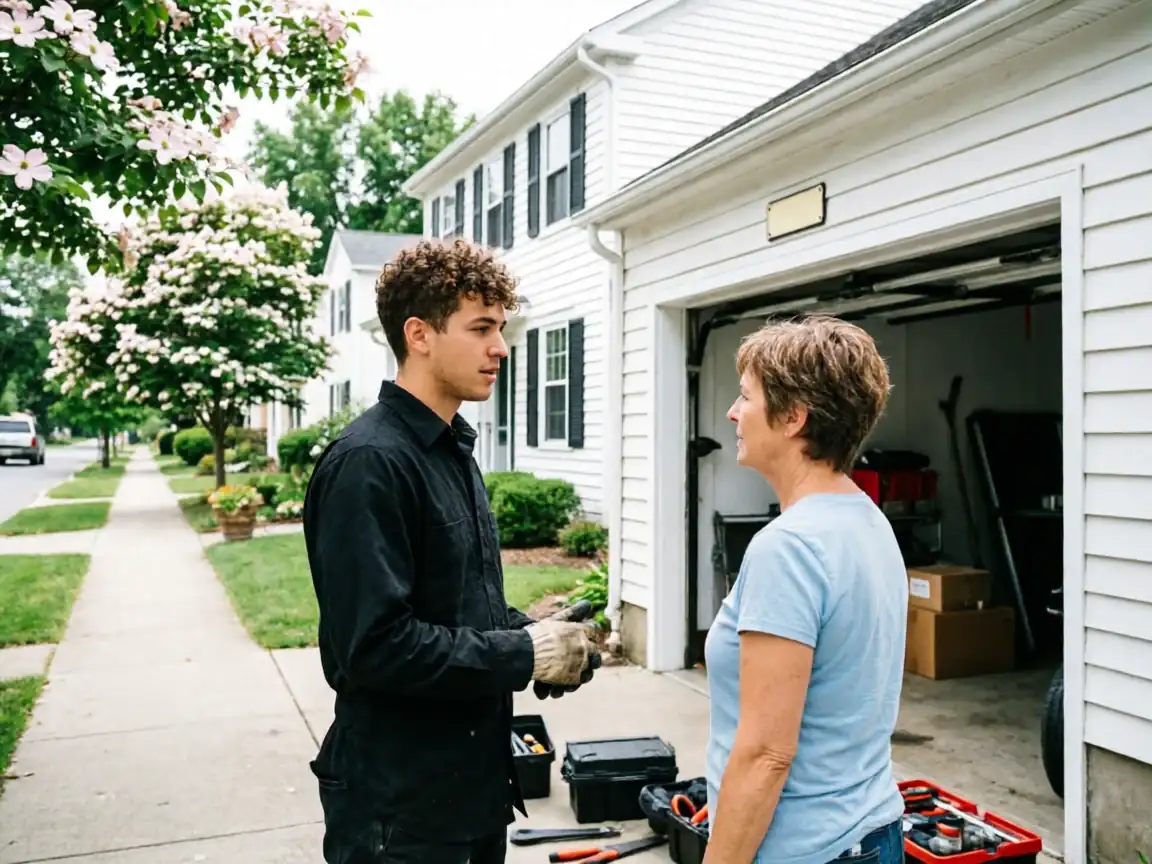
Rockaway sits about five miles from our Randolph shop, which is close enough that a cable call here slots into the same day's route without reshuffling the whole schedule around it. We're not going to promise a window we can't back up with a fact, but a five-mile trip means the truck isn't crossing the county to get to you.
A broken cable almost always means the door won't move, or it moves crooked and binds in the track on one side. That's the cable giving out unevenly, usually the side that's been carrying more of the spring load. Don't try to force the door up by hand once a cable has let go - the other cable and the drum are now holding weight they weren't built to hold alone, and that's how a second failure turns into a bent track or a dropped panel.
We look at what's actually failed before we quote anything. Sometimes it's just the cable. Sometimes the drum underneath it is also chewed up, and replacing one without the other is a callback waiting to happen.
How We Fix It
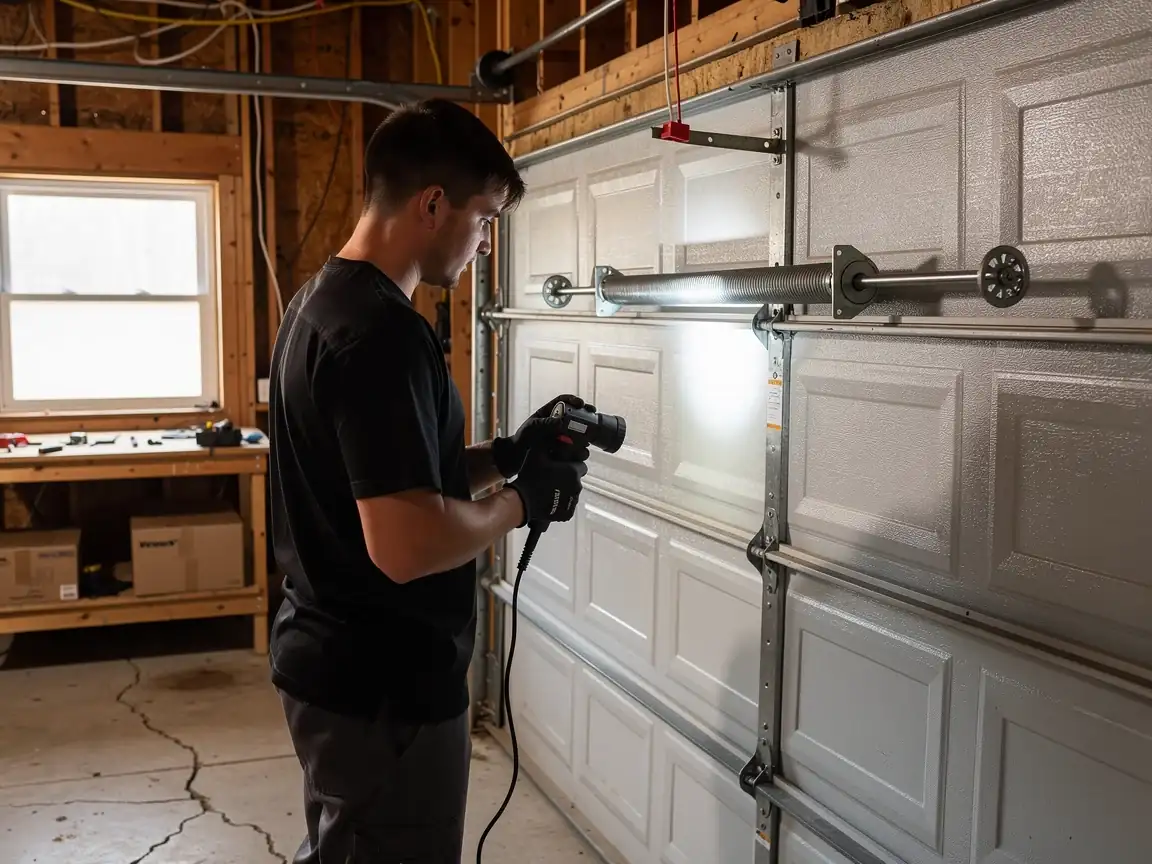
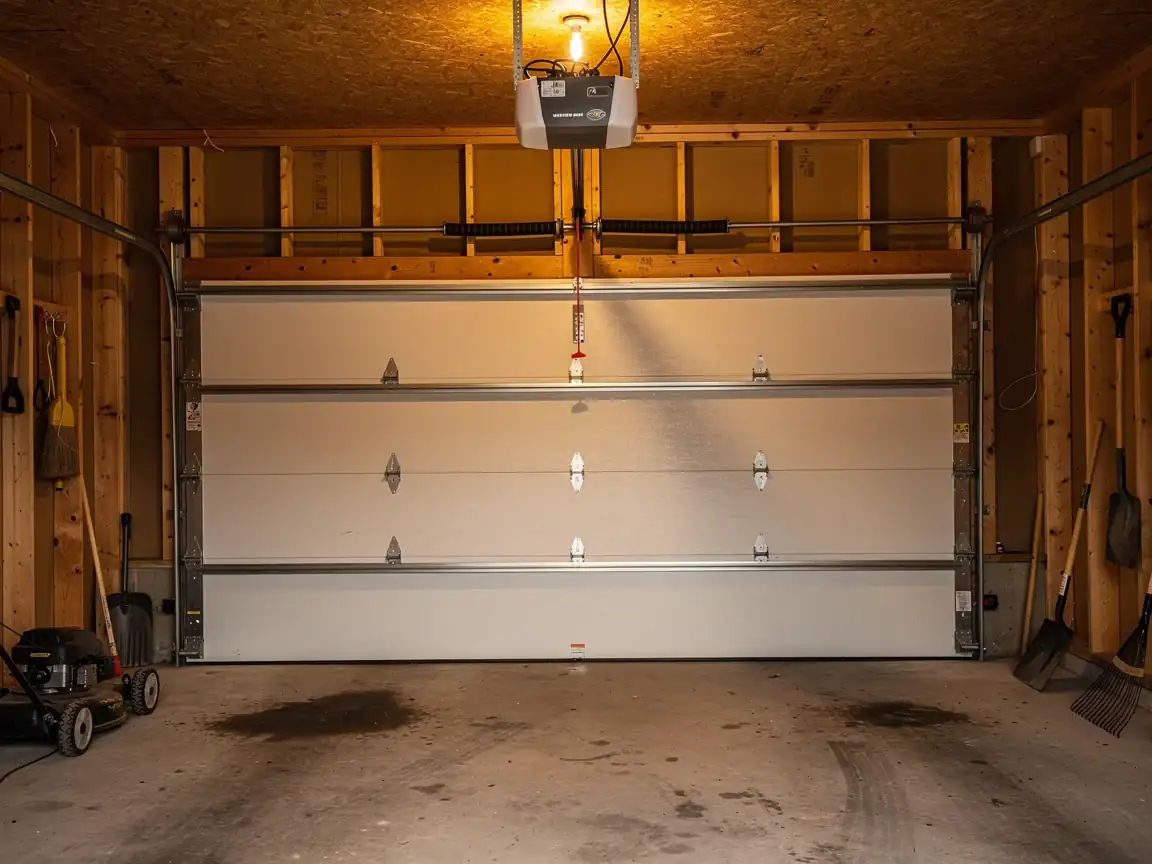
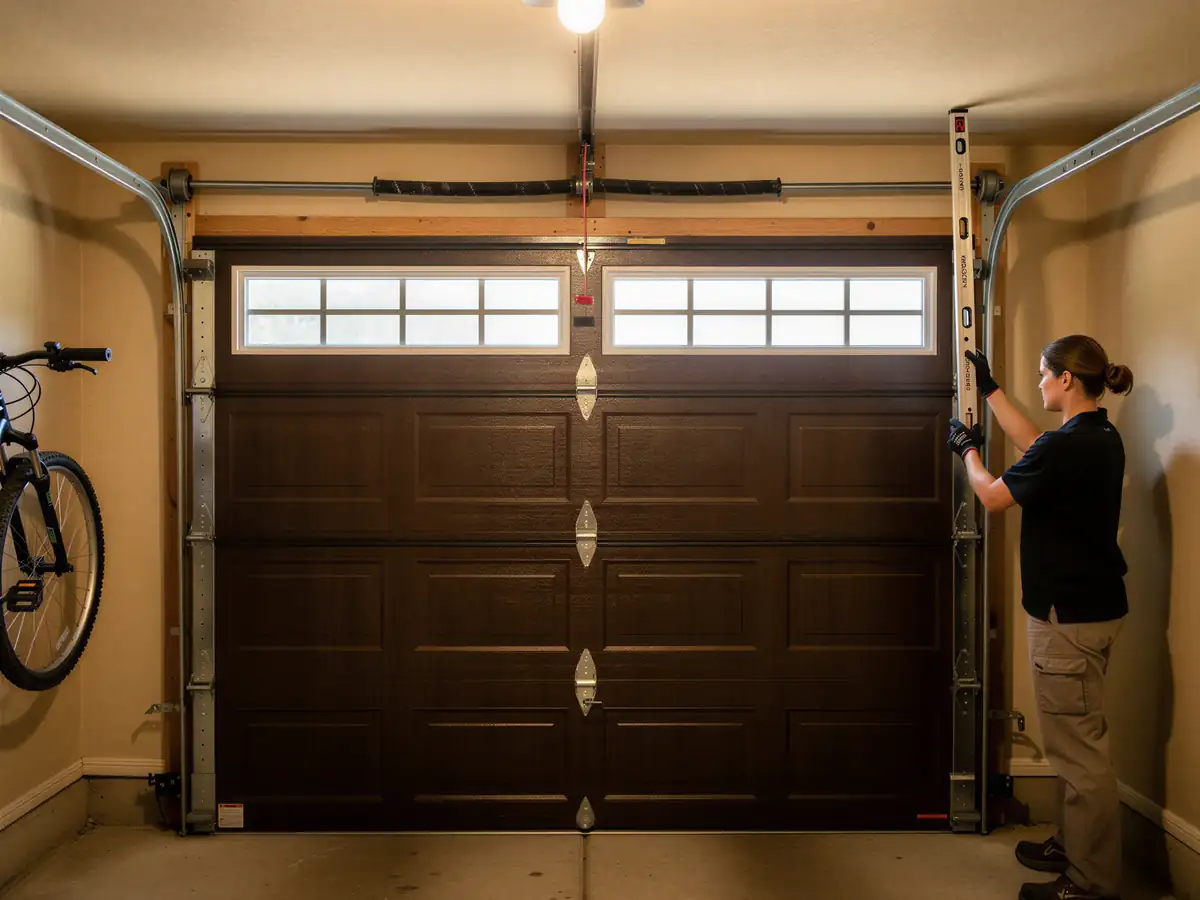
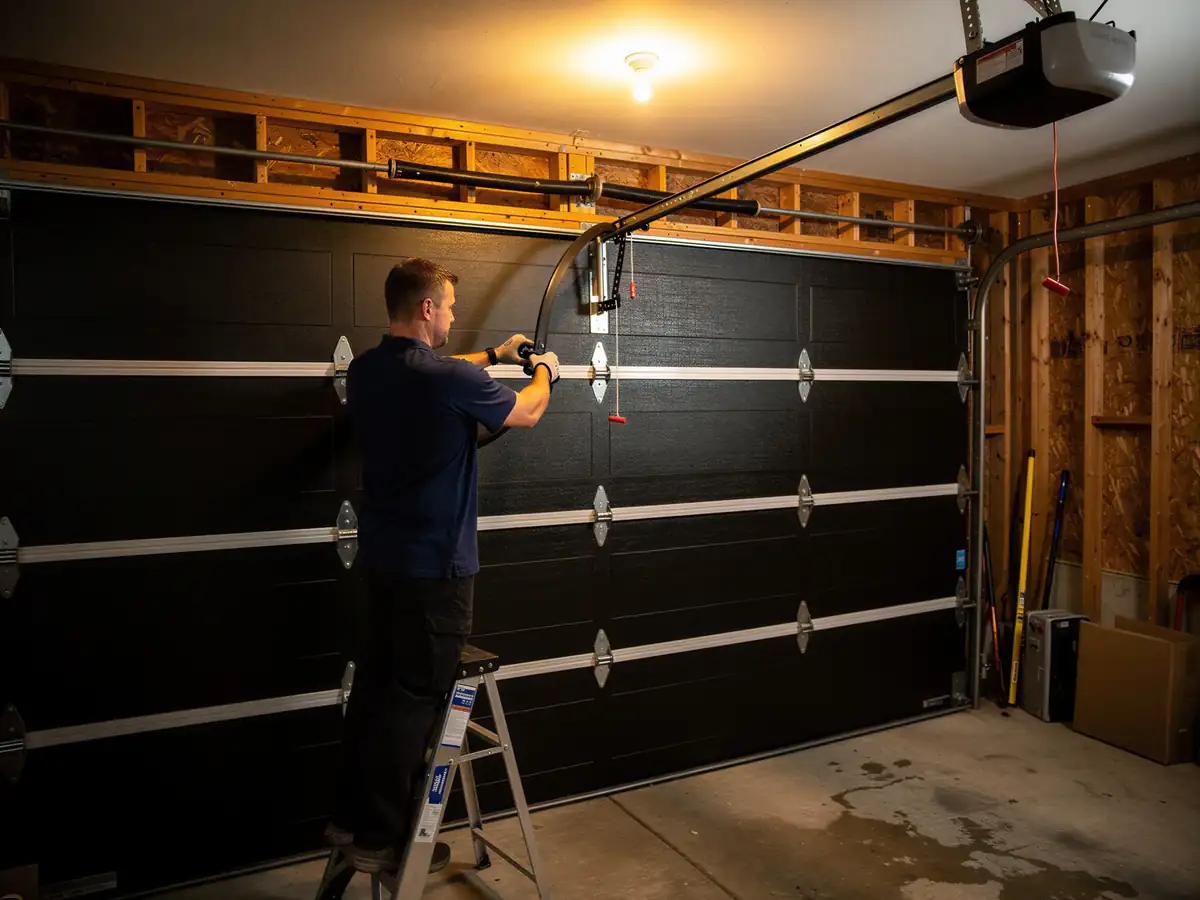
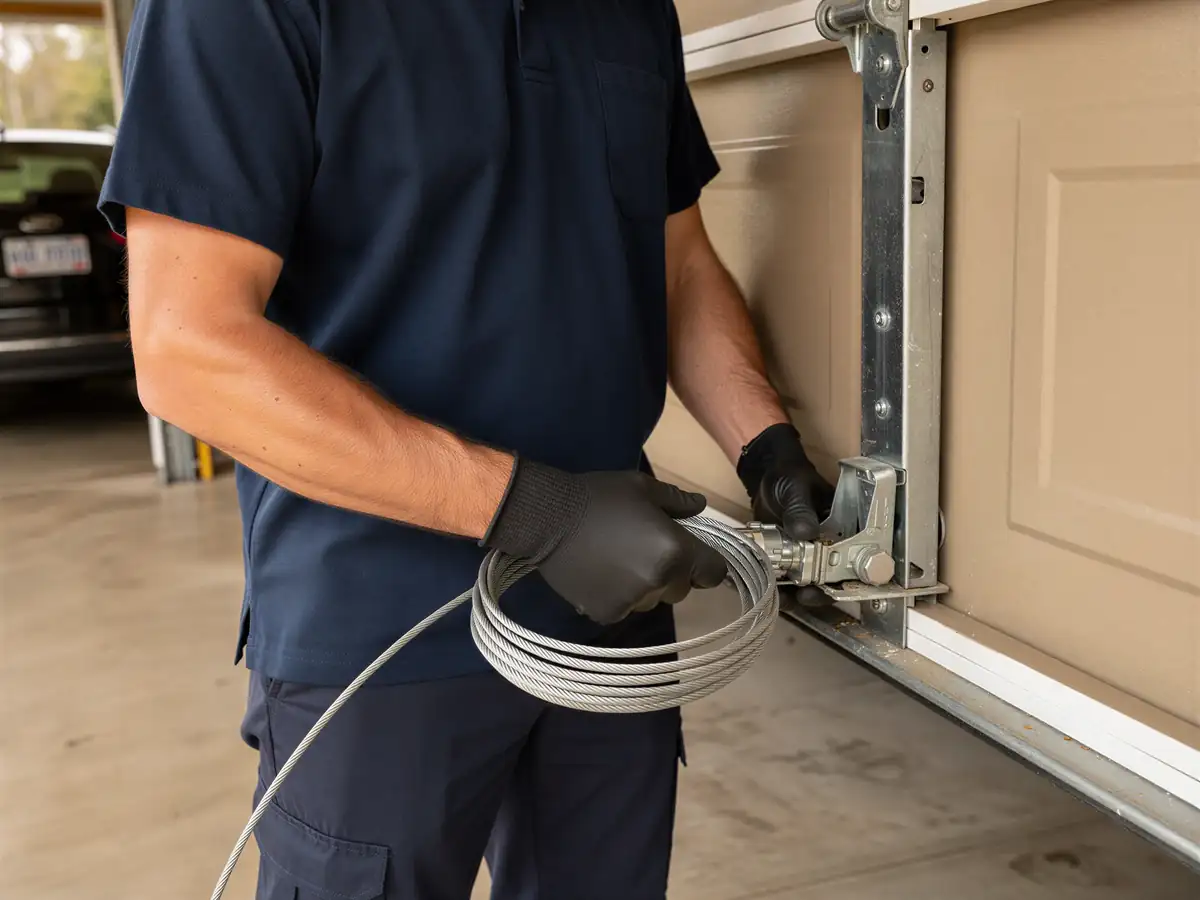
Cable repair means pulling tension off the system safely first - that's the part that hurts people when it's rushed. We clamp the door, relieve the spring, and only then pull the old cable and drum assembly.
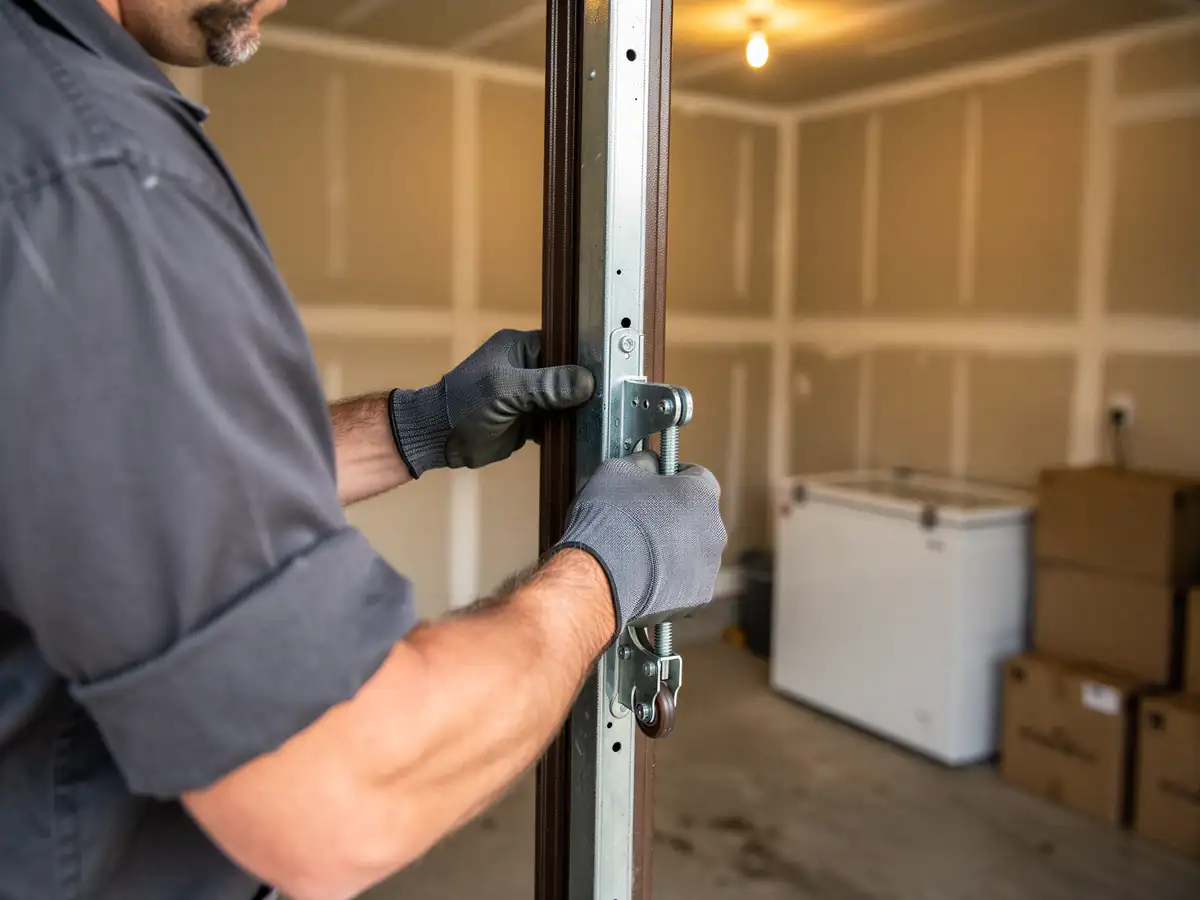
If the drum grooves are worn or chewed from the cable jumping its track, we replace the drum too, not just the cable - a new cable on a worn drum just fails again in a season or two. We match the cable gauge and length to the door's actual weight and lift style, not a generic size, because an undersized cable on a heavier insulated door is exactly how these fail early.
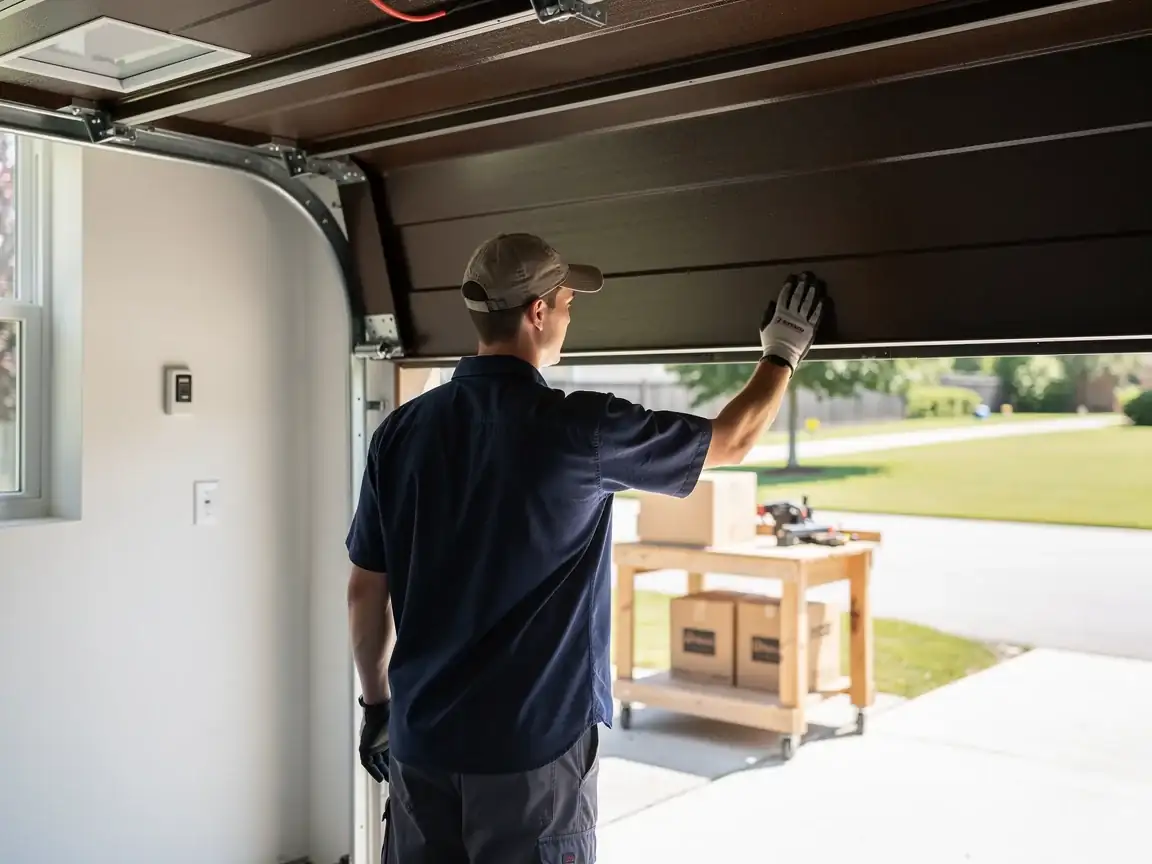
Once both cables and drums are in and the spring is re-tensioned, we run the door through a full cycle under load and check that it tracks even on both sides, top to bottom. A door that closes square and quiet is the test - not just that it moves.
One limit worth saying plainly: if the cable failure has already bent the track or cracked a panel, that's a separate repair, and sometimes the honest answer is that replacing the section costs less than babying an old door back into shape.
What Causes It Around Here
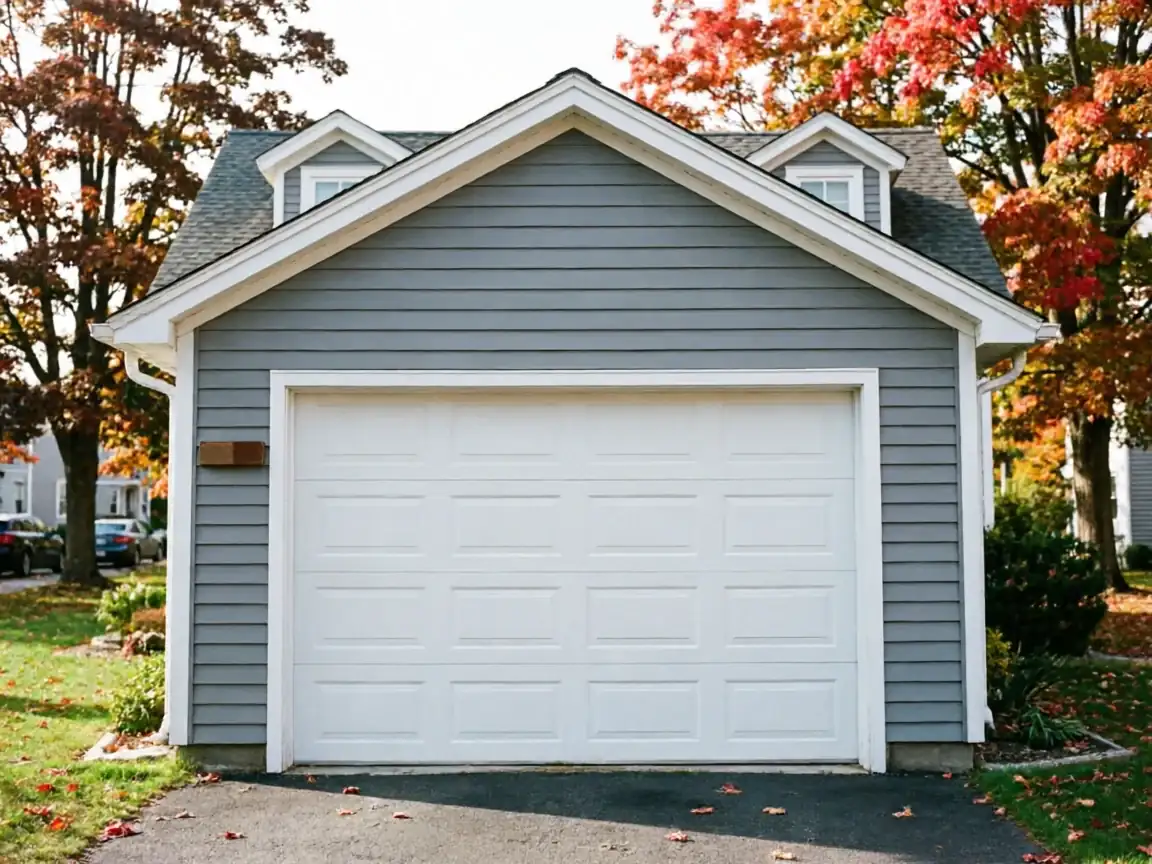
Homes in Rockaway were built around 1960 on average
Which puts the town a little on the older side even within a service area that mostly runs 1938 to 1996 with a median closer to 1964. A lot of those houses still have their original side-mounted torsion hardware - cables and drums sized for a lighter wood door, not the heavier insulated steel doors a lot of owners have swapped in since.
That mismatch is the first cause
The second is the cold. This whole area sits in a severe cold climate band, and a cable with even one nicked strand doesn't fray gradually here - it work-hardens through a few freeze-thaw cycles and lets go all at once, usually on the coldest morning of the stretch, because that's when the door gets used hardest and the steel is least forgiving.
Rust at the bottom roller bracket is the other pattern we see on these older Rockaway houses
Galvanizing wears thin after sixty-plus years, and a cable that rubs against a corroded bracket cuts into itself slowly until it snaps without warning.
What Is on the Truck
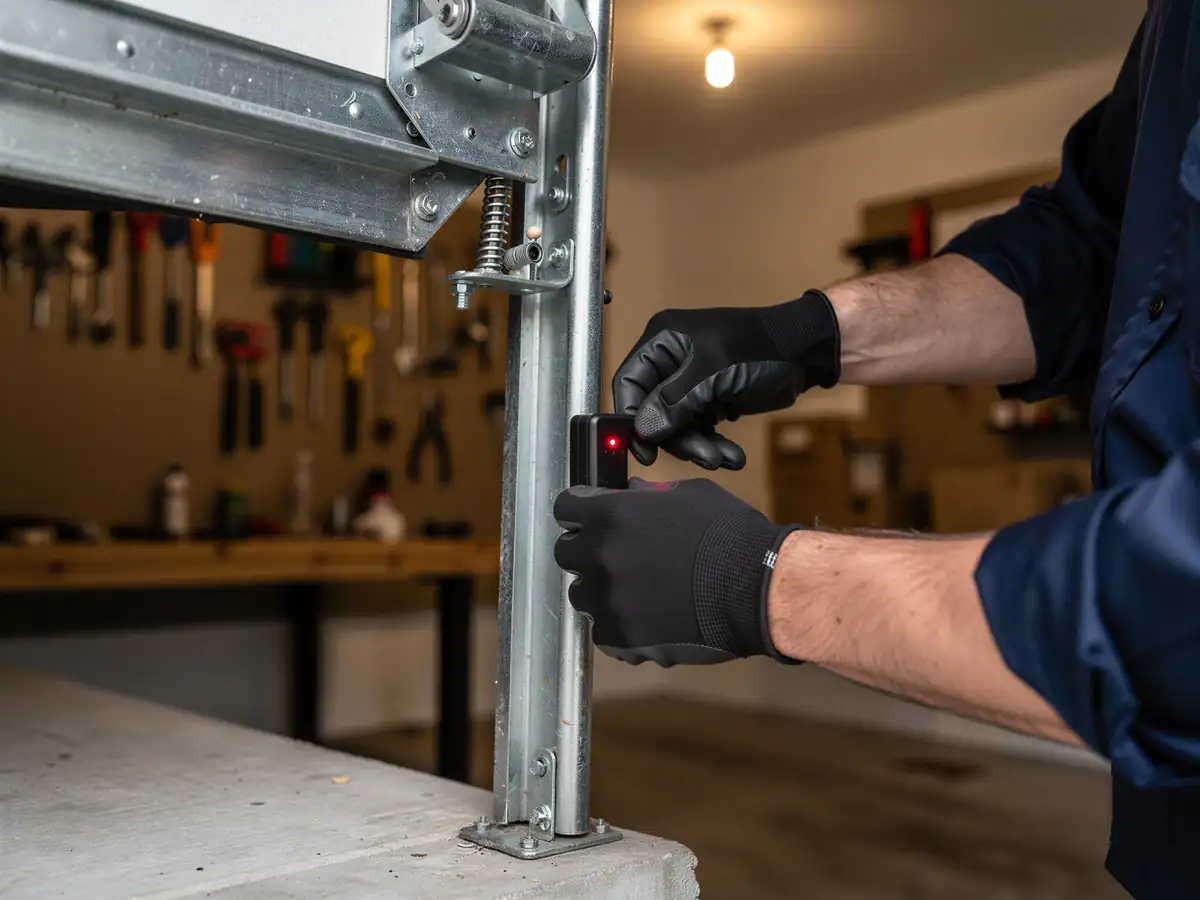
We carry a working stock of standard-gauge lift cables and matching drums sized for the torsion setups common on the 1960s-era doors you'll find across Rockaway and the rest of this area - the sizes that actually fail most, not every size that's ever been made.
What we don't always have on the truck is a cable cut to an odd nonstandard length, which shows up on a door that's been modified or has a replacement spring from a different system than it started with. That's not common, but when it happens, it can mean a short wait on a part instead of a same-visit fix, and we'd rather tell you that up front than pretend every door is a standard one.
We also carry the drums, pulleys, and bottom brackets that usually go bad alongside a cable, so if the drum's chewed up or the bracket's rusted through, we're not making a second trip for it. For households here where a full cable-and-drum job is worth doing right the first time rather than patched twice, we carry the parts to do that in one visit.