How Long You Are Without the Door
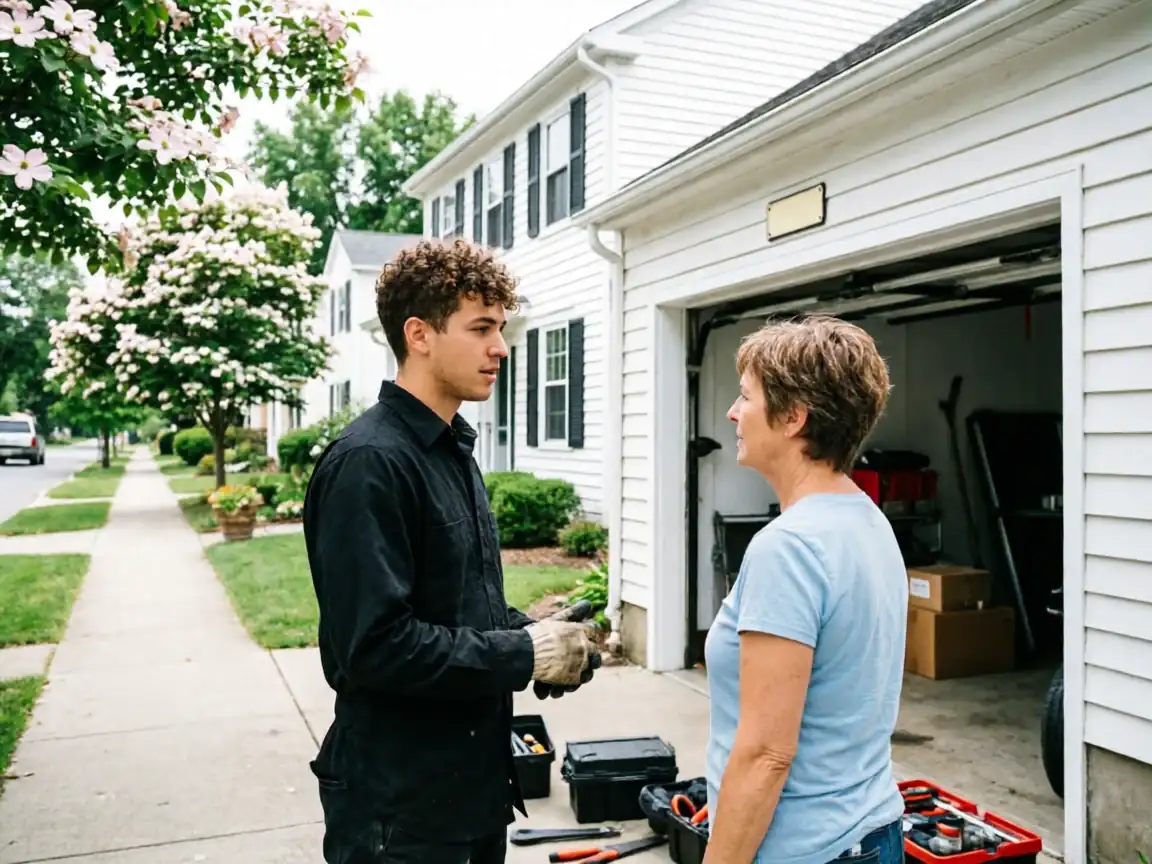
Rockaway is a small town as these things go - about 2,660 households, not the sprawl you get a few miles over. That size matters for off-track calls: the housing here clusters tight, and a lot of it went up in the same stretch of years, so when one door jumps its track on a given street, we're often looking at the same rollers, same bent track, same worn hinge pattern on the next block over. We come from Randolph, five miles out, so there's drive time built into any visit - we don't pretend to have a truck parked in town. Once we're there, most off-track jobs are a same-visit fix: the door comes off the rail, not off the opener, and in most cases the panel and spring are fine. The real variable is whether the track itself is bent past saving or just knocked out of alignment. A bent track gets replaced, not hammered back into shape - hammering it back is how you get a second call in three weeks.
How We Fix It
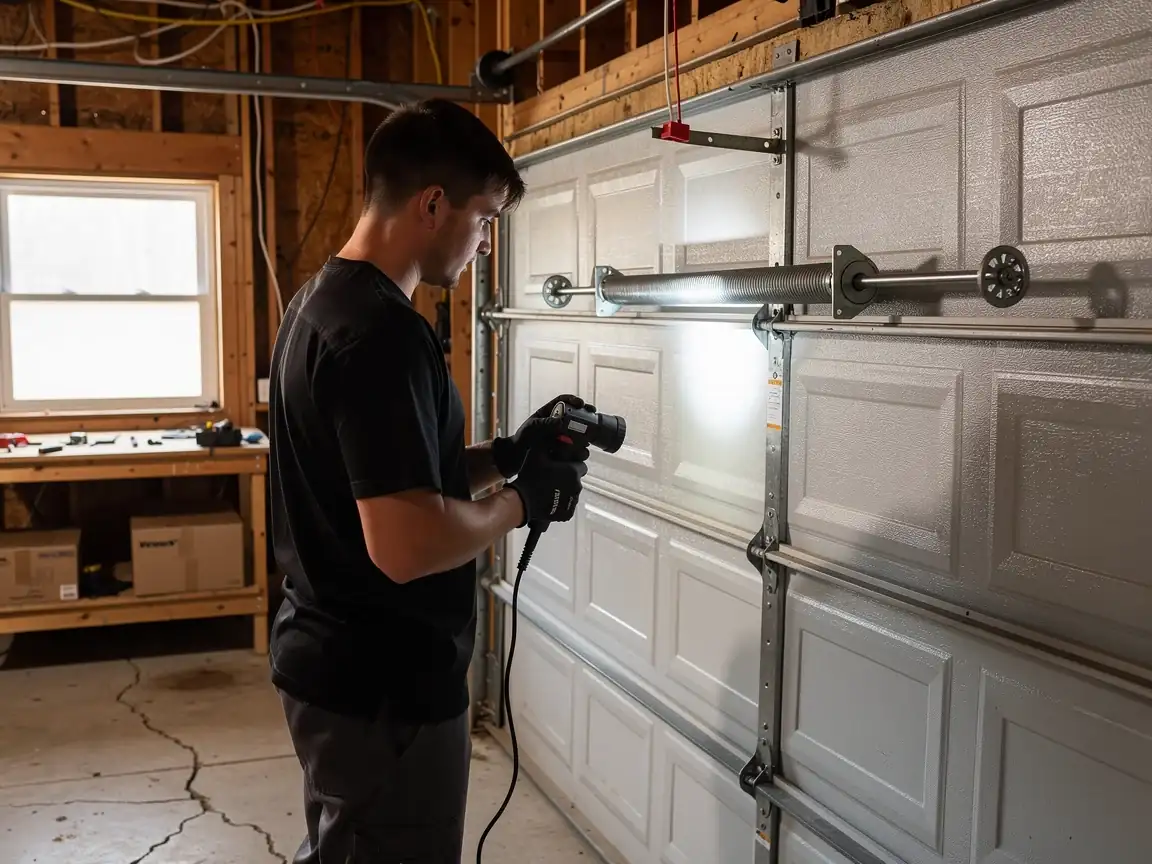
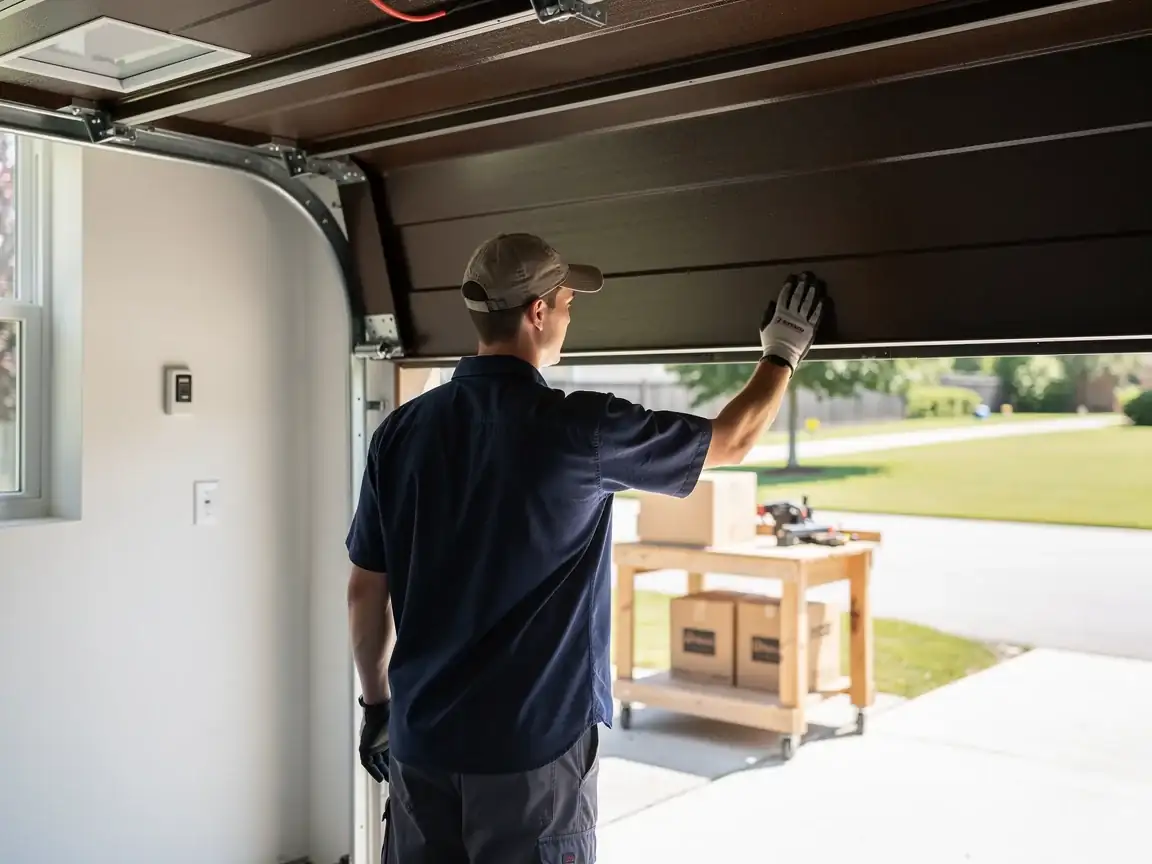
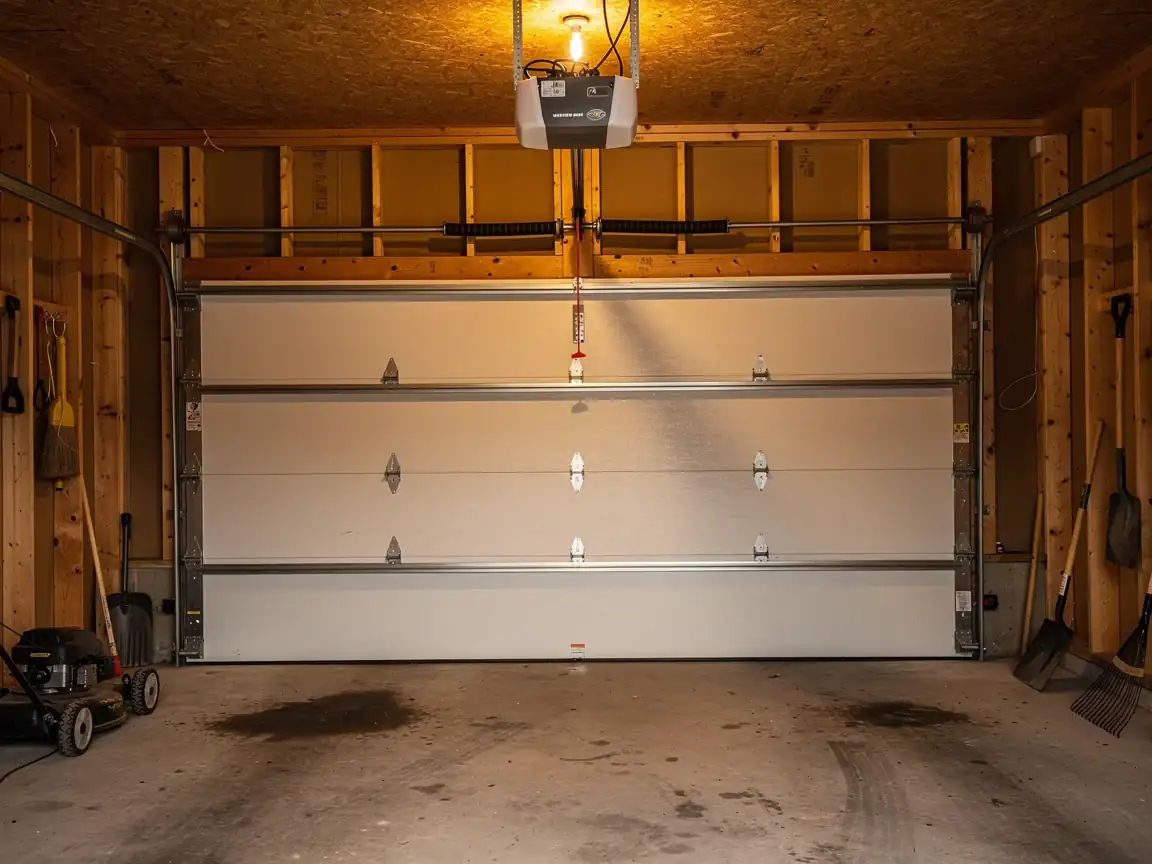
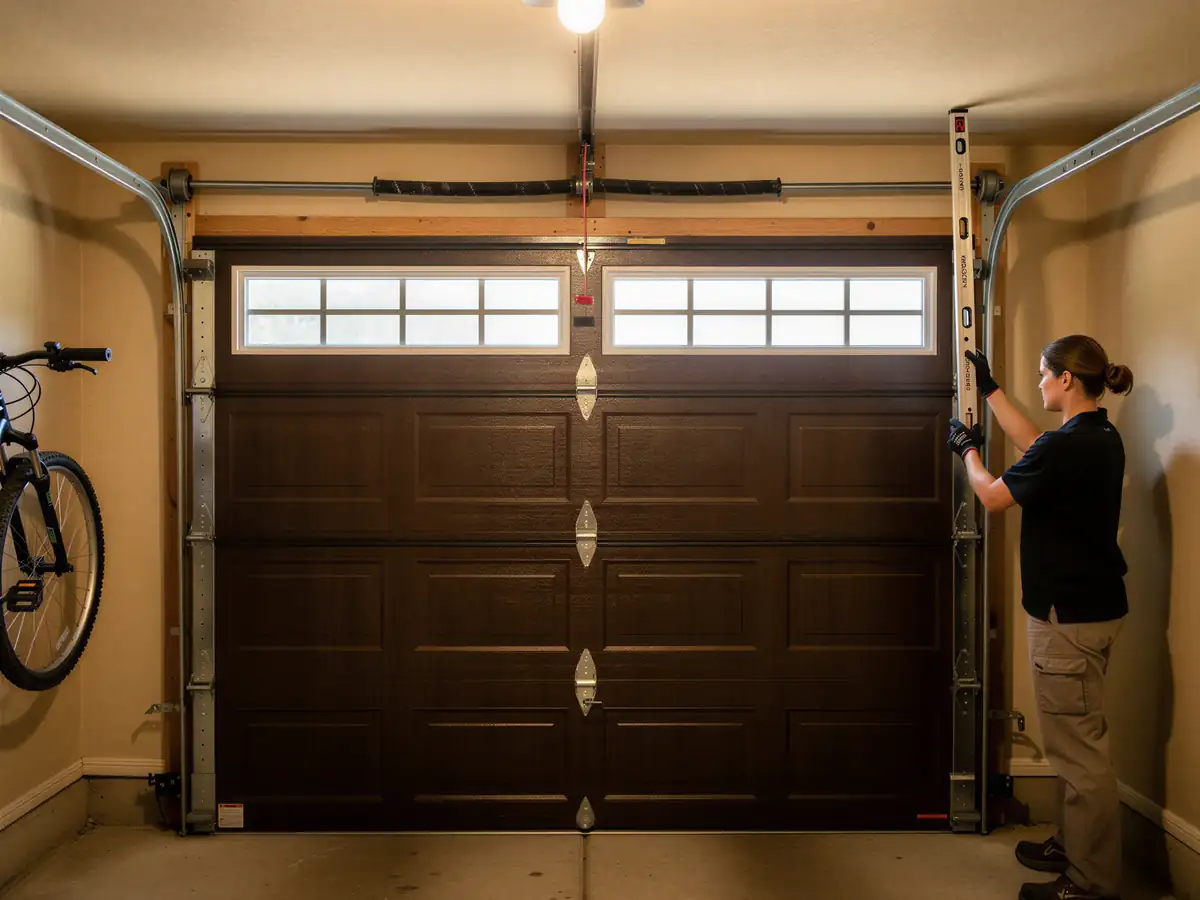
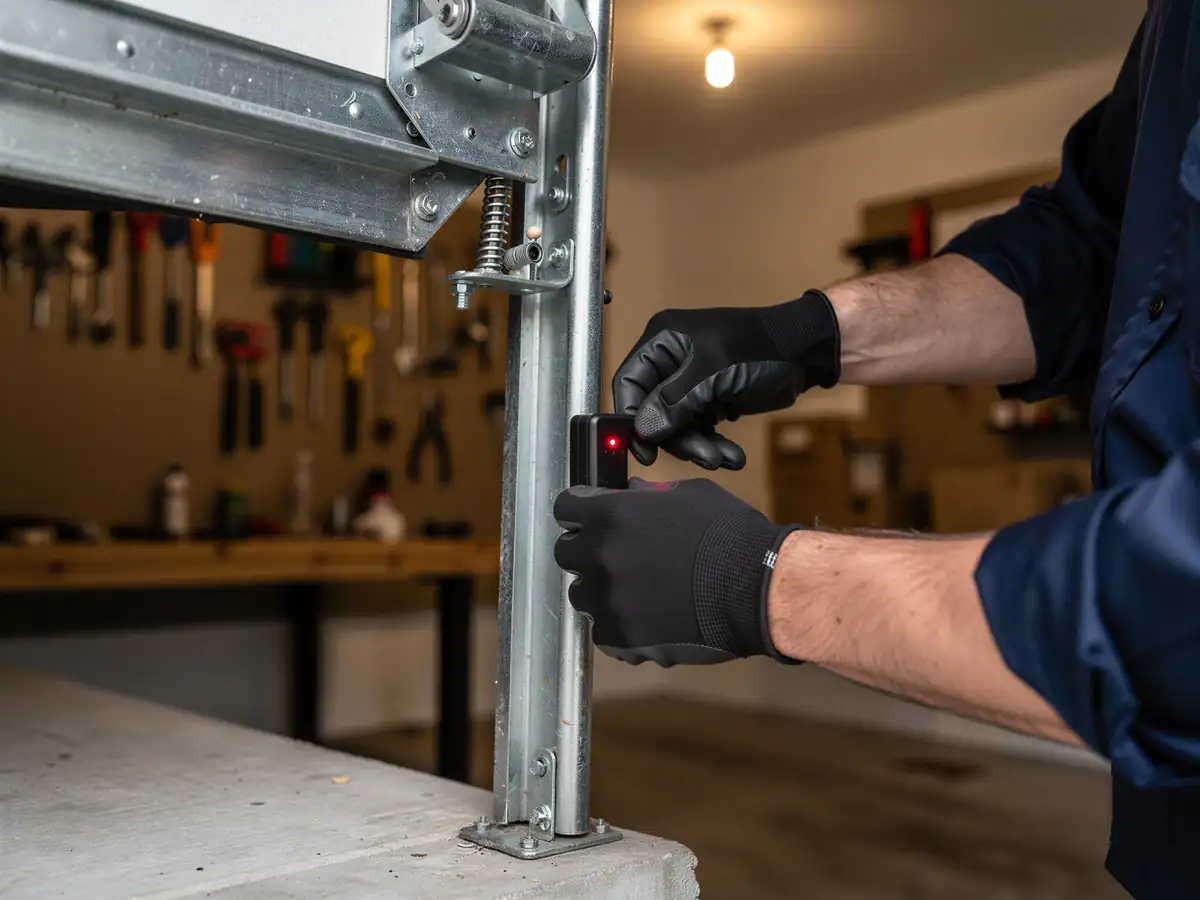
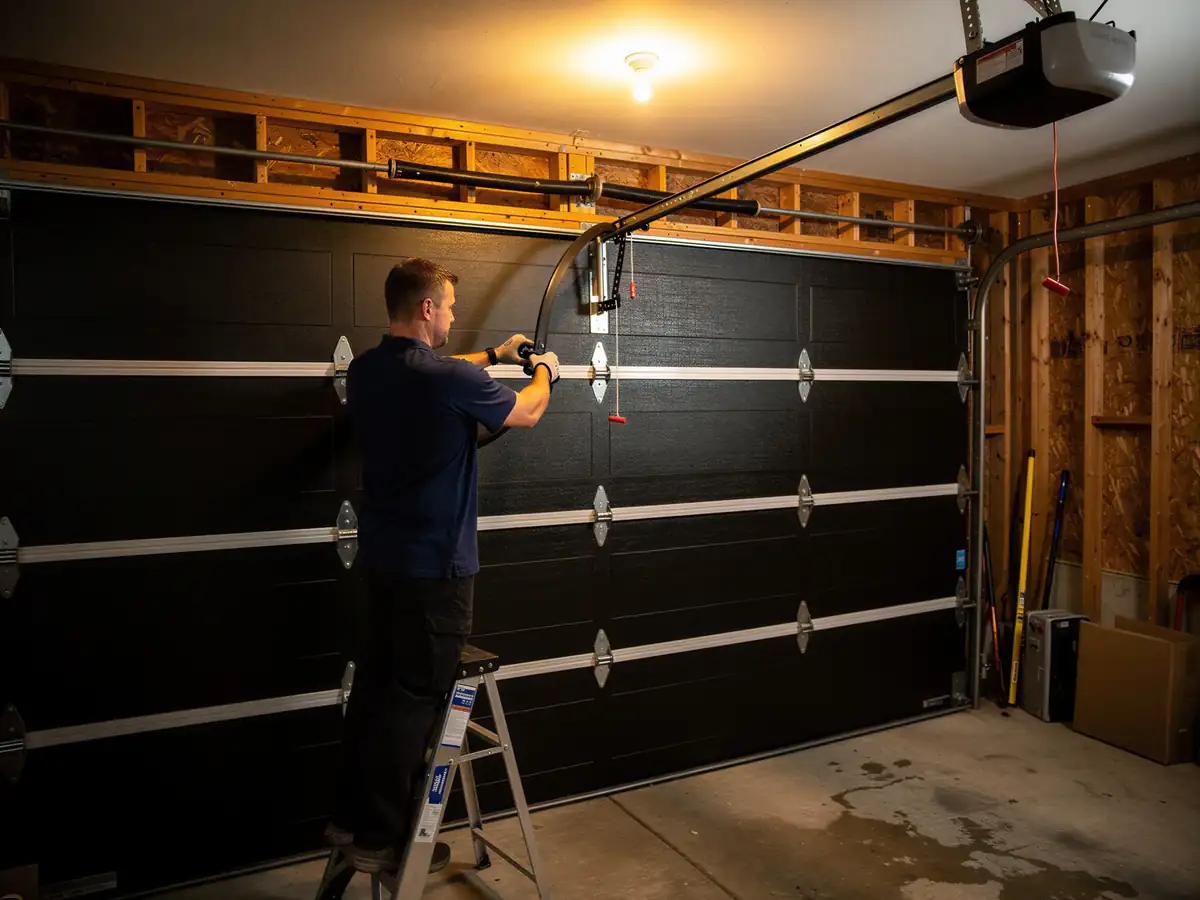
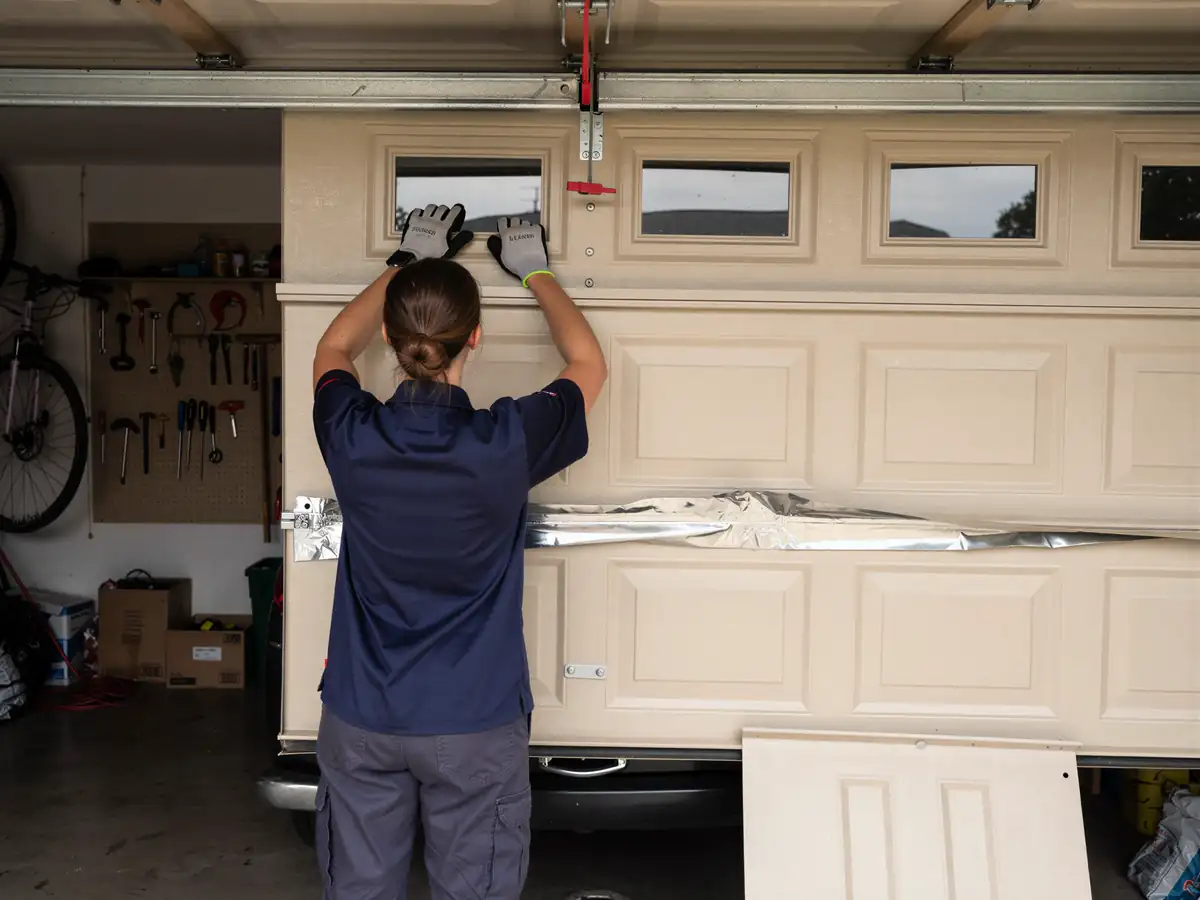
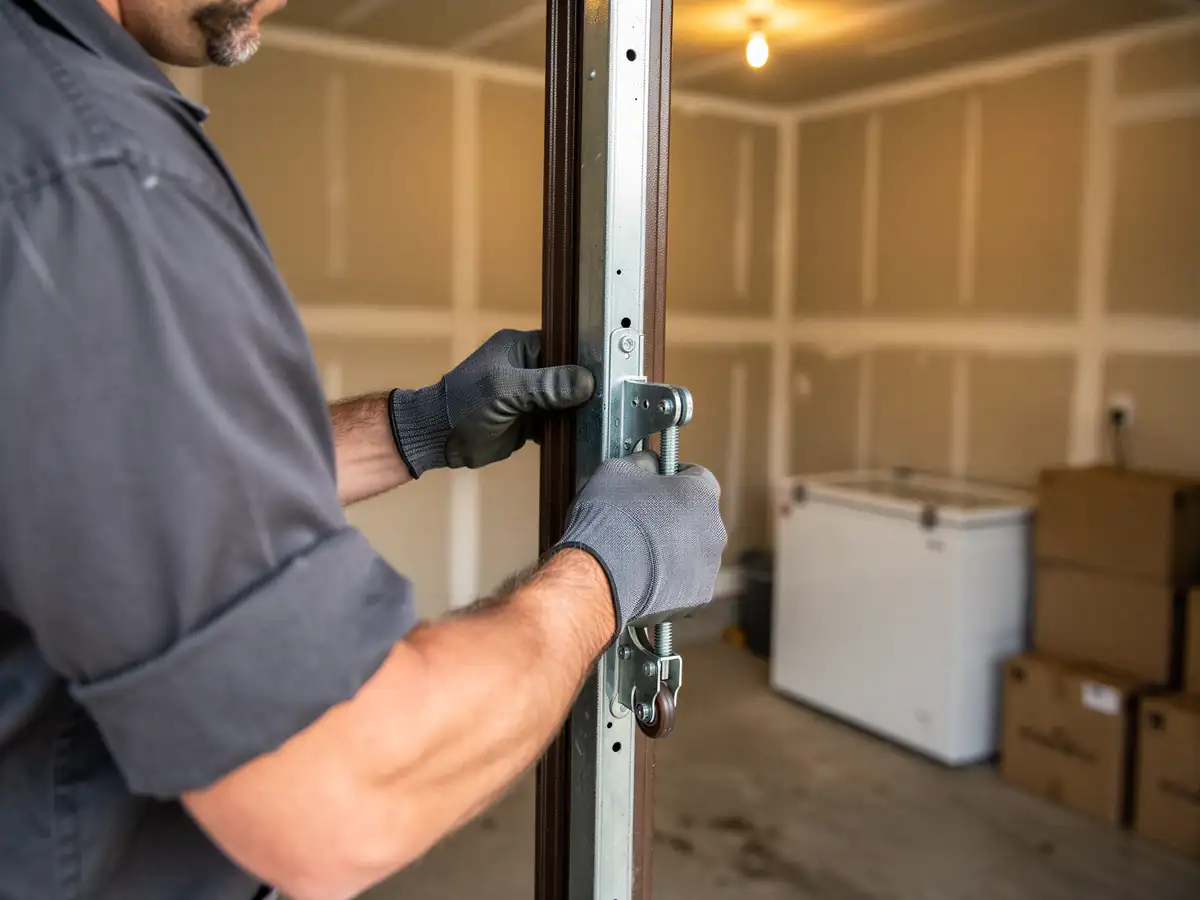
First thing on site: find out why the door left the track, not just put it back. If a roller sheared or a hinge pulled loose, setting the door back on bent rail without fixing the cause means it jumps again, maybe mid-cycle with the door half up. We check the track alignment with a level, not by eye - a quarter-inch out at the top compounds by the bottom. If the vertical or horizontal track is bent, we swap that section rather than bend it back; cold-rolled steel track doesn't forgive being reshaped twice. Rollers get checked for flat spots and cracked nylon, hinges for elongated holes. If the opener forced the door against resistance before it jumped - which happens more than people expect - we check the travel limits and force settings too, because that's often the actual trigger, not just a worn part. On a double door, we also check the center stile and astragal, since a door that's racked slightly can look like a track problem when it's really a door that's not square anymore.
What Is on the Truck
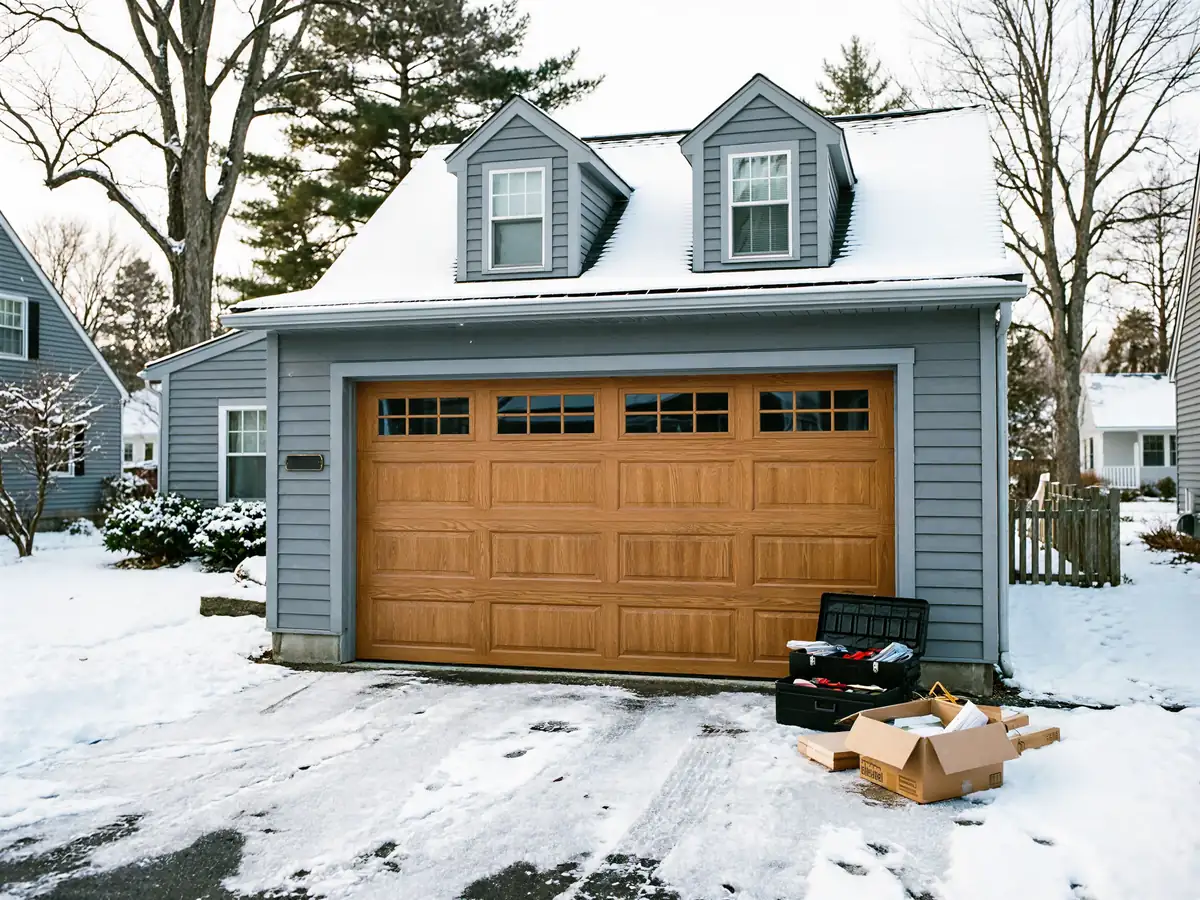
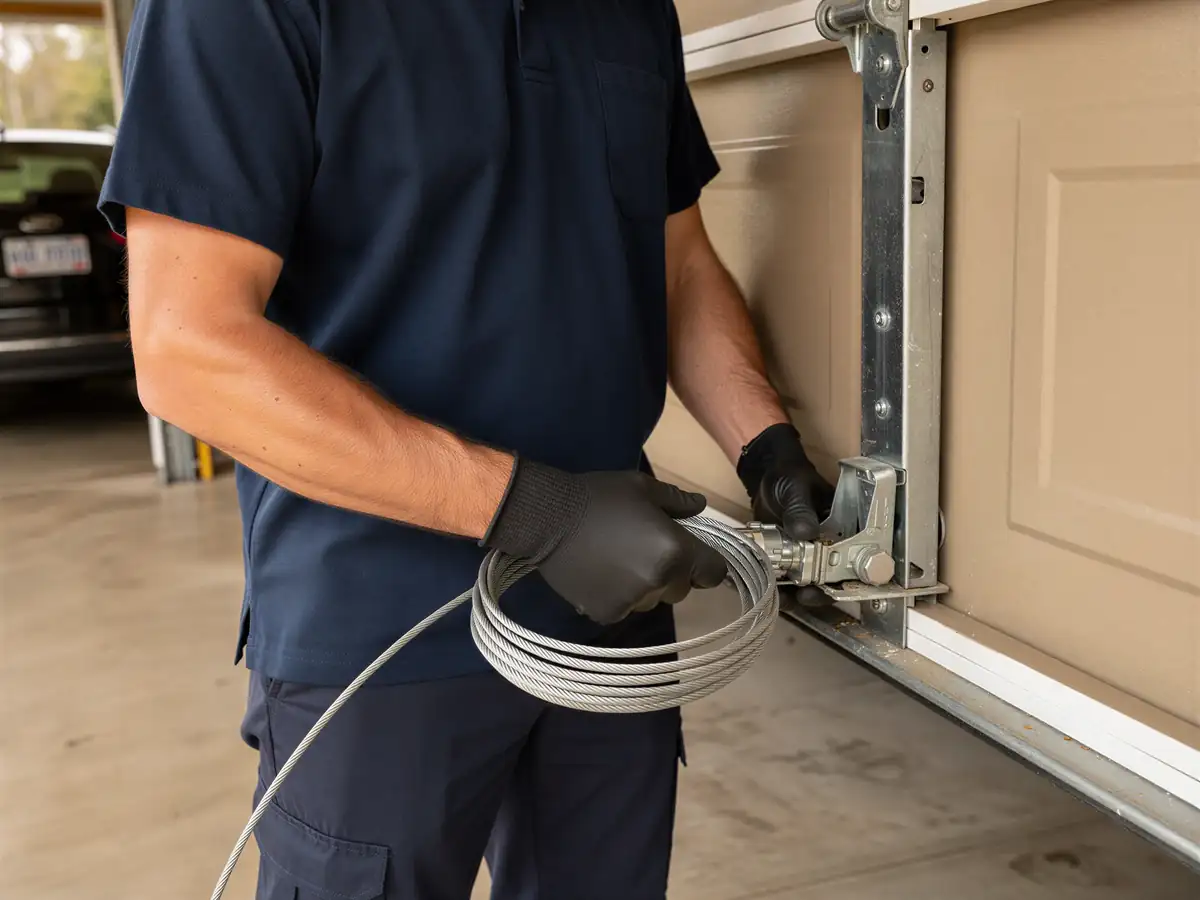
We carry standard rollers - nylon and steel - in the common sizes, replacement track sections in the lengths that fit most residential doors, hinges, and the brackets that hold track to framing. What we don't carry is custom track cut to an odd ceiling height or a specialty low-headroom kit; those get ordered and that means a second trip. If your door is older than the mid-1960s stock common around here and still has its original hardware, there's a real chance a part on it isn't something we stock - it gets special-ordered, and that can mean days, not hours. We'll tell you on site, not after we've started the job. For most 1960s-to-1990s builds, though, the common fix - bent track swapped, rollers replaced, alignment reset - is one visit, done with what's already on the truck.