Serving Randolph, NJ & nearby
(973) 291-0706
Randolph, NJ

What a Dover Garage Door Call Usually Looks Like

Dover, NJ homes mostly date to 1953, older than the wider service area. See what that means for garage door repair, torsion springs, and opener work here.

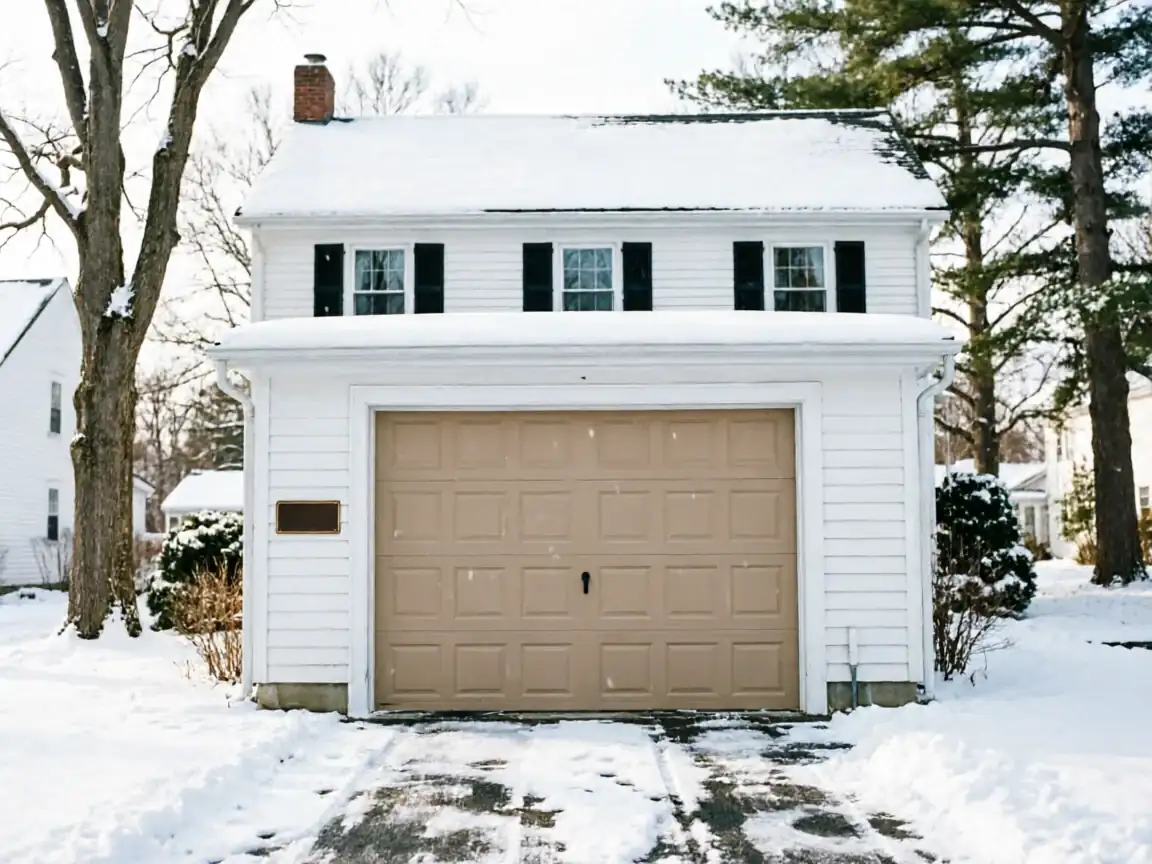
A white house with a tan garage door and black shutters is covered in snow.
Randolph, NJ
8 services
8 service areas
Diagnosis first, then the fix

Where This Job Goes Sideways

Dover is one of the smaller towns Randolph Garage Door Pros reaches, about 6,455 households packed into a town three miles south of Randolph itself. That's a fraction of the 468,693 households across the wider service area, and it changes what shows up on a call sheet. Smaller, older, and tighter together - the median home here was built around 1953, a decade before the service area's overall median of 1964. A town built a decade earlier means more of the original hardware is still hanging in the garage: single-car openings, lighter-gauge steel, and torsion or extension springs sized for doors that weigh less than what's sold today. Median household income in Dover runs $70,519, well under the $146,174 median across the broader area, which tends to mean owners hold off on an opener swap or a full door replacement until something actually breaks, rather than upgrading ahead of trouble. Combine an older, smaller housing stock with a cold-weather climate and the failure pattern looks different than it does six or eight miles out in newer construction. The job that goes sideways in Dover is usually the one where a worn spring from the 1950s or 60s finally lets go on a January morning, not a modern opener board glitching.

How It Shows Up

Because so much of Dover's housing dates to the early 1950s, the calls tend to cluster around original or near-original hardware rather than failed electronics. A torsion spring that's been doing its job since the house was built doesn't fail gradually - it lets go all at once, usually when the door is cold and stiff first thing in the morning. On the extension-spring setups common to this era, you'll see a cable jump the drum before the spring itself snaps, which is its own kind of surprise. Rollers on these older single-car doors are often steel, not nylon, so the track noise complaint - a grinding or popping sound on the way up - shows up more here than it would on a newer door with sealed bearings. Openers in homes this old have frequently been replaced once already, sometimes twice, so the opener itself may be newer than the door it's lifting, which creates its own mismatch: a modern safety sensor paired with a track that's shifted slightly out of plumb over seven decades. None of this is exotic. It's what you'd expect from a housing stock built before most of the service area's homes went up, sitting in a cold climate that's hard on steel and lubricant alike.

What Causes It Around Here

The root cause in most of Dover's older garages comes down to two things stacking on top of each other: age of the hardware and the cold-severe climate the whole service area sits in. Steel springs and cables lose tension and develop fatigue cracks faster when they cycle through freeze-thaw swings every winter, and a spring installed when the house was built in the early 1950s has had seven decades of that cycling. Lubricant that was fine in August turns stiff in January, which is why so many Dover calls land in the colder months - the door that worked fine all fall suddenly binds or won't fully close. Garages built to the standards of that era also tend to have less insulation and more gaps around the frame, so moisture gets in, and rust on tracks or hinges follows. None of this is unique to one house; it's a pattern that comes from building a town's worth of garages in the same ten-year window and then leaving most of that original hardware untouched. The honest limitation here: we can't tell from the road what era a specific garage's springs are without seeing the door, so any number we'd give before a look is a guess, not a quote.

Doing It Yourself

Some of what shows up on an older Dover door is fine to handle yourself. Lubricating hinges and rollers with a garage-door-specific spray, tightening loose bolts on the track brackets, and clearing debris from the track are all reasonable weekend jobs that won't hurt anything. What isn't worth doing yourself is anything involving the torsion or extension spring itself. A spring under tension that's original to a 1950s install has had decades to develop rust or fatigue you can't see from the outside, and it stores enough force to cause a serious injury if it releases while you're working on it. The same goes for cable replacement - on older extension-spring setups, the cable and spring are tied together in a way that makes a DIY swap riskier than it looks. If the door is slow, noisy, or binding but still opens and closes, that's a reasonable thing to live with for a while and get looked at on your schedule. If it won't open at all, or one side has visibly dropped, that's not a project - the spring has likely already gone and the door is being held up by one cable instead of two.
How it works

From “it’s stuck” to “it’s fixed”

A quick, honest process - no guesswork and no surprises, start to finish.

  1. 1
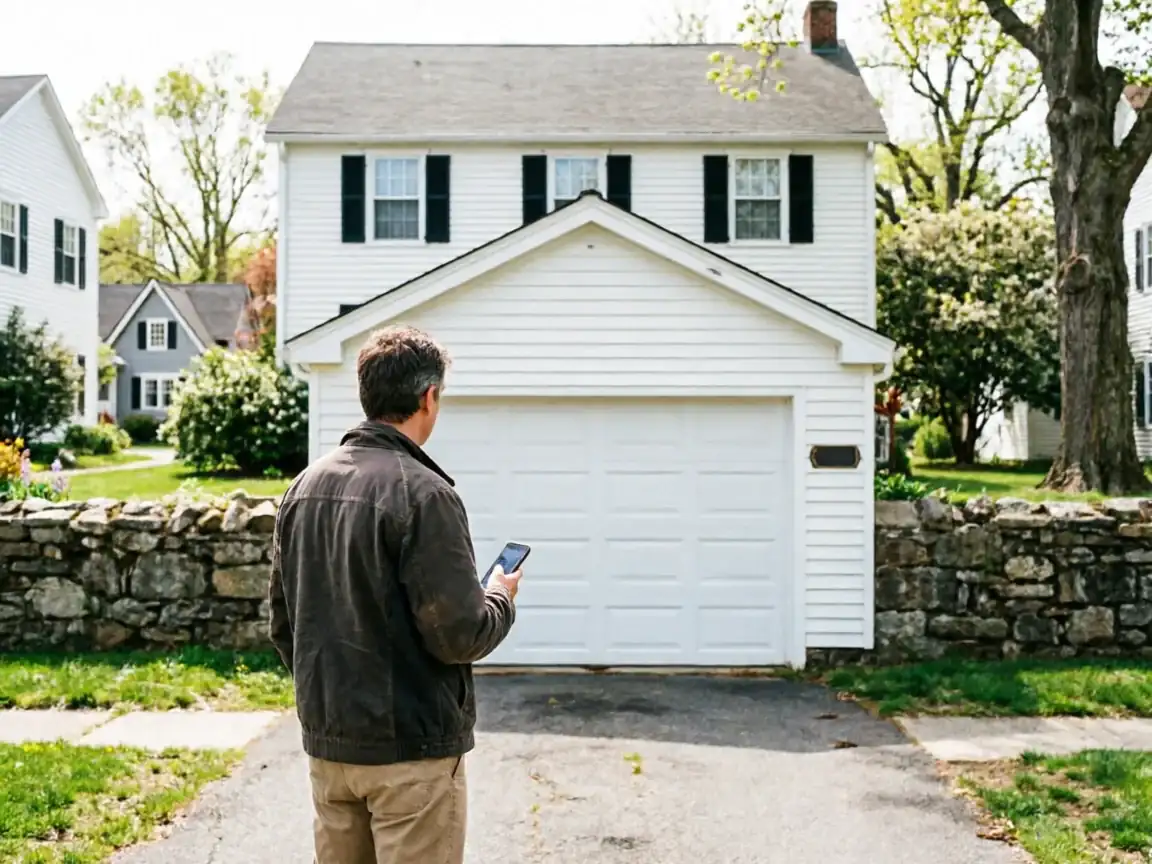
    A man stands in a driveway holding a phone, facing a white garage door.

    Tell us what’s wrong

    Describe the symptom - won’t open, loud bang, opener runs but the door won’t move.

  2. 2
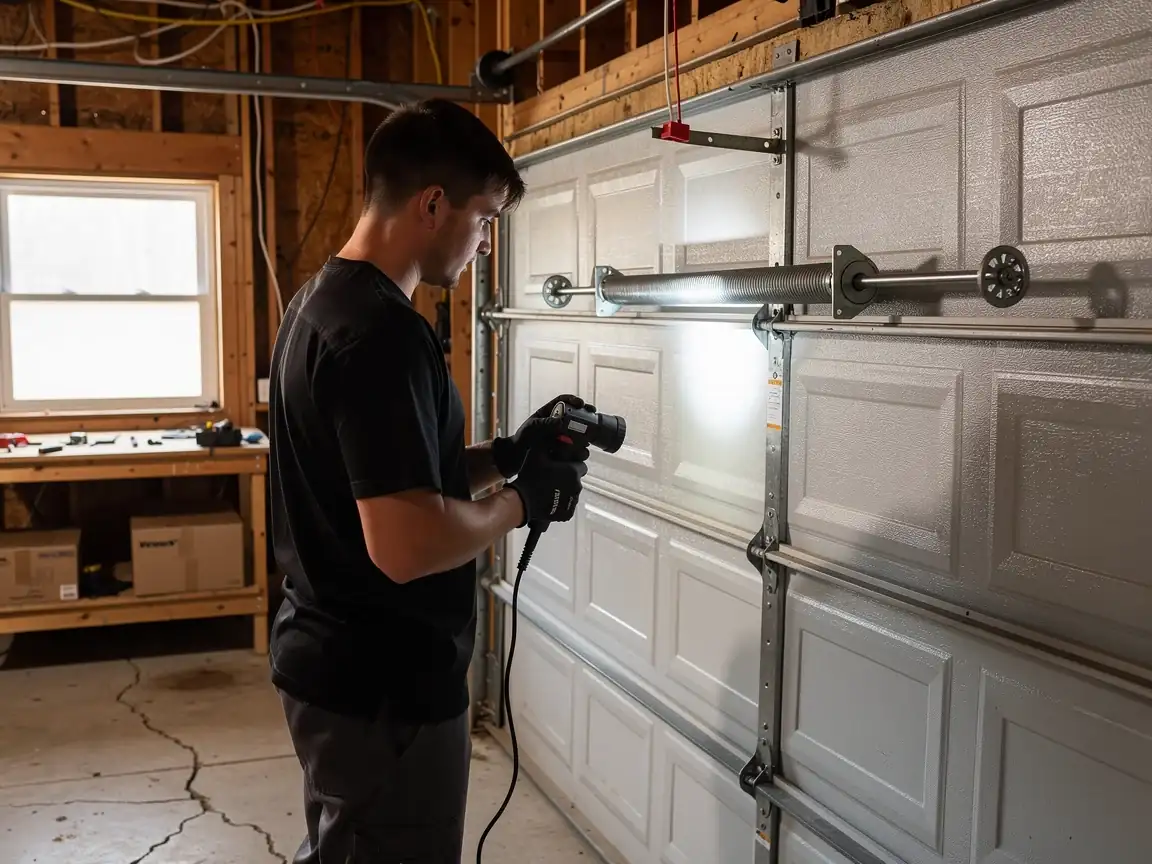
    A technician shines a light on a garage door torsion spring.

    On-site diagnosis

    A technician tests the door under power and by hand and finds what actually failed.

  3. 3
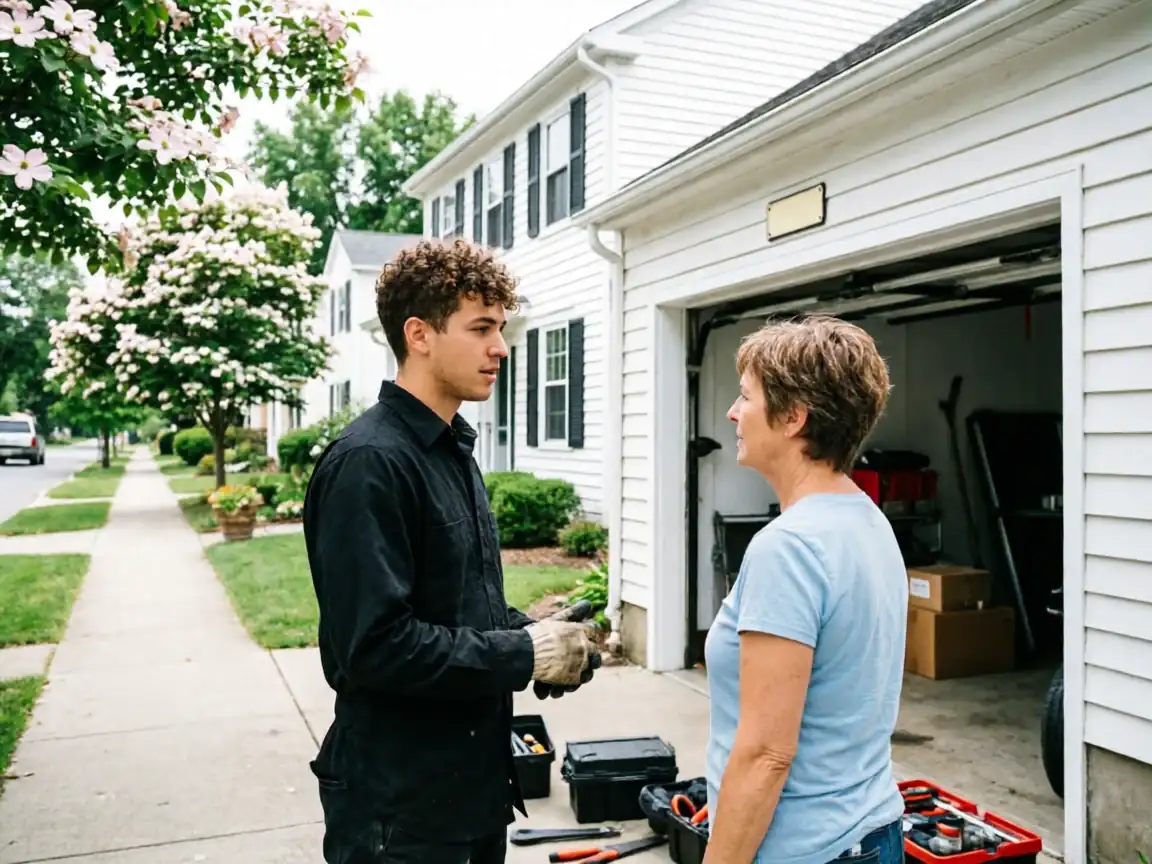
    A technician talks to a woman in front of an open garage.

    Clear, up-front plan

    You get the fix that’s needed and what drives the cost - before any work starts.

  4. 4
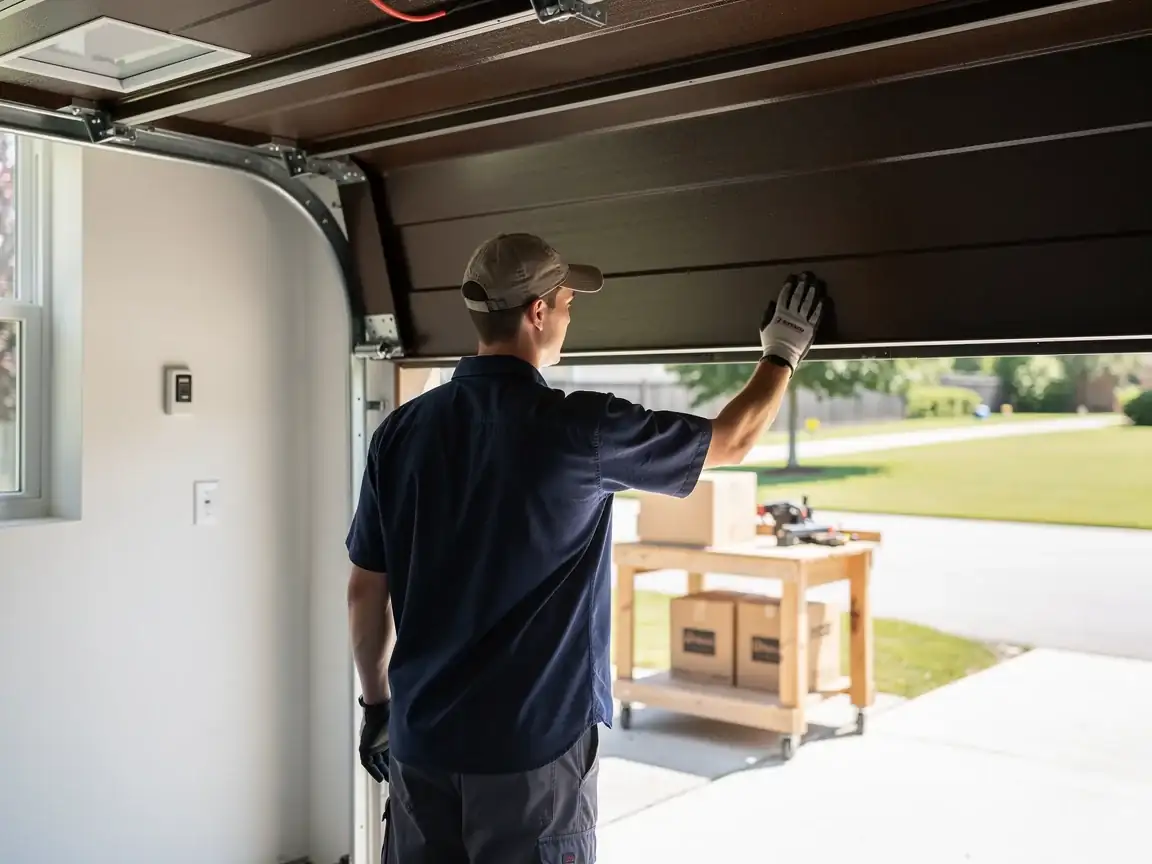
    A technician in a cap and gloves adjusts a brown garage door.

    Repaired & tested

    The repair is done, the door is set true and tested, and the work area left clean.

Not sure which repair your door needs in Randolph, NJ? Describe what it’s doing - every job starts with a diagnosis.

8areas covered
How we work

What to expect

Diagnosis firstEvery visit starts by finding what actually failed - not a pre-written parts list.
The right part for the doorSprings and openers matched to the door’s weight and age, so the fix holds up.
Straight answersWhen a repair makes more sense than a replacement - or the reverse - you hear it plainly.
Clean, careful workTension released safely, hardware set true, the door tested under power before we leave.
25,734
Residents in Randolph
8Garage door services
8Neighborhoods & suburbs
NJServing Randolph, NJ
Questions

Frequently asked

Straight answers about garage door repair in Randolph. Still unsure? Ask us directly.

Why do garage doors in Dover seem to fail more in winter?

Most of Dover's housing dates to the early 1950s, and steel springs and cables that have cycled through decades of freeze-thaw swings lose tension faster than newer hardware. Cold also stiffens lubricant and tightens metal joints, so a door that worked fine in October can bind or snap a spring on a January morning. It's the combination of age and climate, not one or the other.

Does Randolph Garage Door Pros have a location in Dover?

No. The company is based in Randolph and travels to Dover, about three miles away, for service calls. There's no local branch or depot here - every job is routed from Randolph.

Is it worth replacing an old opener instead of repairing it?

It depends on the opener and what's wrong with it, which isn't something we can answer without seeing the unit. Many Dover garages have already had one opener swap since the house was built in the early 1950s, so the door itself and the opener are often different ages, and that mismatch sometimes matters more than the opener's condition alone.

Ready to get your garage door sorted?

Tell us what it’s doing and where you are in Randolph - we’ll take it from there.

Request a QuoteCall