How Long You Are Without the Door
White Meadow Lake sits six miles out from our Randolph shop, which matters more for a cable job than for most repairs. A broken cable is a safety call - the door either won't move or it's hanging crooked on one side - so we treat it as a priority, but six miles still means roughly fifteen minutes of driving before a wrench touches your track. That's not a promise of a specific arrival window, just the honest math of the distance. Most cable jobs here run under an hour once we're on site: pull the old cable, check the drum it rode on, spool the new one, balance the door. The wait is in the drive, not the repair itself.
If you've got a car trapped inside and nowhere else to park it, say so when you call. A one-sided cable failure can sometimes be walked open by hand for a few minutes - carefully, with the opener disconnected - just enough to get a vehicle out before we arrive.
How It Shows Up
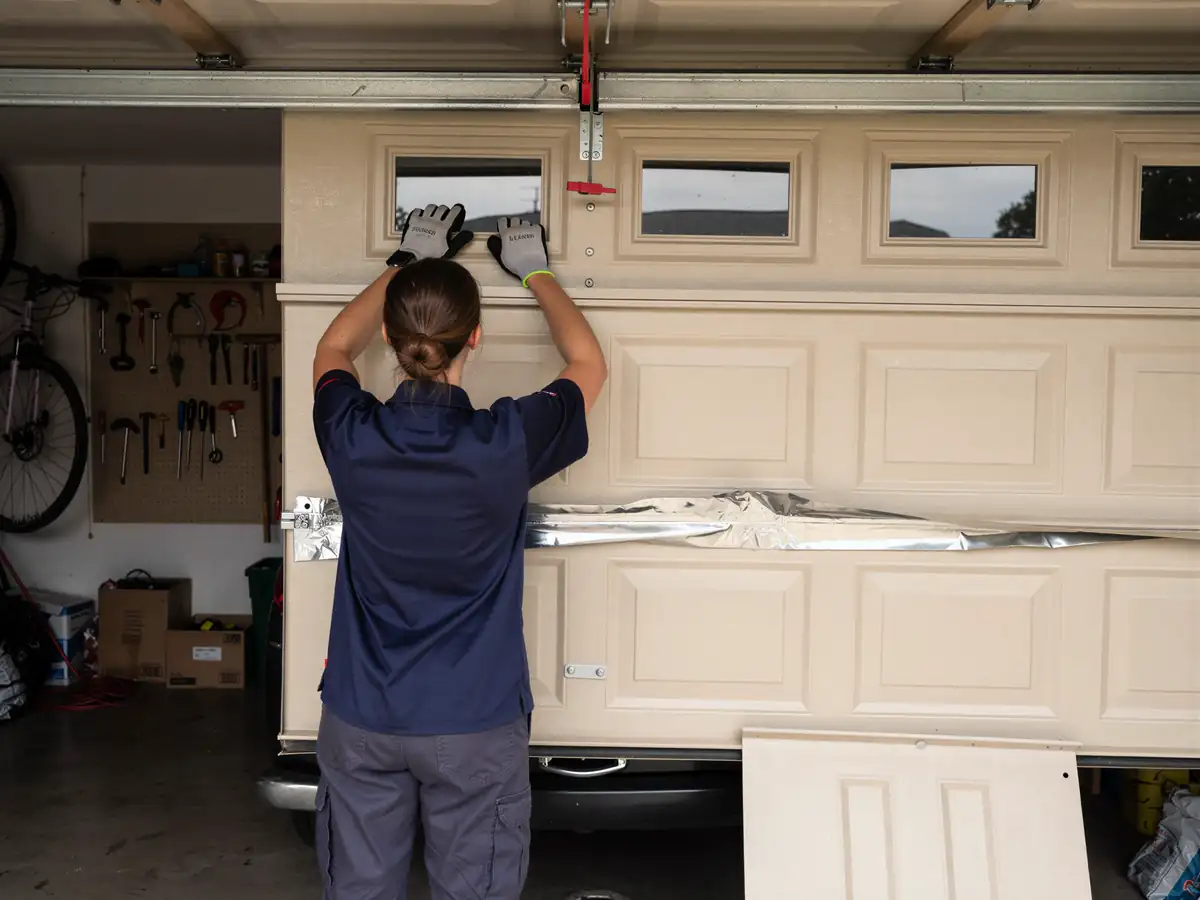
The tell is almost always a door that's gone lopsided. One corner drops lower than the other, or the whole panel tips and jams in the track a few inches up. Sometimes you'll hear it first - a snap, then a bang as the door drops that last few inches onto the floor. On homes built around the mid-1960s, which is the typical build year out here, the original cable drums and tracks have usually been swapped at least once already, so what you're looking at may be newer hardware wearing out faster than the door itself.
A frayed cable, as opposed to a snapped one, gives more warning: a slight shudder when the door moves, a visible kink in the strand, or a door that's started drifting off-square over a few weeks. That's the one worth catching before it lets go completely, usually while someone's walking under it.
What Causes It Around Here
Housing in the broader Randolph service area runs from 1938 to 1996, with White Meadow Lake's homes centering closer to 1965 - squarely in that mid-century run where torsion and extension cable setups were standard but not built to today's load specs. Cold-climate winters put extra strain on cable and drum assemblies: the cold stiffens the lubricant on the drum, the cable rides rougher, and strands fray faster than they would in a milder climate. Over enough winters in a cold-band area like this one, that wear adds up on cables that were already decades old.
We also see cables fail from rust where moisture's gotten into a drum groove, and from simple fatigue on a door that's been cycled thousands of times without the hardware ever being inspected.
How We Fix It
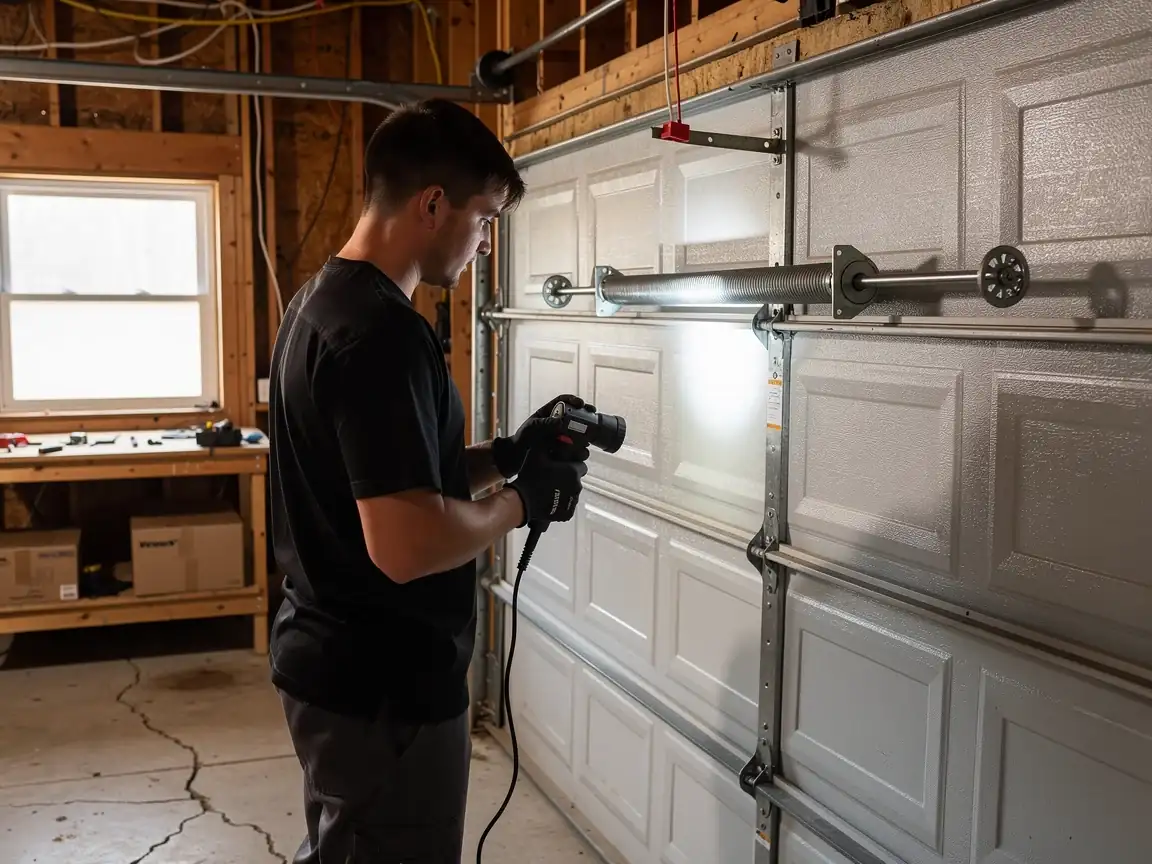
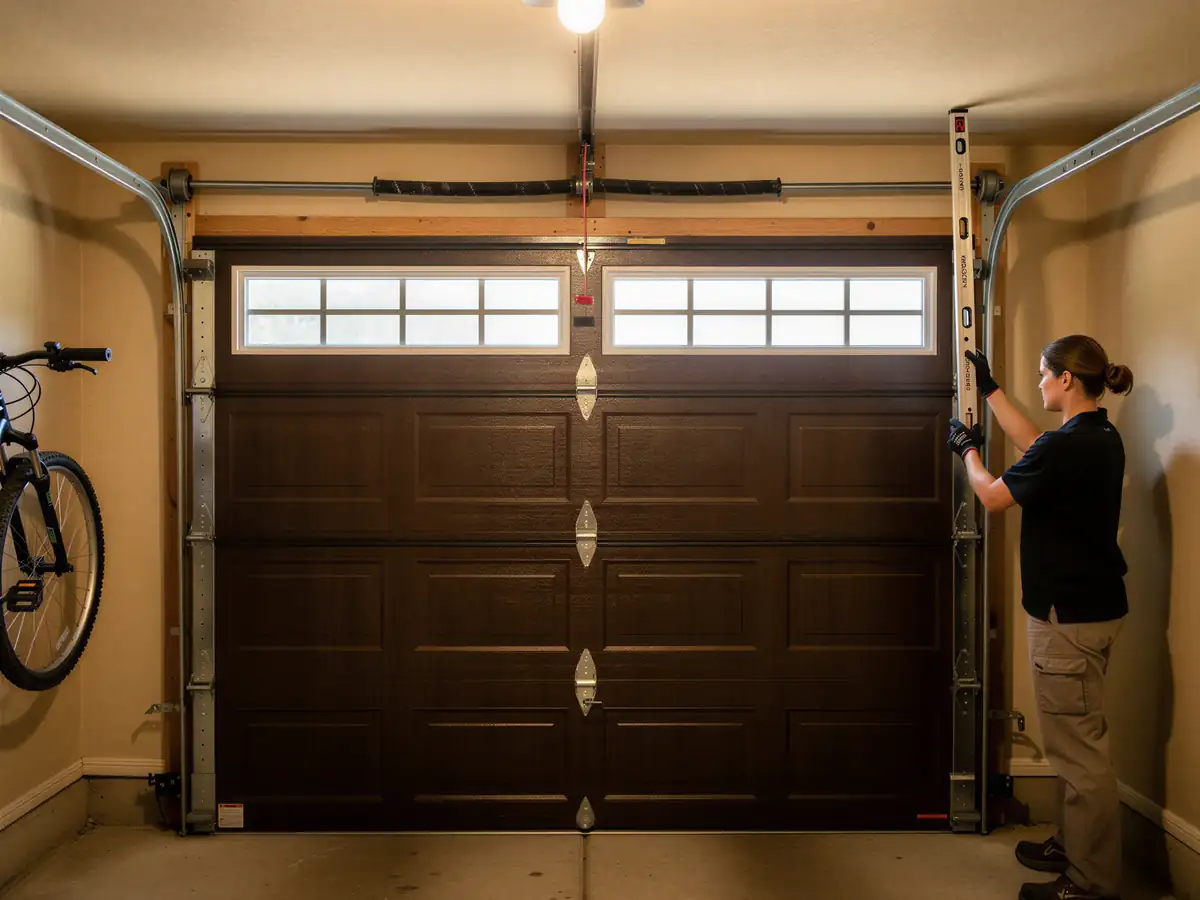
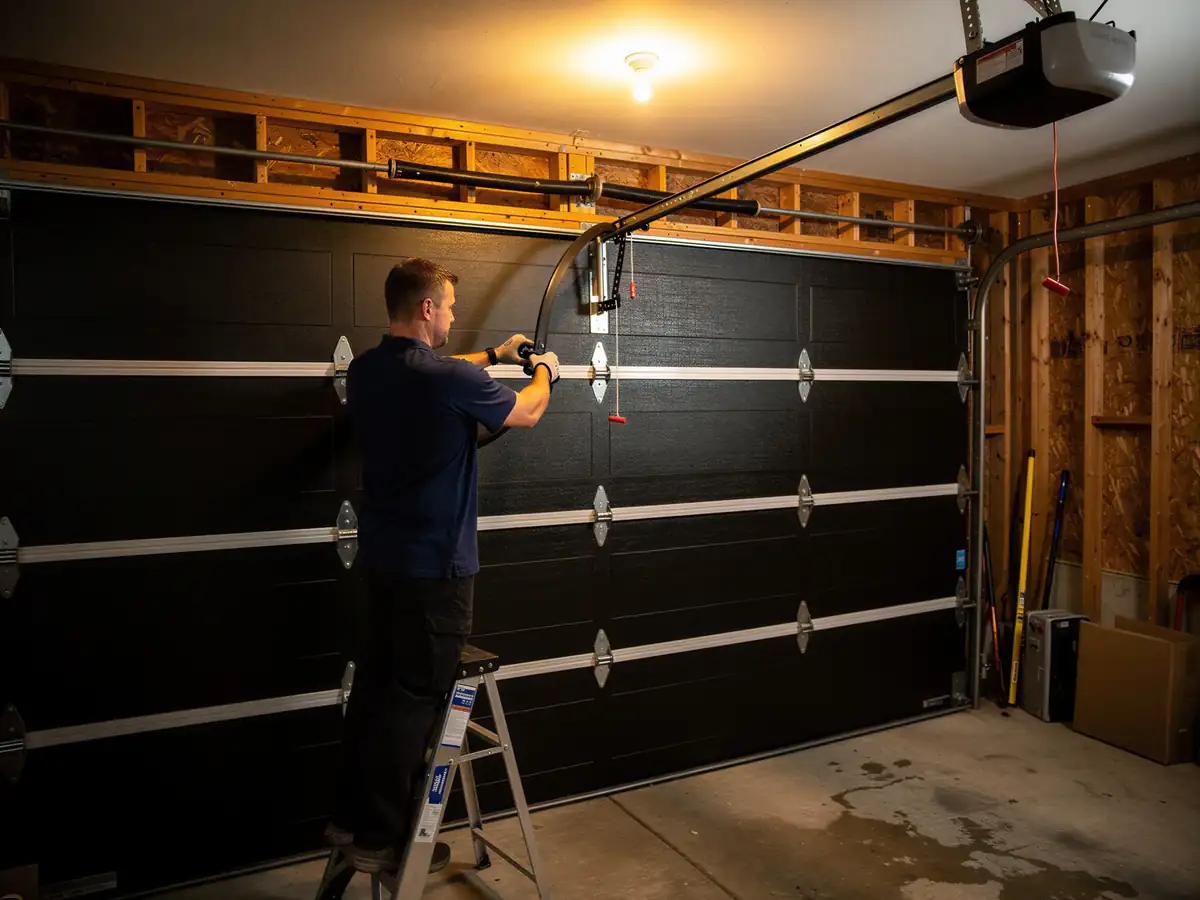
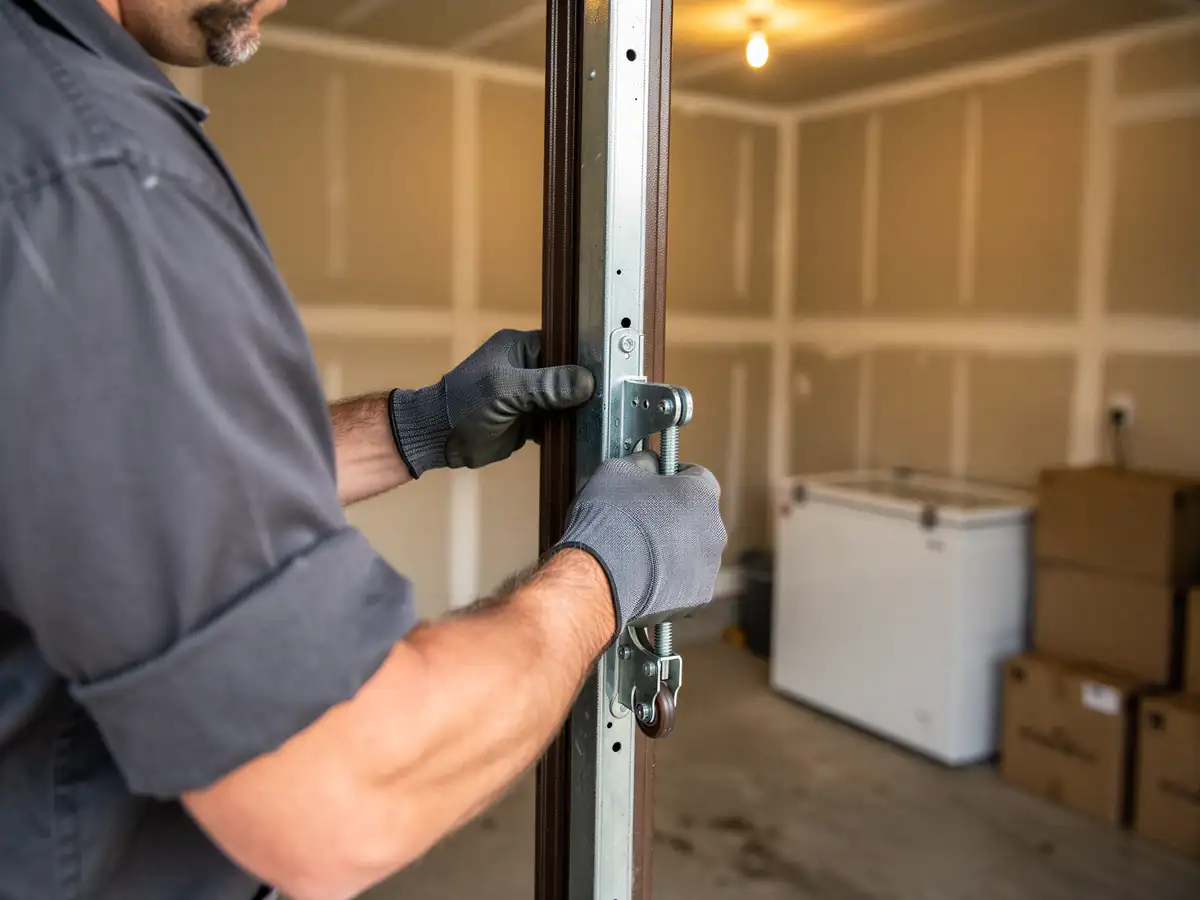
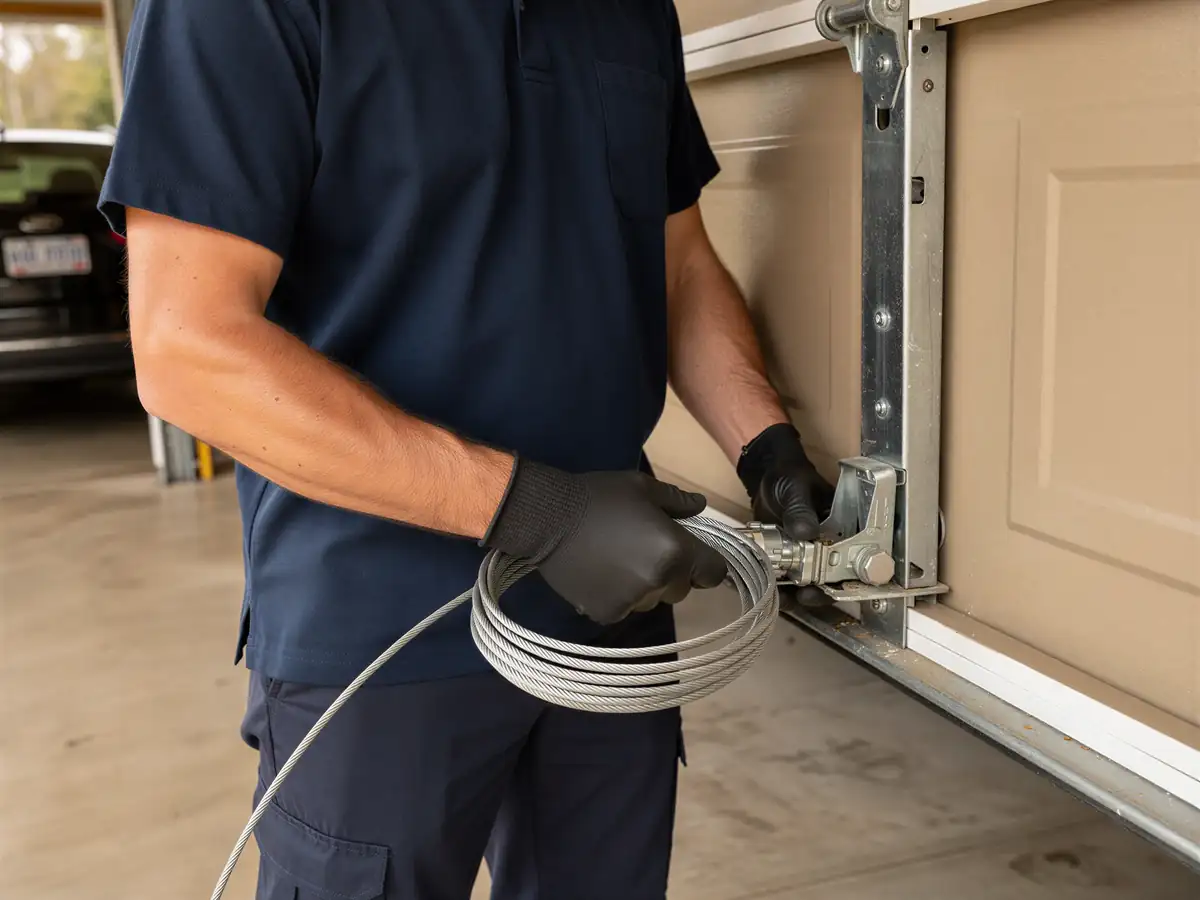
We start by checking both cables, not just the one that broke - if one side failed from age or fatigue, the other side is usually close behind, and replacing just one often means a second call within months. We inspect the drums for wear grooves, check the track alignment since a dropped door can bend it on the way down, and rebalance the door's spring tension once the new cable is on. On a mid-1960s door that's never had the drums replaced, we'll flag it, but we don't swap parts that aren't failing - the drum itself usually outlasts several cables if it's not damaged.