How Long You Are Without the Door
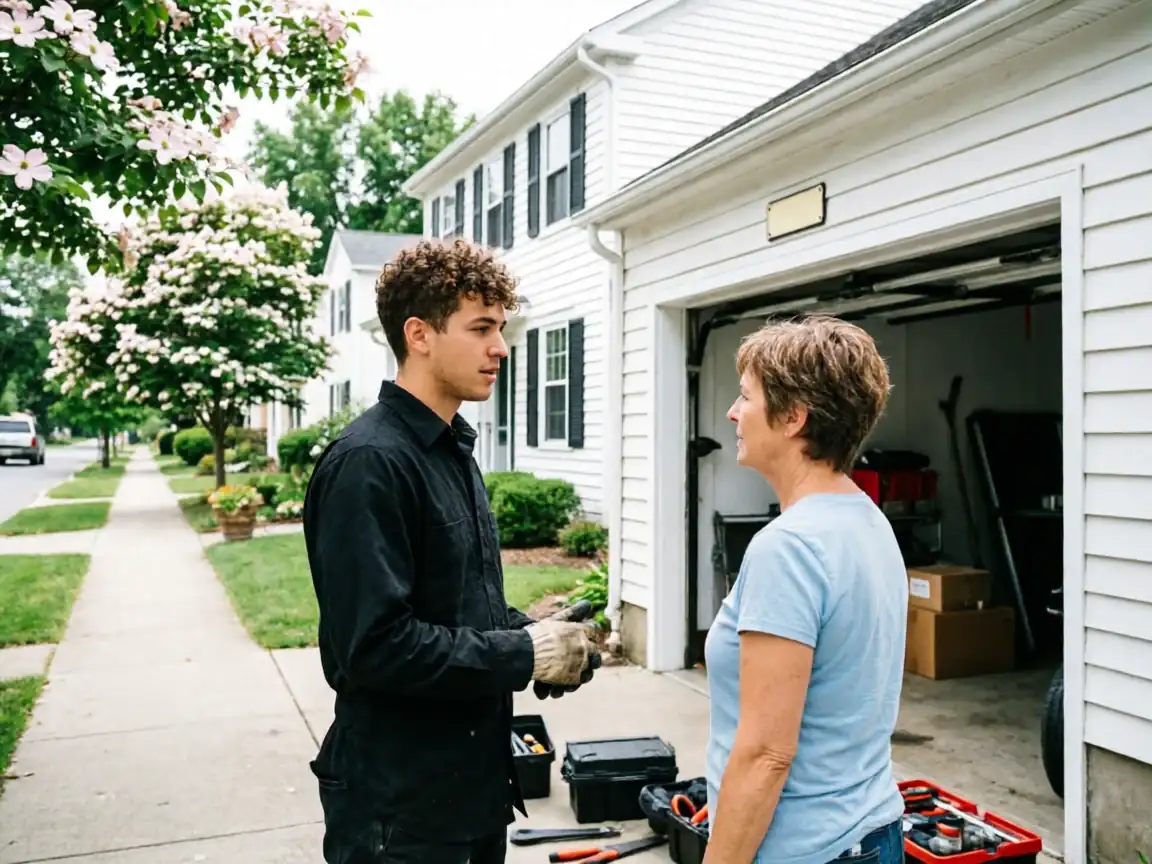
We run out of Randolph, about 6 miles from White Meadow Lake, so there's drive time built into every call before a wrench ever touches your track. We don't keep a branch or a second truck staged in the lake area, so we're honest about that upfront rather than promising something we can't back up. What we can tell you is that a door built around 1965 - which describes most of the housing stock here - rarely fails all at once. A fraying cable or a spring losing tension usually gives you a week or two of warning noise before it lets go completely. If you call when you hear the grinding instead of after the door is stuck down, you're not actually without a garage for long at all.
How It Shows Up
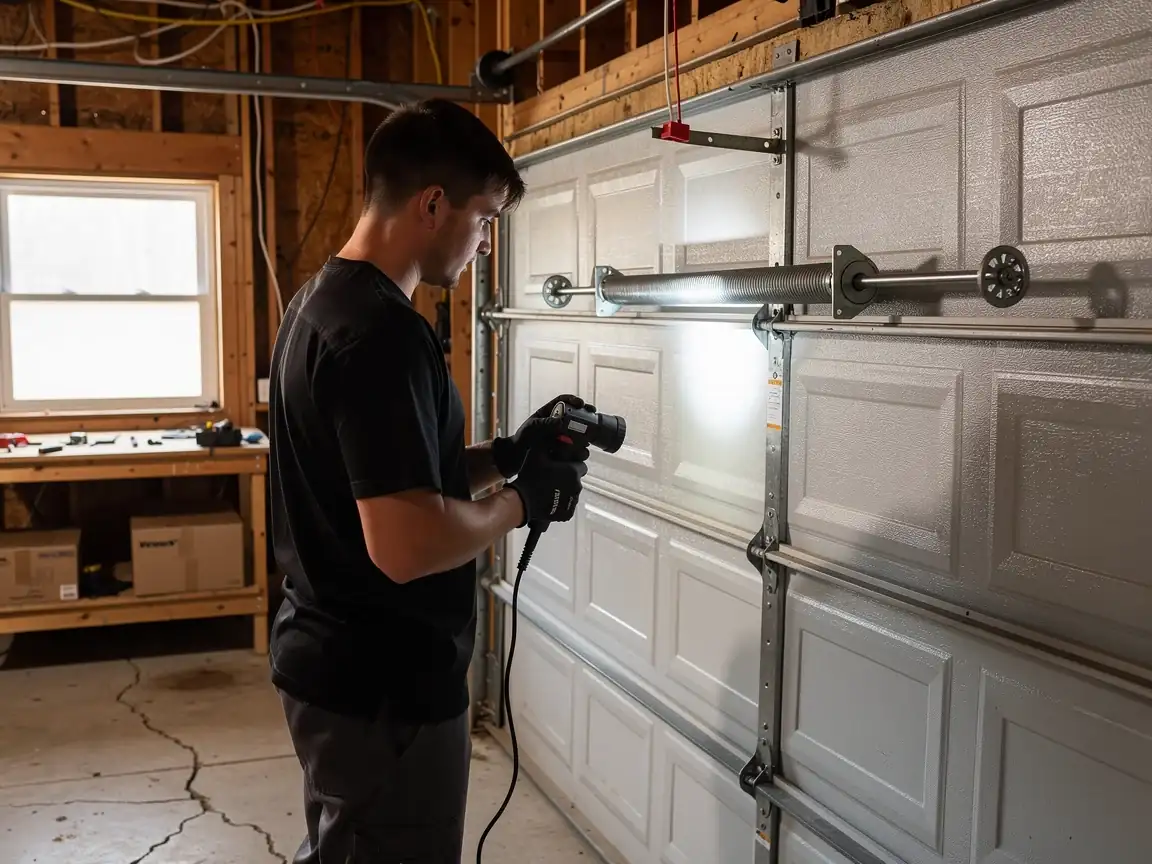
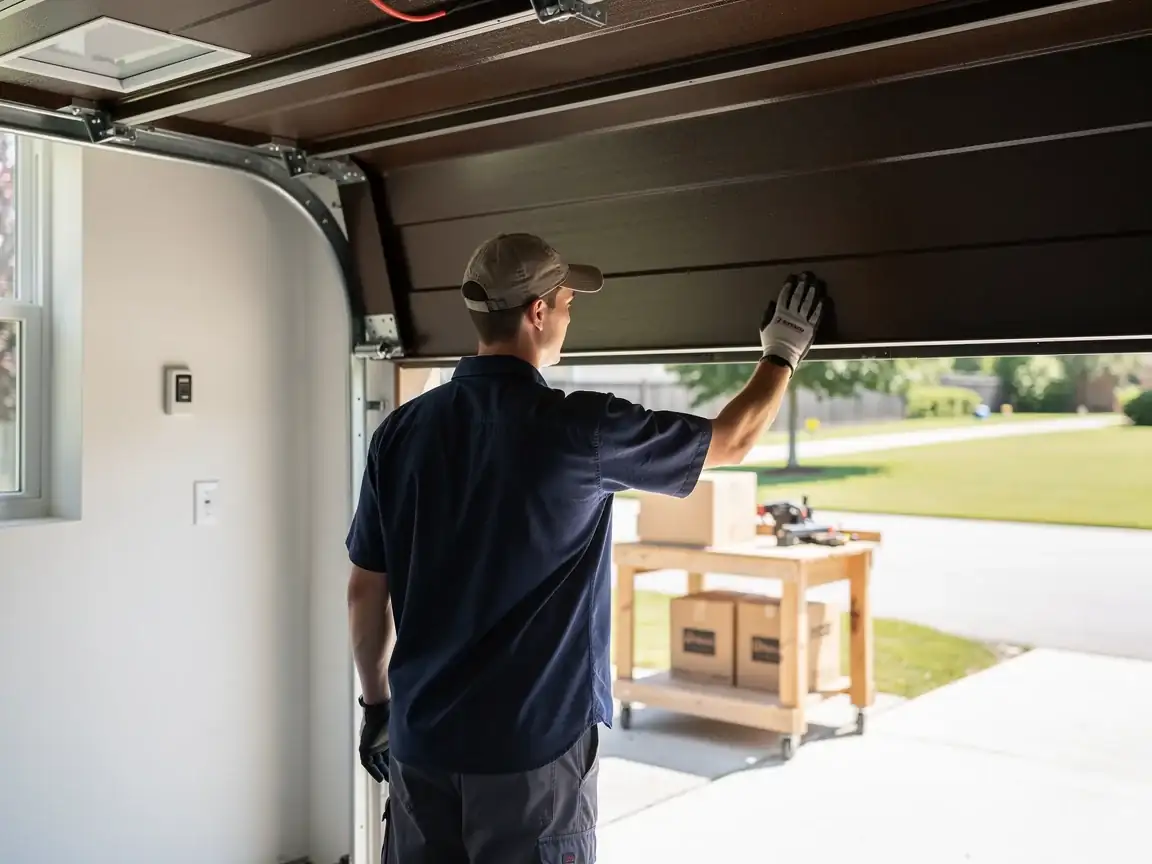
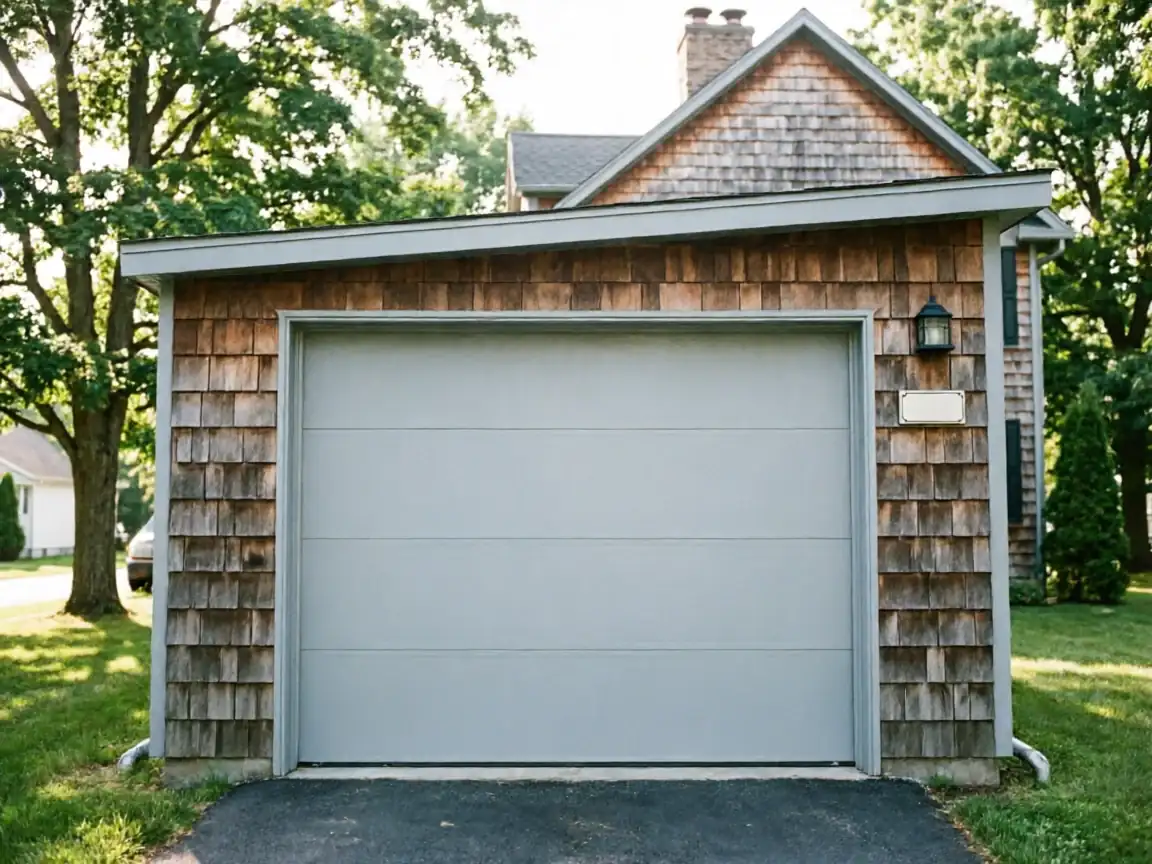
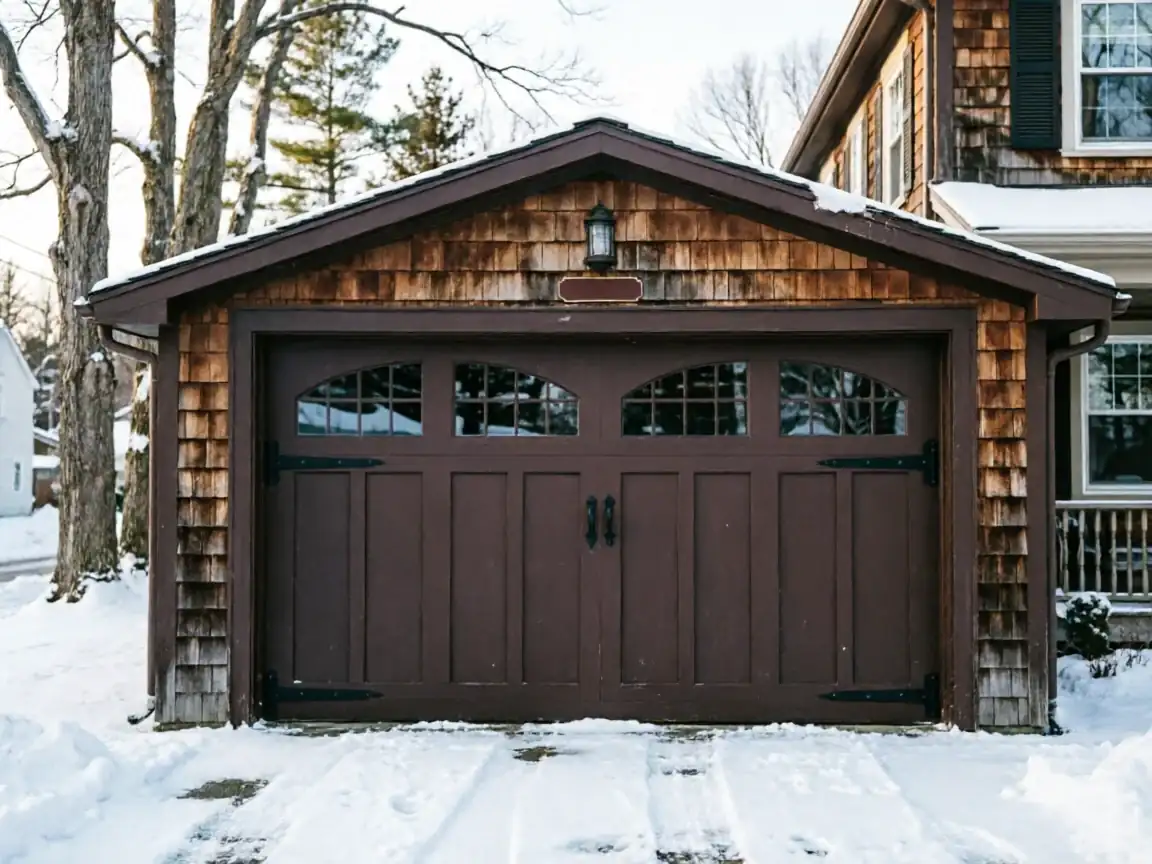
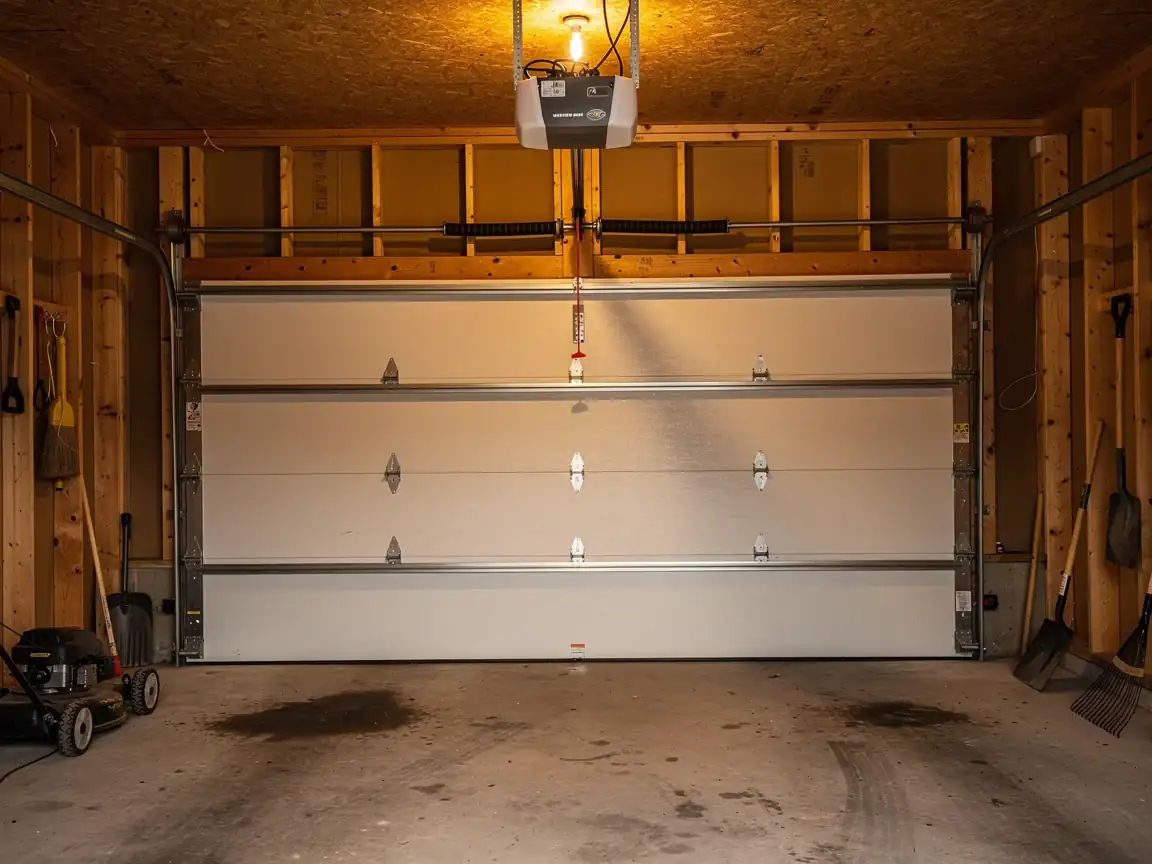
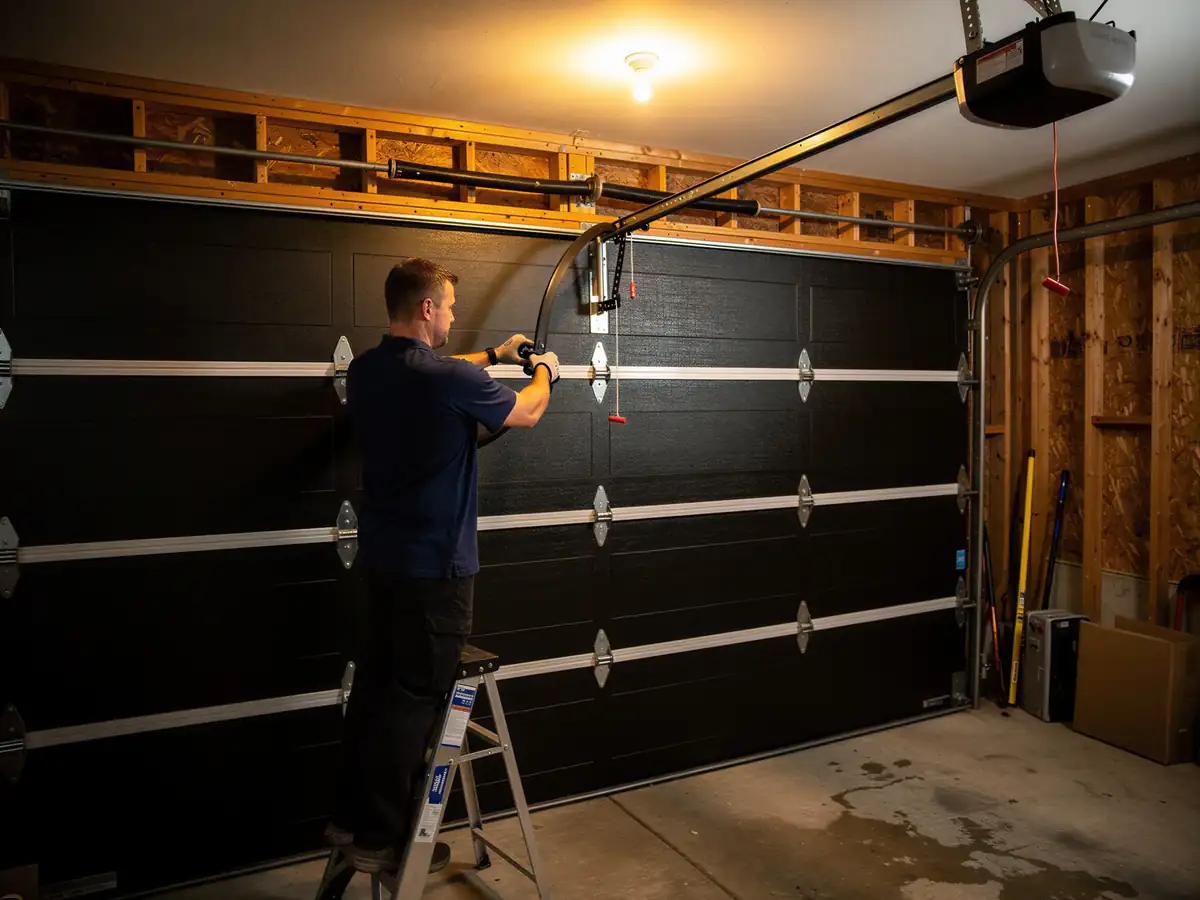
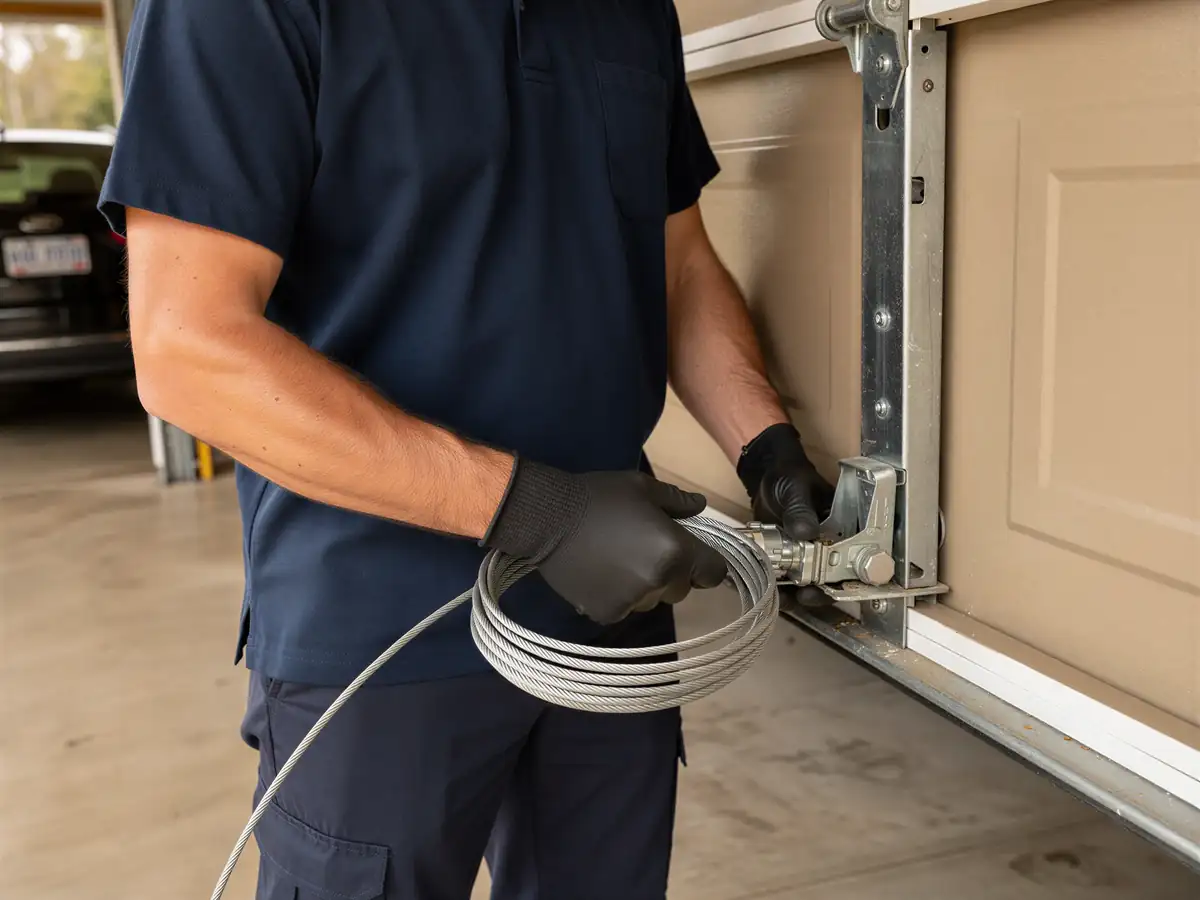
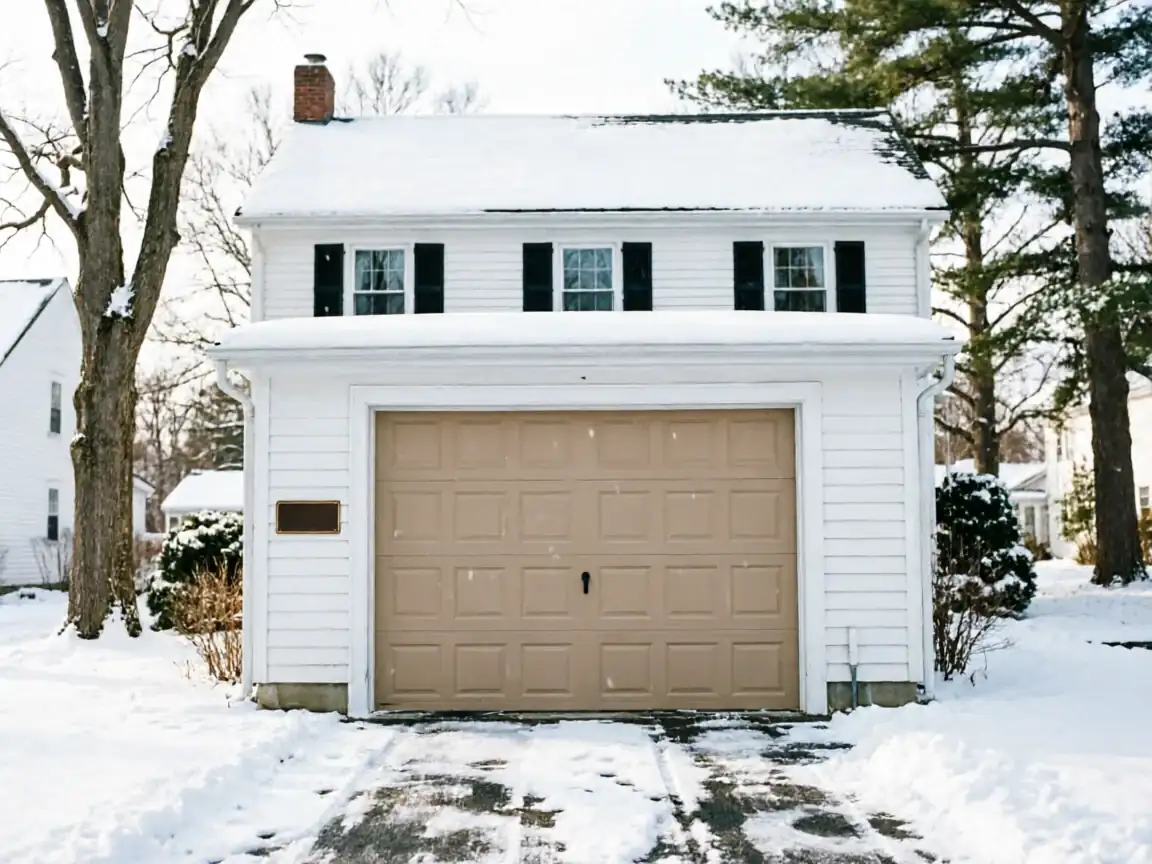
On a house from the mid-1960s, the door itself is usually a single-layer steel panel, sometimes wood, hung on hardware that was never meant to last sixty years. The first sign is rarely total failure. It's the door that hesitates halfway up, or drops the last foot instead of settling. On these older sectional doors, that's almost always a spring losing coil tension or a roller that's worn its track channel egg-shaped. You might also hear a pop from the garage and then find the door simply won't move - that's a cable off its drum, common once the original galvanizing has worn thin. None of this is catastrophic yet, but it's the kind of wear that's baked into a door this age, not a sign something was installed wrong.
What Causes It Around Here
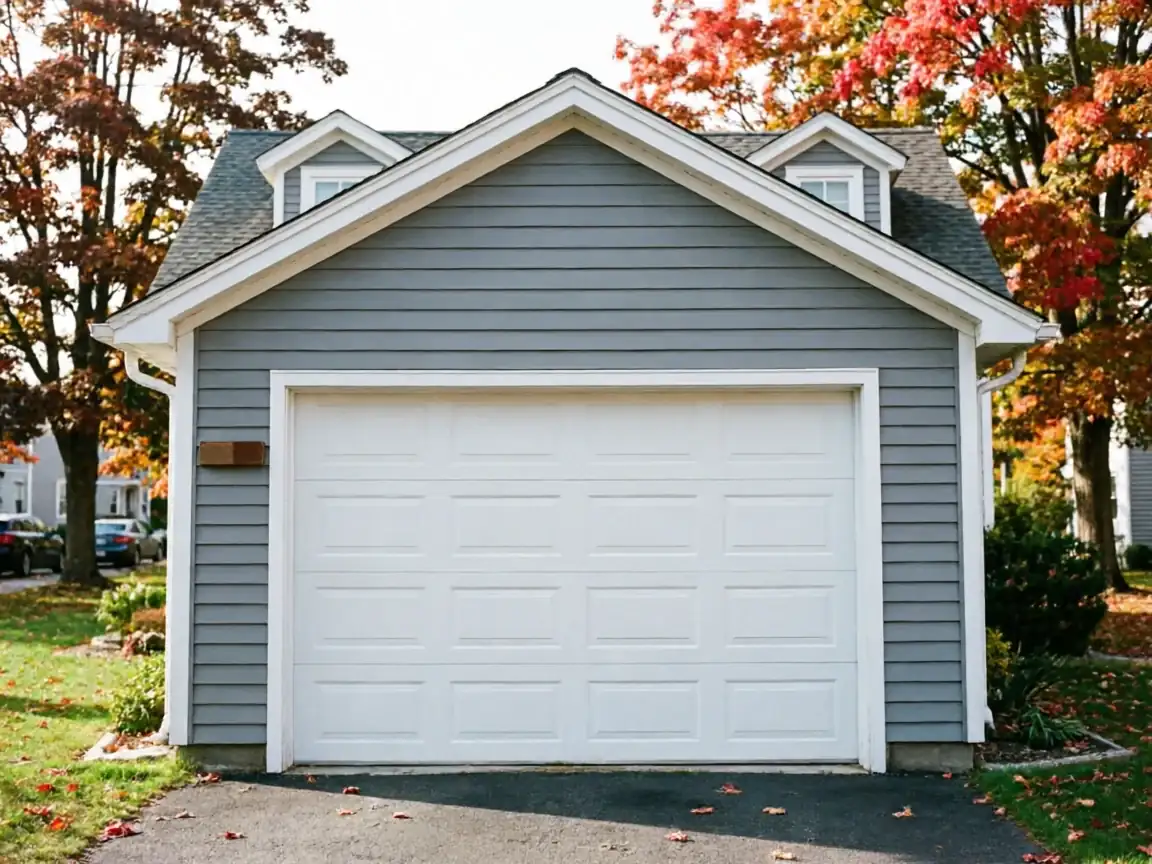
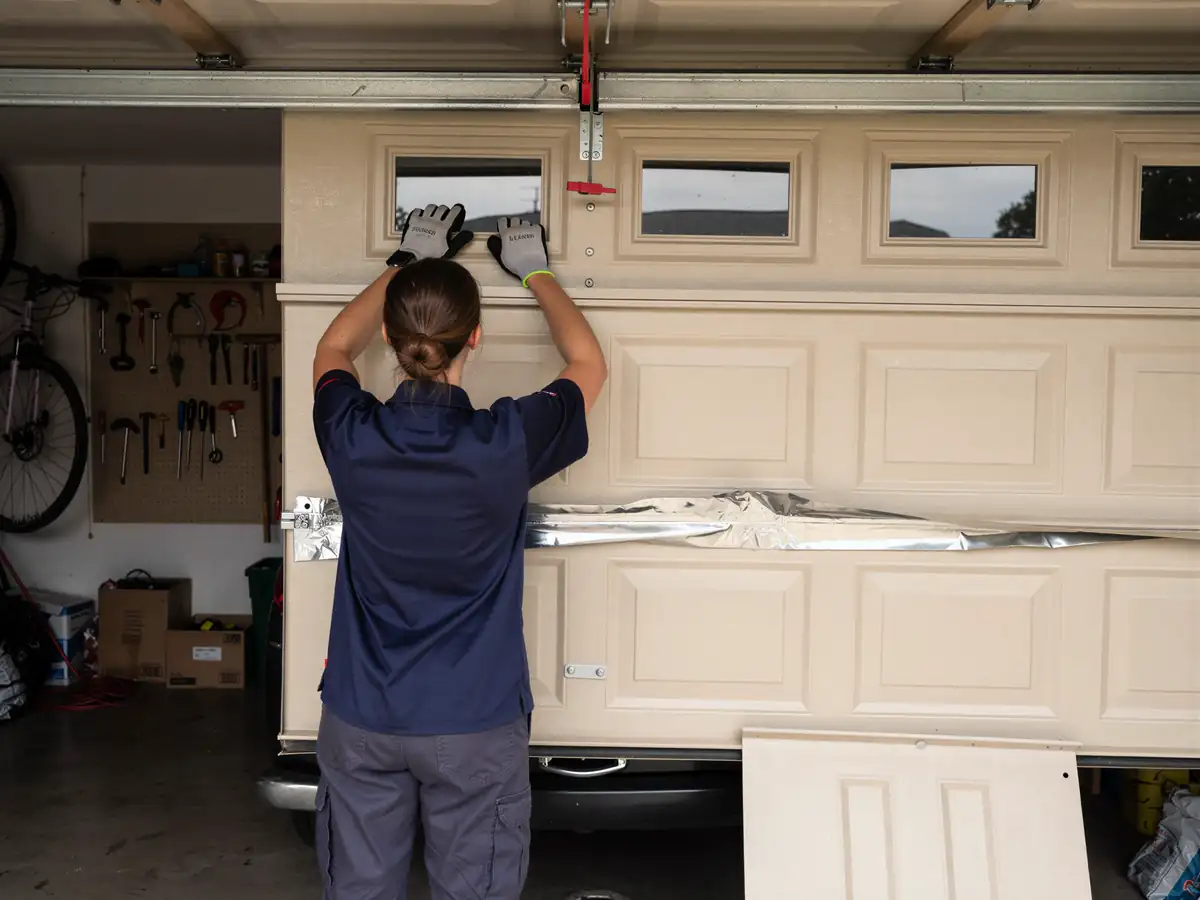
White Meadow Lake sits in a cold-weather band with real winter severity, and that matters more on a door from 1965 than it would on something newer. Original steel panels from that era don't have the foam core insulation that later doors picked up, so the metal itself contracts hard in a cold snap - that's when a weak spring or a marginal cable tends to finally give out. The area's median household income, around $150,042, means a fair number of these houses have had the door swapped for an insulated replacement over the decades, but plenty of originals are still out there on their third or fourth spring since the house was built.
How We Fix It
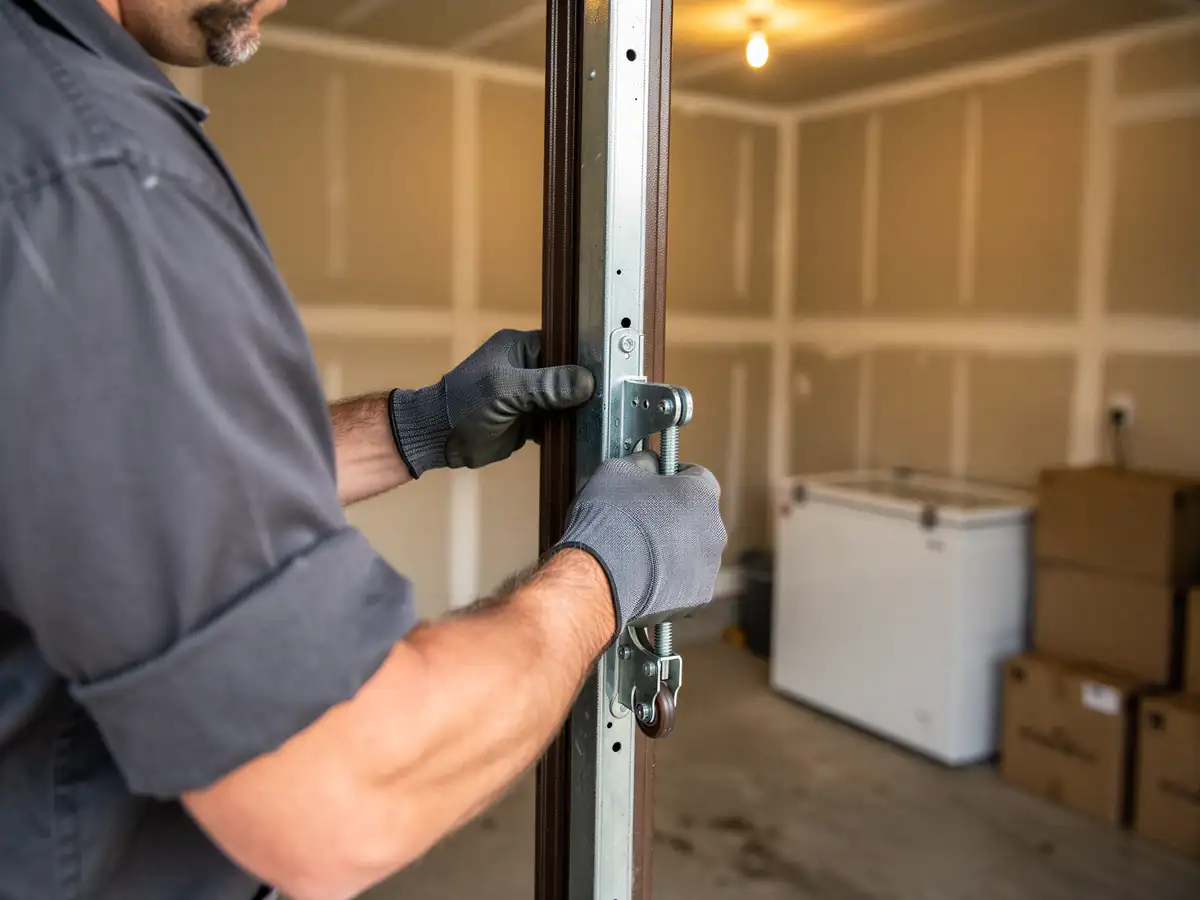
We replace springs matched to your door's weight and size rather than grabbing whatever's closest to the right length - that matters more on an original 1960s door, where the panel is often heavier steel than what's sold today. Cable and roller replacement is a same-visit job in most cases. If the track itself has bent from years of a misaligned roller, we true it up or replace the section rather than the whole run, which keeps the cost down on an older door that doesn't need a full rebuild. For a few of these houses, the door and opener are both original, and at that point we'll tell you straight when replacement makes more financial sense than another round of patch repairs.